

Turkey is more relaxed than many first-time visitors expect. Resorts and big cities have a dress code close to Europe’s. Step into a mosque, a village or a family home and the rules change a little.
This guide covers what British and Irish visitors ask about most, from greetings and tea to alcohol, LGBTQ+ travel and what the law says about Atatürk. Where a rule comes from the UK Foreign, Commonwealth & Development Office (FCDO) or the Irish Department of Foreign Affairs (DFA), we say so.
Shake hands when you meet and when you leave, starting with the eldest person. Friends often greet with a kiss on each cheek, men with men included. If you offer a hand and someone of the opposite sex touches their hand to their chest instead, it is a gesture of respect, not a snub. Shopkeepers may call you abi (elder brother) or abla (elder sister).

You will be offered tea (çay) in shops, hotels and carpet showrooms. Accepting is polite and rarely obliges you to buy anything. To decline, put a hand on your heart and smile.
If you are invited home:
The Irish DFA says dress in many tourist areas is similar to Europe, but more conservative in rural areas, small towns and some neighbourhoods of larger cities. Swimwear belongs on the beach or by the pool, so throw something over it to walk into town. In Istanbul, Izmir and Ankara, shorts and sleeveless tops are fine in most districts. In villages and religious neighbourhoods, covered shoulders and knees are the safer choice for men and women.

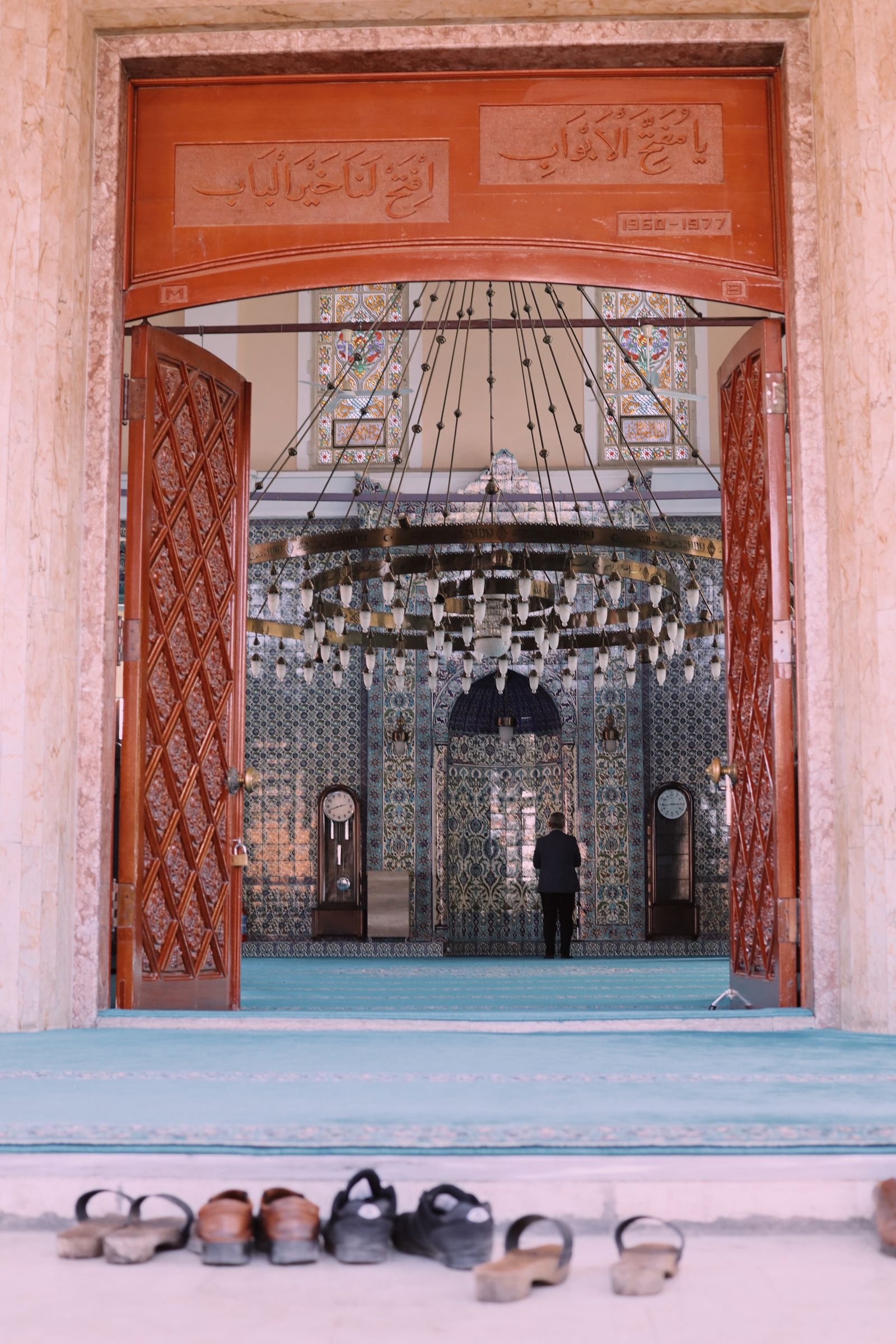
The FCDO says to dress modestly in a mosque or religious shrine. In practice:
Mosques are working places of worship. Keep your voice down, do not walk in front of anyone praying, switch off flash, and do not film worshippers. Visitor access usually pauses around the five daily prayers and for about two hours at Friday midday prayers. Our Hagia Sophia guide has the current rules for the best-known example.
Ramadan is expected to begin around 8 February 2027, with Ramazan Bayramı around 10 to 12 March and Kurban Bayramı around 16 to 19 May. timeanddate.com lists these as tentative, since they depend on moon sightings.
The FCDO says it may cause offence to eat, drink, smoke or chew gum in public in the daytime, play loud music, dance or swear. Resorts carry on largely as normal, but check opening hours elsewhere. Both Bayrams are national public holidays, so expect some closures and busier roads, buses and hotels. Bayramınız kutlu olsun (happy Bayram) will get you a smile.
Meals are social and unhurried, with dishes shared in the middle. Say afiyet olsun (enjoy your meal) when food arrives, and ellerinize sağlık (health to your hands) to compliment the cook. Whoever invites usually pays, and a friendly tussle over the bill is normal. Waiters rarely bring it unprompted, because hurrying you is considered rude, so ask with hesap, lütfen. Tipping differs from the UK, so see our guide to tipping in Turkey.
Alcohol is legal and easy to find in restaurants, bars and resorts, but the Irish DFA says public drunkenness is frowned upon. Shops can sell alcohol only between 06:00 and 22:00, while licensed bars and restaurants are not limited in the same way. A beer on a café terrace is normal. Drinking in the street, or in daylight during Ramadan, will draw looks.
The FCDO warns that people have died or been seriously ill from illegally produced local spirits and counterfeit branded bottles in Turkey, including in Istanbul and Ankara. You cannot detect methanol by taste or smell. Stick to licensed venues and keep your drink in sight.

Haggling is normal for carpets, ceramics, leather and souvenirs in bazaars, and not in supermarkets, restaurants or shops with price tags. Keep it good-humoured, counter well below the first price, and be ready to walk away politely. Once you agree, you are expected to buy. Our Grand Bazaar guide covers what to buy and how to haggle.
The FCDO says same-sex sexual activity is legal in Turkey, but same-sex relationships are not legally recognised and some parts of the country are socially conservative. Pride events have been banned or dispersed since 2015, anti-LGBT+ statements by senior public figures have increased, and authorities have carried out operations against LGBT+ organisations and activists. The sensible approach is discretion with public affection, especially outside the big cities and resorts. Read the FCDO’s advice for LGBT+ travellers before you go.
Solo women travel in Turkey every day, and foreign women are generally welcomed. You may get attention that feels intrusive, such as staring or comments. A firm hayır (no) and walking on is usually enough.
The FCDO is direct about the risks. Among 4.27 million British visitors in 2025, 29 cases of sexual assault, including rape, were reported to British consular staff. Most were in coastal resorts in the tourist season, often involving someone the victim had met that day, including hotel or spa staff. Use reputable providers, do not share where you are staying, use registered or app-based taxis, and call 112 if you feel threatened. See Is Turkey safe? for more.
This is where manners become law. The FCDO states that it is illegal to insult the Turkish nation or the national flag, and that insulting the President or the founder of the Republic, Mustafa Kemal Atatürk, is a criminal offence. These laws can apply to comments or images posted online, wherever and whenever you posted them. Defacing Turkish banknotes is also illegal. Offences carry a prison sentence of 6 months to 3 years.
You will see Atatürk on statues, banknotes and shop walls. Do not joke about him or the flag, and do not deface a banknote. On politics generally, listen more than you argue. The FCDO advises avoiding demonstrations. Our safety and local laws guide covers other rules, such as carrying photo ID.
A slight downward nod means yes. A slight upward nod, usually with a quick “tsk” click of the tongue, means no. The click is not disapproval, it means “no, thanks”. Avoid the “OK” circle made with thumb and finger, which can read as an insult, and putting your thumb between your first two fingers, which is rude. Pointing at people is also rude.
Turkey drives on the right, so British and Irish visitors should look left first, then right. Do not assume cars will stop at zebra crossings. The FCDO says accidents are common, mainly due to poor or reckless driving, and that drink-driving can cost you your licence for 6 months. See our driving in Turkey guide.
Most offers of tea, directions and help are genuine. The line is crossed when a stranger steers you to a particular shop, bar or restaurant. The FCDO warns to be wary of strangers who approach you to change money or take you to a restaurant or nightclub, because food and drink may be spiked. Choose your own venues and you can say no without causing offence. Our tourist scams guide lists the common tricks.
| English | Turkish | Say it |
|---|---|---|
| Hello | Merhaba | mer-ha-ba |
| Thank you | Teşekkür ederim | teh-sheh-kewr eh-deh-reem |
| No, thank you | Hayır, teşekkürler | hai-ur teh-sheh-kewr-ler |
| I’m full | Doydum | doy-doom |
| The bill, please | Hesap, lütfen | heh-sap lewt-fen |
| Enjoy your meal | Afiyet olsun | ah-fee-yet ol-sun |
More in our Turkish phrases guide.
Video: Turkey Travel Guide: 25 Things to Know Before You Go by Turkey Travel Planner (August 2026). The first eight minutes cover dress, mosques, personal space and tea. Watch on YouTube.
Only in mosques, where women should cover their hair, shoulders and legs. Elsewhere, no, though dress is more conservative in rural areas.
No. A smile and a hand on your heart is a polite refusal, and accepting a glass does not oblige you to buy anything.
Yes. It is sold in licensed bars and restaurants, and in shops between 06:00 and 22:00. Public drunkenness is frowned upon, and the FCDO warns against illegally produced spirits.
It is a criminal offence, with a prison sentence of 6 months to 3 years according to the FCDO, and it can apply to online posts.
Sources: FCDO Turkey travel advice, Irish DFA Türkiye travel advice.
Prices and opening details checked in November 2026. Confirm on the official page before you go.