

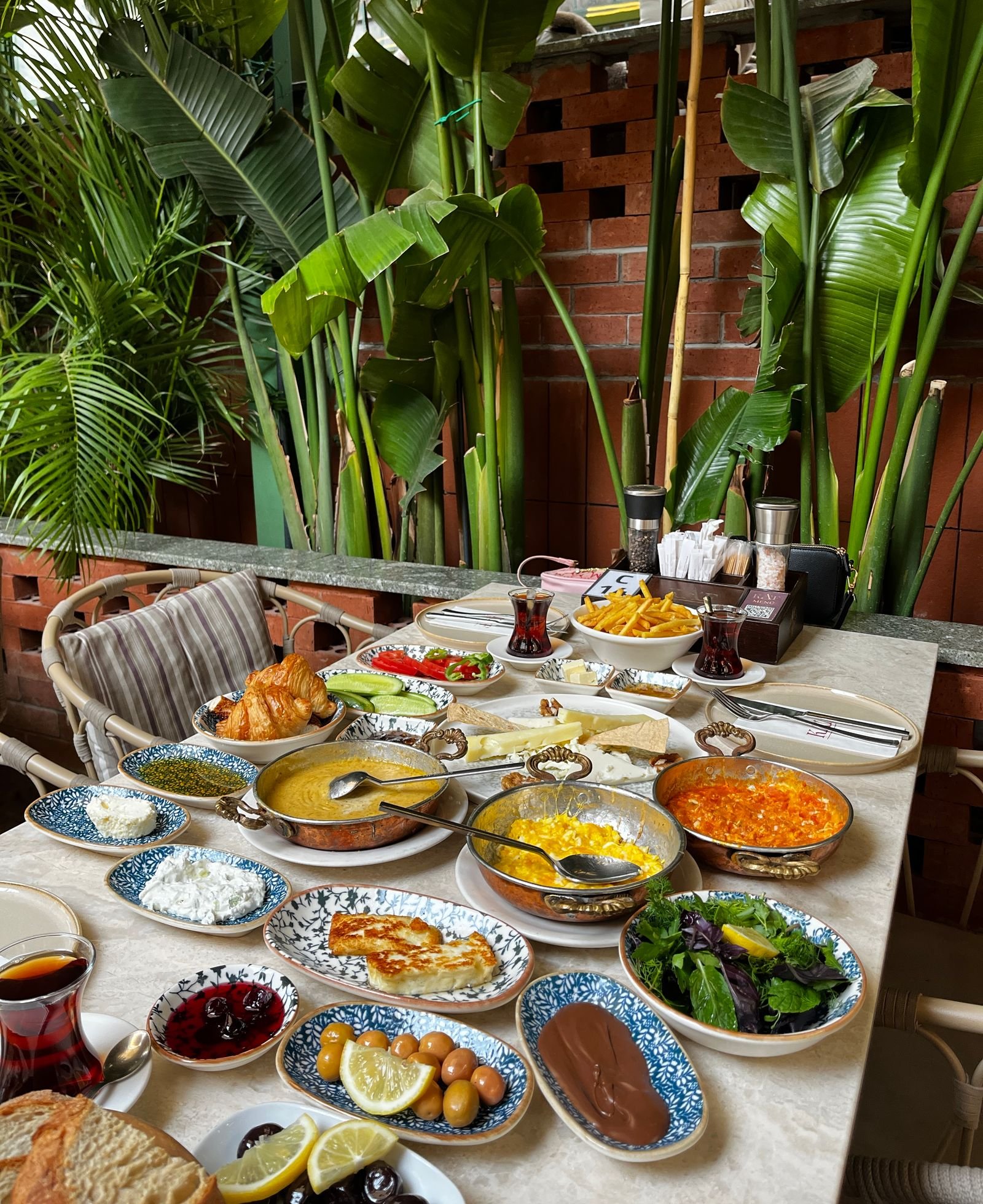

Breakfast is the meal British visitors talk about most after a trip to Turkey. It is slow, it is shared, and on a weekend it can run to lunch. It is also nothing like a full English: mostly cold plates and one hot egg dish.
This guide covers what is on the table, how the regions differ, what it costs in pounds in late 2026, where to eat it, and how to order without ending up with plates you did not want.
What is on a classic Turkish breakfast table
The word kahvaltı comes from “before coffee”, and the meal is built from small plates rather than one dish. A typical table has:
- Cheese: white cheese (beyaz peynir), often a kaşar slice, and regional types such as Van’s herb cheese or braided cheese.
- Olives: black and green, sometimes dressed with oil and chilli.
- Tomatoes and cucumber: sliced, often with peppers and parsley.
- Eggs: boiled, fried or cooked in a pan (see below).
- Sucuk and pastırma: a spiced dry-cured sausage and a cured, spice-coated beef.
- Honey and kaymak: thick, clotted-cream-like kaymak is spread on bread and topped with honey. Many places add jam, tahini and pekmez (grape molasses).
- Bread and pastry: fresh bread, simit, and often a börek or fried pişi.
- Tea: black, strong and served in small tulip glasses.
Dishes you order separately
On a serpme table the cold plates arrive together, but hot dishes are usually extra, so ask for them when you sit down.
- Menemen: eggs scrambled softly with tomato and green pepper, served bubbling in a small pan. Turks argue about whether it should contain onion; ask which version you are getting.
- Sahanda yumurta: fried eggs in a small pan, sometimes with cheese.
- Sucuklu yumurta: eggs fried with sliced sucuk. This is the closest thing to a fry-up.
- Çılbır: poached eggs over garlicky yoghurt with chilli butter.
- Kuymak or mıhlama: Black Sea melted cheese, cornmeal and butter in a copper pan. Trabzon says kuymak, Rize says mıhlama.
- Börek and pişi: flaky filo pastry with cheese, spinach or mince, and fried dough puffs.

Regional Turkish breakfasts
Van
Van, in the east, is the city Turks name when they talk about the best breakfast. Look for otlu peynir (a sheep’s cheese flavoured with wild herbs), kaymak skimmed from milk and from yoghurt, murtuğa (a crisp egg dish topped with walnuts and honey), kavut (toasted wheat) and Van’s own cacık. Dozens of restaurants line Kahvaltıcılar Sokağı, the “Breakfast Street”, where diners sit in the street itself.
Gaziantep
Gaziantep breakfast can start before dawn. Beyran is a garlicky, chilli-hot soup of meat and rice served in a copper pan, with some places serving it from about 05:00. Katmer, a thin pastry with kaymak and Antep pistachio, is the sweet option. See our things to do in Gaziantep for the rest of the food scene.
Black Sea
Around Trabzon and Rize the star is kuymak or mıhlama, usually with kaygana (a thin egg-and-flour pancake), local butter and honey. Our Trabzon guide covers where to base yourself.
Aegean
İzmir and the Aegean coast lean on herbs, greens and olive oil: mint, dill and rocket on the plate, lor cheese, spreads such as girit ezmesi and acuka, and boyoz, a layered pastry eaten with a baked egg. Gevrek, a sesame ring served with cheese, tomato and olives, is the local simit.
Serpme or a single plate: which to order
Serpme means “scattered”: a spread of small plates brought to the table at once, so it fills the space. It suits two or more people and a long morning. A tek kişilik (single) plate gives you a smaller selection of cheese, olives, egg and bread for one. If you are travelling alone or want something lighter, order the single plate, or just a menemen and tea.
Some points that help when ordering:
- Ask for the “for two” version at a table of two. Per-head serpme prices often include more than you can eat, and restaurateurs themselves say diners rarely finish it all.
- Hot dishes (menemen, sucuklu yumurta, kuymak) are often extra, so add them by name.
- Some places advertise “unlimited” serpme, but the rules vary. Ask whether plates are topped up before you assume.
- Tea is usually priced per glass or per pot, and sometimes included. Check the menu line before a third glass.
- Tip 5 to 10 per cent in a sit-down place and round up at a counter; our tipping guide has the detail.
How much does Turkish breakfast cost?
Menus change quickly, so treat these as ranges. The figures come from 2026 price surveys and round-ups published between late September and early November 2026, converted at roughly ₺67 to £1. Tourist-heavy streets such as Sultanahmet charge more than the figures below.
| What | Price | About |
|---|---|---|
| Simit, Istanbul (citywide, from late September 2026) | ₺30 | 45p |
| Glass of tea in a café | ₺50 to ₺120 | 75p to £1.80 |
| Börek, menemen or toast in Kadıköy market streets, per person | ₺250 to ₺500 | £4 to £7.50 |
| Café breakfast plate in Moda or Yeldeğirmeni, per person | ₺600 to ₺1,000 | £9 to £15 |
| Serpme in Istanbul, per person | ₺1,000 to ₺1,500 | £15 to £22 |
| Serpme in Gaziantep, per person | ₺500 to ₺900 | £7.50 to £13.50 |
| Beyran in Gaziantep | ₺350 to ₺450 | £5 to £7 |
| Regional serpme in Trabzon, per person | ₺750 to ₺1,000 | £11 to £15 |
| Serpme in İzmir, per person | ₺700 to ₺1,200 | £10.50 to £18 |
| Boyoz, egg and tea in İzmir | ₺150 to ₺350 | £2 to £5 |
Istanbul serpme prices vary a lot by venue: a September 2026 survey by Endeks24 found ₺640 at a Kadıköy café and ₺899 at one in Bakırköy, against a general ₺1,000 to ₺1,500. For the wider budget, see our Turkey travel costs guide.
Where to eat Turkish breakfast
Istanbul
Kadıköy, on the Asian side, is the easiest area to eat well and cheaply. Yemek.com’s November 2026 Kadıköy round-up lists Meşhur Menemenci Cemal Polat in Osmanağa for menemen and Tarihi Kadıköy Börekçisi in Caferağa for börek. On the European side, Sütiş, a dairy-farm brand that serves breakfast, has branches in Emirgan and Akaretler. For Van-style breakfast, Van Kahvaltı Evi in Cihangir has long been the name Istanbul visitors are given; confirm it is open before you go. Planning a first visit? Try our 3 days in Istanbul itinerary.
Gaziantep
The Yemek.com guide of 3 November 2026 lists Metanet Lokantası on Kozluca Caddesi among its local breakfast stops, and the katmer shops Katmerci Murat in Bey Mahallesi and Katmerci Zekeriya Usta in Şahinbey.
Trabzon and the Black Sea
The same publication’s 30 October 2026 Trabzon list includes Seyir Cafe on Boztepe, above the city, Livera Bir Asır Kahvaltı Evi in Maçka and Fade Cafe in Uzungöl.
İzmir
For boyoz, Alsancak Dostlar Fırını in Alsancak opens at 06:30. For gevrek, Zeynel Ergin Gevrek Fırını nearby opens at 06:00. Moresi Kordon on the seafront does a serpme at about ₺850 (around £12.50), per Yemek.com’s 5 November 2026 guide.
Watch: an Istanbul breakfast, from cheap to premium
Video: Istanbul Breakfast Battle | Premium vs Traditional Turkish Spread by Turkey Travel Planner (April 2026). Watch on YouTube.
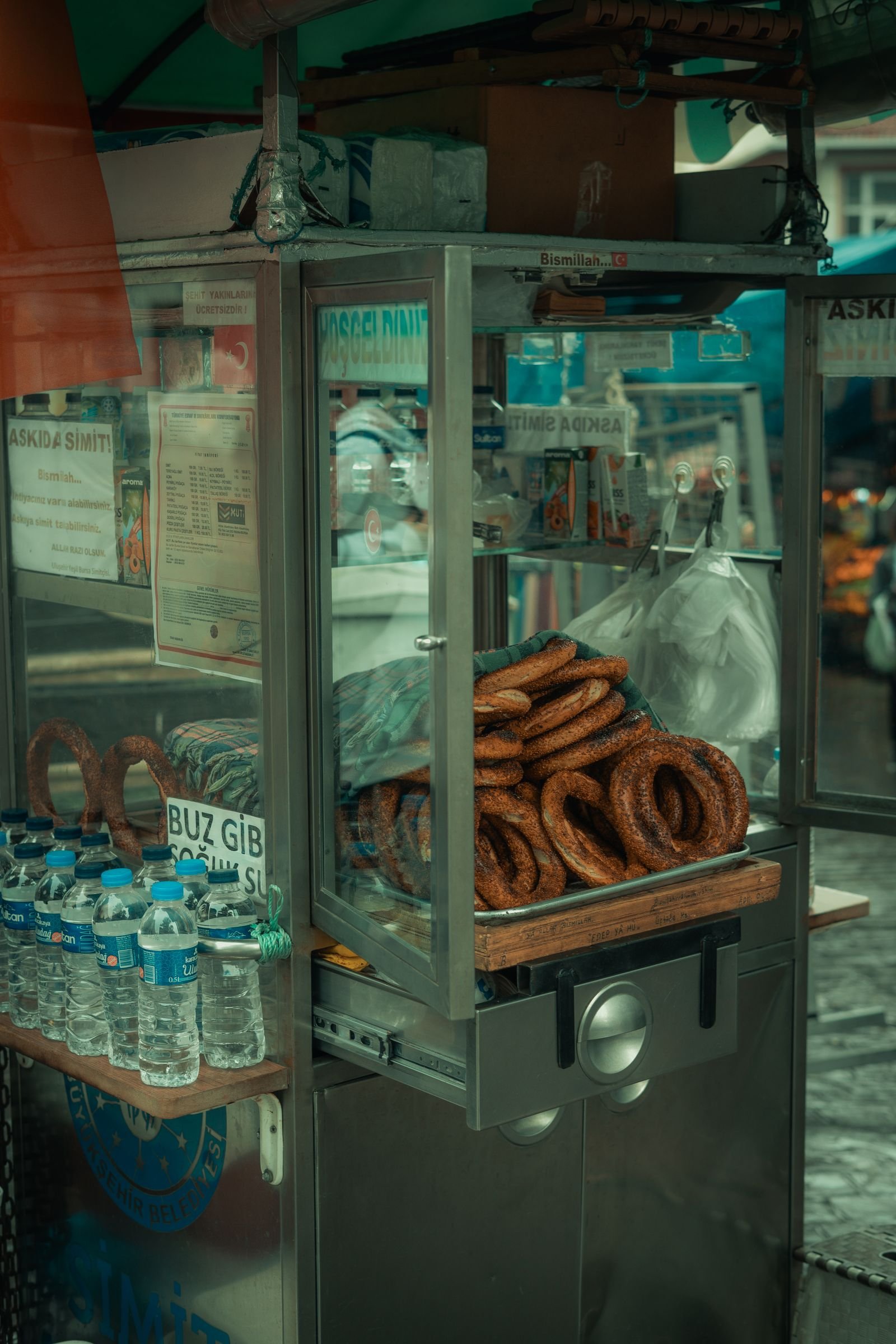
A quick Turkish breakfast: simit, açma and poğaça
If you do not want a two-hour sit-down, do what locals do on a weekday. Buy a simit from a street cart or bakery: a crisp, sesame-covered ring that costs ₺30 in Istanbul. Açma is a soft, buttery ring roll, and poğaça is a soft savoury bun, usually filled with cheese or potato. Bakeries (fırın) sell all three, plus börek by the slice. Pair any of them with tea from a stand or a café.
Tea, coffee and breakfast manners
Tea is the breakfast drink. Coffee comes afterwards, which is where the word kahvaltı (“before coffee”) comes from. Tea is served black in a small tulip glass, with sugar on the side. Milk is not part of the ritual, so if you want it, ask.

There is no fixed refill rule, so ask. Some venues price tea per glass, others per pot, and a few include it in the serpme price. Tear the bread and use it to scoop up menemen and dips; it is how everyone does it.
Vegetarian, vegan and halal
Vegetarians do well, because cheese, eggs, olives, vegetables, honey and bread are the core of the meal. Menemen, sahanda yumurta, çılbır and kuymak are all vegetarian. Avoid sucuklu yumurta, pastırma and kavurma, which are meat. Vegans have a harder time: stick to olives, tomatoes, cucumber, jam, tahini and pekmez, simit and olive-oil dishes.
The breakfast meats, sucuk and pastırma, are usually beef, and pork is not expected on a Turkish breakfast table. If halal certification matters to you, ask the venue about a specific product.
Turkish breakfast vs a full English
| Turkish breakfast | Full English | |
|---|---|---|
| Style | Shared small plates, mostly cold | One hot plate each |
| Meat | Sucuk, pastırma (beef) | Bacon and pork sausage |
| Drink | Black tea, coffee later | Tea with milk or coffee |
If you stay in a hotel, the included buffet is convenient and often has a decent Turkish selection, but it will not show you menemen cooked to order or a regional dish like kuymak. Mix it up: use the buffet on busy sightseeing mornings and go to a local kahvaltı place at the weekend.
Frequently asked questions
What is a typical Turkish breakfast?
Cheese, olives, tomatoes, cucumber, eggs, honey, kaymak, jam, bread and tea, eaten as a shared spread. On weekdays it is often just simit and tea.
What is serpme kahvaltı?
A spread of many small plates brought to the table at once, priced per person. It is usually enough for a very long breakfast.
How much is breakfast in Turkey?
A simit and tea costs about £1 to £1.50 in Istanbul, a market-street breakfast roughly £4 to £7.50, and a full serpme about £7.50 to £22 per person depending on the city.
Is Turkish breakfast halal?
In practice, yes. The sausage and cured meat are usually beef, and pork is not expected at a Turkish breakfast table.
Keep planning
- 16 Turkish dishes to try on your trip
- Turkish desserts guide
- 3 days in Istanbul itinerary
- Turkey travel costs for 2027
- Tipping in Turkey
- Things to do in Gaziantep
- Things to do in Trabzon
Prices and opening details checked in November 2026. Confirm on the official page before you go.
0 Comment