Born: 7 June 1952, Istanbul.
Known for: the 2006 Nobel Prize in Literature; My Name Is Red, Snow and Istanbul: Memories and the City.
Start with: Istanbul: Memories and the City (tr. Maureen Freely).
Where to visit: the Museum of Innocence in Çukurcuma, Beyoğlu, and the Nişantaşı and Bosphorus neighbourhoods of his books.
Orhan Pamuk is the Turkish writer most UK readers have heard of, and the only Turk to have won the Nobel Prize in Literature. Almost everything he writes comes back to Istanbul: its old wooden mansions, its ferries, its fading Ottoman grandeur and the melancholy he calls hüzün. Read him before you go and the city will feel strangely familiar when you arrive.
This page sits under our guide to famous Turkish writers and novelists. Here we look at his life, his main books in English, the legal case that made headlines in 2005 and the places in Istanbul where you can step into his work.
Life: a writer of one city
Pamuk was born into a wealthy, westernised family in Nişantaşı, on the European side of Istanbul. He studied architecture at Istanbul Technical University for three years, then left to write, later graduating in journalism from Istanbul University. He has said he spent much of his twenties at home, writing novels in the family apartment block that appears, lightly disguised, in several books.
His first novel, Cevdet Bey and His Sons (1982), was a family saga. International attention came with The White Castle (1985), and by the late 1990s he was one of the most translated living novelists. He has taught at Columbia University in New York for many years while keeping Istanbul as his home and his subject.
In 2005 Pamuk was charged under Article 301 of the Turkish penal code, which concerns “insulting Turkishness”, over remarks in a Swiss newspaper interview about the deaths of Armenians and Kurds. The case drew wide international attention and was dropped in January 2006.
The books: where to begin in English
Pamuk’s novels range from Ottoman murder mysteries to modern political thrillers. Most have been translated into English by three translators: Maureen Freely, Erdağ Göknar and, for the later novels, Ekin Oklap.
- Istanbul: Memories and the City (2003; tr. Maureen Freely, 2005). A memoir of his childhood and youth, illustrated with black-and-white photographs. The best introduction, and the one to read before a first trip.
- My Name Is Red (1998; tr. Erdağ Göknar, 2001). A murder among the miniature painters of the sultan’s workshop in 1591, told by many narrators, including a coin and the colour red. It won the International IMPAC Dublin Literary Award in 2003.
- Snow (2002; tr. Maureen Freely, 2004). A poet arrives in snowbound Kars, in the far east of Turkey, during a local election. His most overtly political novel.
- The Museum of Innocence (2008; tr. Maureen Freely, 2009). A wealthy man’s obsessive love for a poorer relative in 1970s Istanbul, and the objects he collects in her memory.
- A Strangeness in My Mind (2014; tr. Ekin Oklap, 2015). Four decades in the life of a street vendor selling boza, the fermented winter drink, as the city explodes in size.
- Nights of Plague (2021; tr. Ekin Oklap, 2022). An epidemic on an imaginary Ottoman island in 1901.
Other titles include The Black Book, The New Life, The Red-Haired Woman and the essay collection Other Colours.
Awards and legacy
The Swedish Academy awarded Pamuk the Nobel Prize in 2006, praising the way his search for the sad soul of his home city had produced fresh images of cultures colliding and mixing (see the Nobel Prize page). Before that he had won the Peace Prize of the German Book Trade (2005) and the Prix Médicis étranger for Snow.
His recurring themes are East and West, memory, collecting, guilt and the private lives of Istanbul families. He also paints and takes photographs, and has published books of his own Istanbul pictures, among them Balkon and Orange.
Pamuk’s Istanbul: where to go
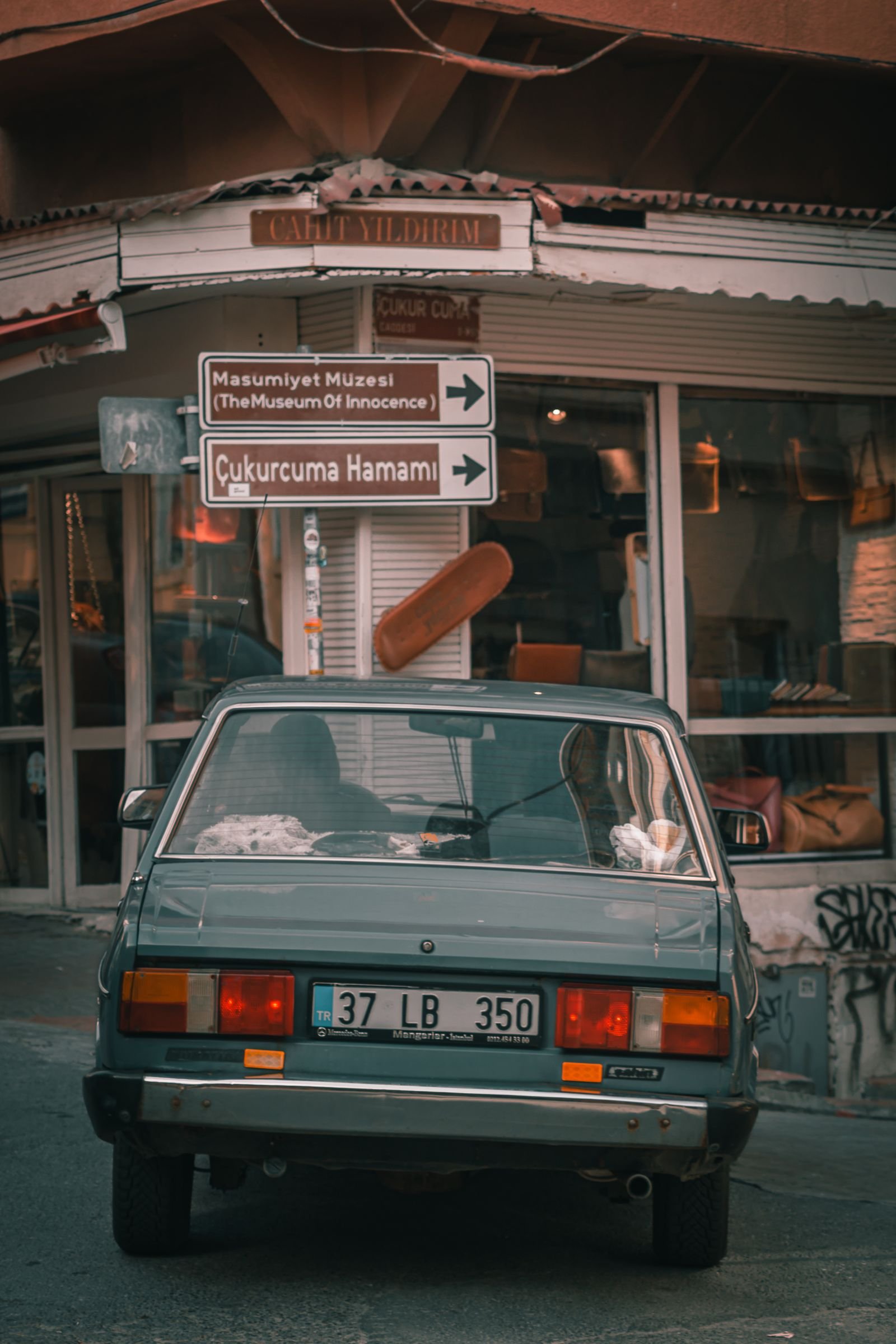
The Museum of Innocence, Çukurcuma. Pamuk built a real museum to go with his novel, in a narrow 19th-century house in Çukurcuma, below İstiklal Caddesi. It opened in spring 2012 and was named European Museum of the Year in 2014. Each cabinet matches a chapter of the book, and there is a wall of 4,213 cigarette ends. Bring your copy of the novel: the ticket printed in it is stamped at the desk. For hours and prices, see the museum’s own website (closed Mondays).
Nişantaşı. The smart shopping district where he grew up and still lives. Walk Teşvikiye Caddesi and Abdi İpekçi Caddesi, then sit in a café with Istanbul or The Museum of Innocence.
The Bosphorus. Pamuk writes lovingly about the yalı mansions and ferry crossings. A public ferry from Eminönü up the Bosphorus is the cheapest way to see what he describes. Our guide to things to do in Istanbul covers the routes.
Sultanahmet and the old city. For My Name Is Red, visit Topkapı Palace, where Ottoman miniatures and manuscripts are displayed, and the Museum of Turkish and Islamic Arts on the Hippodrome.

Watch and read next
Netflix released a nine-part Turkish series of The Museum of Innocence on 13 February 2026, directed by Zeynep Günay, with Selahattin Paşalı as Kemal and Eylül Lize Kandemir as Füsun. Grant Gee’s documentary Innocence of Memories (2015) is a slower, dreamier film built around the museum and the city.
Video: Writer Orhan Pamuk: The Texture of Istanbul by Louisiana Channel (October 2024, in English). Watch on YouTube.
If you enjoy Pamuk, try Ahmet Hamdi Tanpınar, whose Bosphorus novels he admires, and Sait Faik Abasıyanık for Istanbul’s waterfront in short-story form. For a different Istanbul, read Elif Shafak or the crime novels of Ahmet Ümit. Britannica’s biography gives a concise overview of his career.
Frequently asked questions
Which Orhan Pamuk book should I read first?
Istanbul: Memories and the City. It is non-fiction, beautifully illustrated and explains the mood of all his novels. Move on to My Name Is Red if you like historical mysteries, or Snow for modern Turkey.
Do I need to read The Museum of Innocence before visiting the museum?
No, but it helps. The museum makes sense on its own as a portrait of 1970s Istanbul, and the novel’s ticket gets stamped if you bring it.
Does Orhan Pamuk write in English?
No. He writes in Turkish, and his books reach English readers through translators, chiefly Maureen Freely, Erdağ Göknar and Ekin Oklap.
Related reading
- Famous Turkish writers and novelists
- Elif Shafak: books, life and Istanbul
- Ahmet Hamdi Tanpınar
- Sait Faik Abasıyanık
- Ahmet Ümit
- Things to do in Istanbul
- Topkapı Palace guide
- Istanbul souvenirs
Opening details checked in November 2026. Confirm on the official page before you go.