Turkish novels are one of the best ways into the country before you land. They explain the Istanbul neighbourhoods you will walk through, the villages you will drive past and the jokes you will not quite get at dinner. Most of the big names are now well translated and easy to buy in the UK and Ireland.
Here are 12 Turkish writers with dates, why they matter, the best book to start with in English and a place in Turkey to visit. For poets, including Nazım Hikmet, see our separate guide to famous Turkish poets.
Read before you go: the shortlist
| Book | Author and translator | Read it before |
|---|---|---|
| Istanbul: Memories and the City | Orhan Pamuk, tr. Maureen Freely | Any Istanbul trip |
| The Museum of Innocence | Orhan Pamuk, tr. Maureen Freely | Visiting Çukurcuma and Nişantaşı |
| Madonna in a Fur Coat | Sabahattin Ali, tr. Maureen Freely and Alexander Dawe | A short flight: it is a slim novel |
| Memed, My Hawk | Yaşar Kemal, tr. Edouard Roditi | Adana and the south coast |
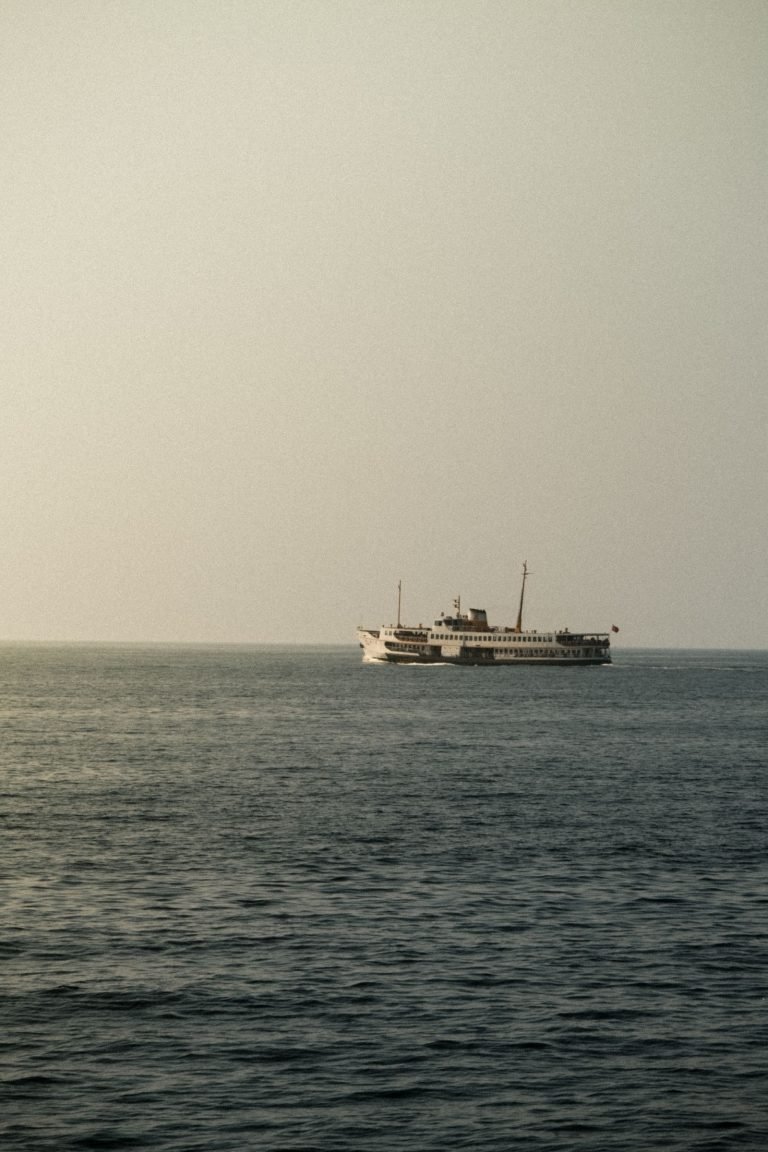
| A Mind at Peace | Ahmet Hamdi Tanpınar, tr. Erdağ Göknar | A Bosphorus ferry ride |
| A Useless Man | Sait Faik Abasıyanık, tr. Maureen Freely and Alexander Dawe | A day on the Princes’ Islands |
| The Bastard of Istanbul | Elif Shafak (written in English) | Beyoğlu and family life |
| A Memento for Istanbul | Ahmet Ümit, tr. Rakesh Jobanputra | Sultanahmet’s monuments |
The Istanbul novelists
1. Orhan Pamuk, born 1952
Pamuk is the best-known Turkish writer abroad and the only Turk to win the Nobel Prize in Literature, in 2006. The Nobel citation singled out his writing on the sadness of his home city and on how cultures meet and mix. In 2005 he was charged under Article 301 of the Turkish penal code over remarks in a Swiss newspaper interview about the deaths of Armenians and Kurds; the case was dropped in January 2006.
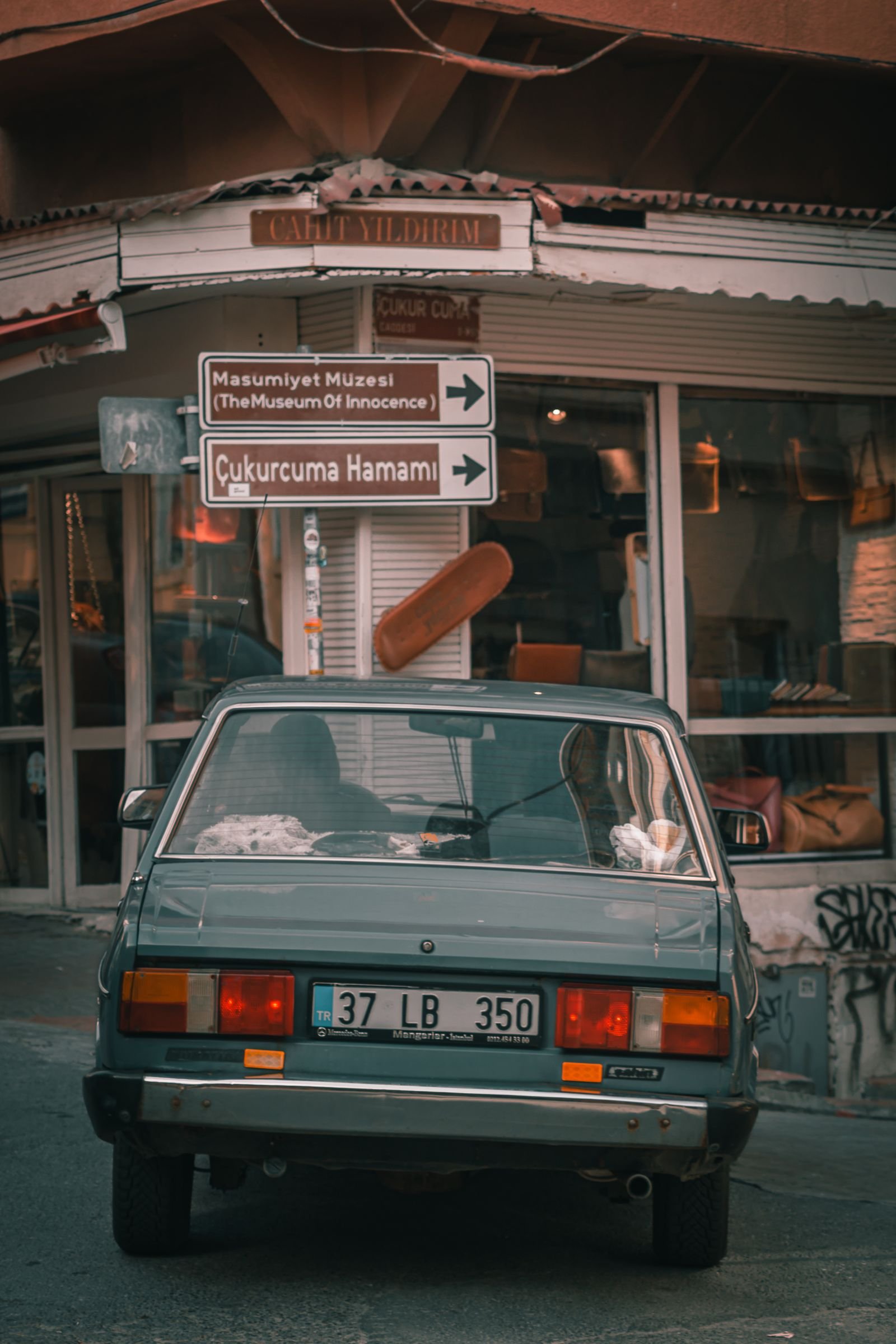
Start with: Istanbul: Memories and the City (tr. Maureen Freely), then My Name Is Red (tr. Erdağ Göknar), a murder mystery among Ottoman miniaturists. Snow is set in Kars in the far east. Visit: the Museum of Innocence, which he created to go with his 2008 novel; it opened in spring 2012 (details below).
2. Elif Shafak, born 1971
Born in Strasbourg and now based in London, Shafak writes in both English and Turkish and is one of the most widely read women novelists in Turkey. Her books mix family sagas, Istanbul history and Sufi ideas. In 2006 she was tried under Article 301 over words spoken by characters in The Bastard of Istanbul and was acquitted. 10 Minutes 38 Seconds in This Strange World was shortlisted for the Booker Prize in 2019.
Start with: The Bastard of Istanbul, or 10 Minutes 38 Seconds in This Strange World for a darker Istanbul. Visit: Beyoğlu and the backstreets around İstiklal Caddesi, where her Istanbul feels most alive.
3. Ahmet Hamdi Tanpınar, 1901 to 1962
Tanpınar was a poet, professor and novelist who wrote about Turkey caught between the Ottoman past and a modern republic. Huzur (1949) is a love story set on the Bosphorus on the eve of the Second World War. The Time Regulation Institute is a very funny satire of bureaucracy and modernisation.
Start with: A Mind at Peace (tr. Erdağ Göknar, Archipelago) or The Time Regulation Institute (tr. Maureen Freely and Alexander Dawe, Penguin Classics). Visit: the Ahmet Hamdi Tanpınar Literature Museum Library, opened in 2011 by the Ministry of Culture in the Alay Köşkü pavilion on the wall of Gülhane Park, a few minutes from Topkapı Palace. He is buried in Aşiyan Cemetery above the Bosphorus.
4. Sait Faik Abasıyanık, 1906 to 1954
Sait Faik changed the Turkish short story. Instead of plots and morals he wrote about fishermen, waiters, Greek and Armenian neighbours and lonely men on the Istanbul waterfront, in a loose, personal voice. A leading Turkish short story prize is named after him.
Start with: A Useless Man: Selected Stories (tr. Maureen Freely and Alexander Dawe, Archipelago). Visit: his house on Burgazada in the Princes’ Islands. He gave it to the Darüşşafaka Association, which opened it as a museum in 1959; after restoration it reopened in 2013. Check opening days before you take the ferry. Our day trips from Istanbul guide covers the islands.

5. Ahmet Ümit, born 1960
One of Turkey’s best-selling crime writers, Ümit uses detective plots to walk readers through Istanbul’s layers of history. In A Memento for Istanbul a body is found by a monument in the old city, and the killings that follow are tied to the city’s ancient rulers and landmarks.
Start with: A Memento for Istanbul (tr. Rakesh Jobanputra). Visit: Sultanahmet, with the novel in hand, after you have seen Hagia Sophia.
Anatolia, war and the village
6. Yaşar Kemal, 1923 to 2015
Born in Hemite (now Gökçedam) in the south, Yaşar Kemal was for decades Turkey’s best-known writer abroad. İnce Memed (1955) follows a village boy who becomes a bandit to fight a cruel landlord, against the cotton fields and mountains of the Çukurova. It reads like a western.
Start with: Memed, My Hawk (tr. Edouard Roditi). Visit: the Çukurova plain around Adana and the Taurus foothills to the north, a long but rewarding drive inland from the Mediterranean resorts.
7. Halide Edib Adıvar, 1883 to 1964
Novelist, nationalist and one of the first prominent Turkish feminists, Halide Edib addressed a huge protest meeting in Sultanahmet in 1919 and then served with the nationalist forces in the War of Independence. She wrote several books in English, including two volumes of memoirs (1926), The Turkish Ordeal (1928) and the novel The Clown and His Daughter (1935), later published in Turkish as Sinekli Bakkal. Our guide to how the Republic was founded gives the background.
Start with: The Clown and His Daughter, written in English, so no translator is needed. Visit: Sultanahmet Square, scene of the 1919 meeting.
8. Reşat Nuri Güntekin, 1889 to 1956
A teacher, schools inspector, MP and later Turkey’s delegate to UNESCO, who died in London, Reşat Nuri wrote Çalıkuşu (The Wren, 1922), the story of a young Istanbul woman who goes to teach in the provinces. Generations of Turks have read it at school and watched it on screen.
Start with: Çalıkuşu: The Wren, a complete English edition of 2018 that uses Sir Wyndham Deedes’s 1949 translation with the missing final part translated by Tugrul Zure. Visit: no single site; it is the ideal book for a long train or coach ride across Anatolia.
9. Orhan Kemal, 1914 to 1970
Orhan Kemal wrote about cotton pickers, factory workers and the urban poor of Adana and Istanbul. As a young man he was in Bursa prison at the same time as Nazım Hikmet, who encouraged him to write.
Start with: In Jail with Nazım Hikmet (tr. Bengisu Rona, Saqi), a short memoir of that friendship. Visit: Bursa, the first Ottoman capital, where you can read both writers in the city where they met.
Satire and the modern novel
10. Aziz Nesin, 1915 to 1995
Nesin was Turkey’s great satirist, the author of a vast number of comic stories about bureaucrats, police, politicians and ordinary people getting by. In 1972 he set up the Nesin Foundation in Çatalca, which houses and educates children from poor families.
Start with: Istanbul Boy, his memoir of childhood (tr. Joseph S. Jacobson). Visit: Heybeliada in the Princes’ Islands, where he was born.
11. Sabahattin Ali, 1907 to 1948
Sabahattin Ali was a short story writer and novelist who was jailed more than once for his writing and was killed in 1948 near the Bulgarian border. His short novel Kürk Mantolu Madonna (1943), a love story set mainly in 1920s Berlin, became one of the best-selling books in Turkey decades after his death.
Start with: Madonna in a Fur Coat (tr. Maureen Freely and Alexander Dawe, Penguin Modern Classics). Visit: the historic prison in Sinop on the Black Sea, reopened as a museum in 2025, where he wrote the poem “Aldırma Gönül” (Never Mind, My Heart).
12. Oğuz Atay, 1934 to 1977
Atay’s huge, playful, experimental novel Tutunamayanlar (1972) was barely noticed in his lifetime and is now a cult classic, especially among students. It follows misfits who cannot fit into respectable life, told through diaries, parodies and jokes.
Start with: The Disconnected (tr. Sevin Seydi, Olric Press, 2017). Visit: any Istanbul bookshop, where you will see the Turkish edition on the front table.
Watch: Orhan Pamuk on the Museum of Innocence
Video: Nobel Prize-winner Orhan Pamuk on why museum are like novels by Louisiana Channel (May 2026, in English). Watch on YouTube.
Visiting the Museum of Innocence
The museum fills a tall, narrow house in Çukurcuma with the objects of the novel’s love story, including a wall of 4,213 cigarette ends. You do not need to have read the book, but it helps. These details are from the museum’s official visitor page, checked on 10 November 2026:
- Hours: Tuesday to Sunday, 10:00 to 18:00, last entry 17:30. Closed on Mondays, on 1 January, 1 May and the first day of each religious holiday.
- Tickets: ₺800 (about £12) for foreign visitors. An audio guide is ₺50 (about 75p). Children under 12 go free.
- The novel’s ticket: bring your copy of the book. The invitation printed in its final chapter, in any language or edition, is stamped at the desk.
- Getting there: about eight minutes’ walk uphill from the Tophane tram stop, or from Galatasaray on İstiklal Caddesi. The ground floor is wheelchair accessible; the upper floors need help.
Istanbul bookshops and literary sights
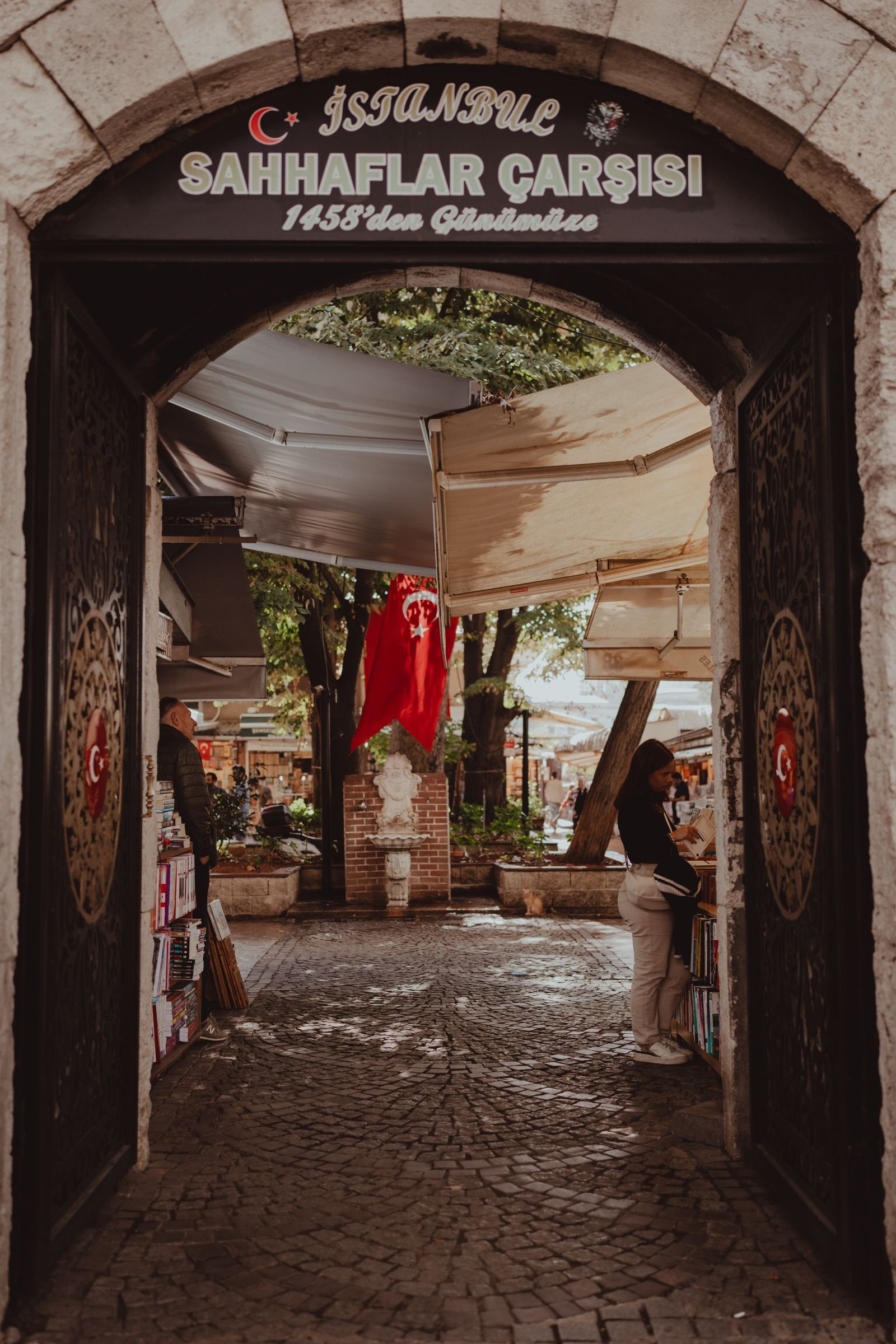
- Sahaflar Çarşısı: the old book bazaar in a shady courtyard between the Grand Bazaar and Beyazıt Mosque. Stalls sell second-hand books, old prints, calligraphy and Ottoman documents. English titles are limited, but it is a peaceful break from the bazaar.
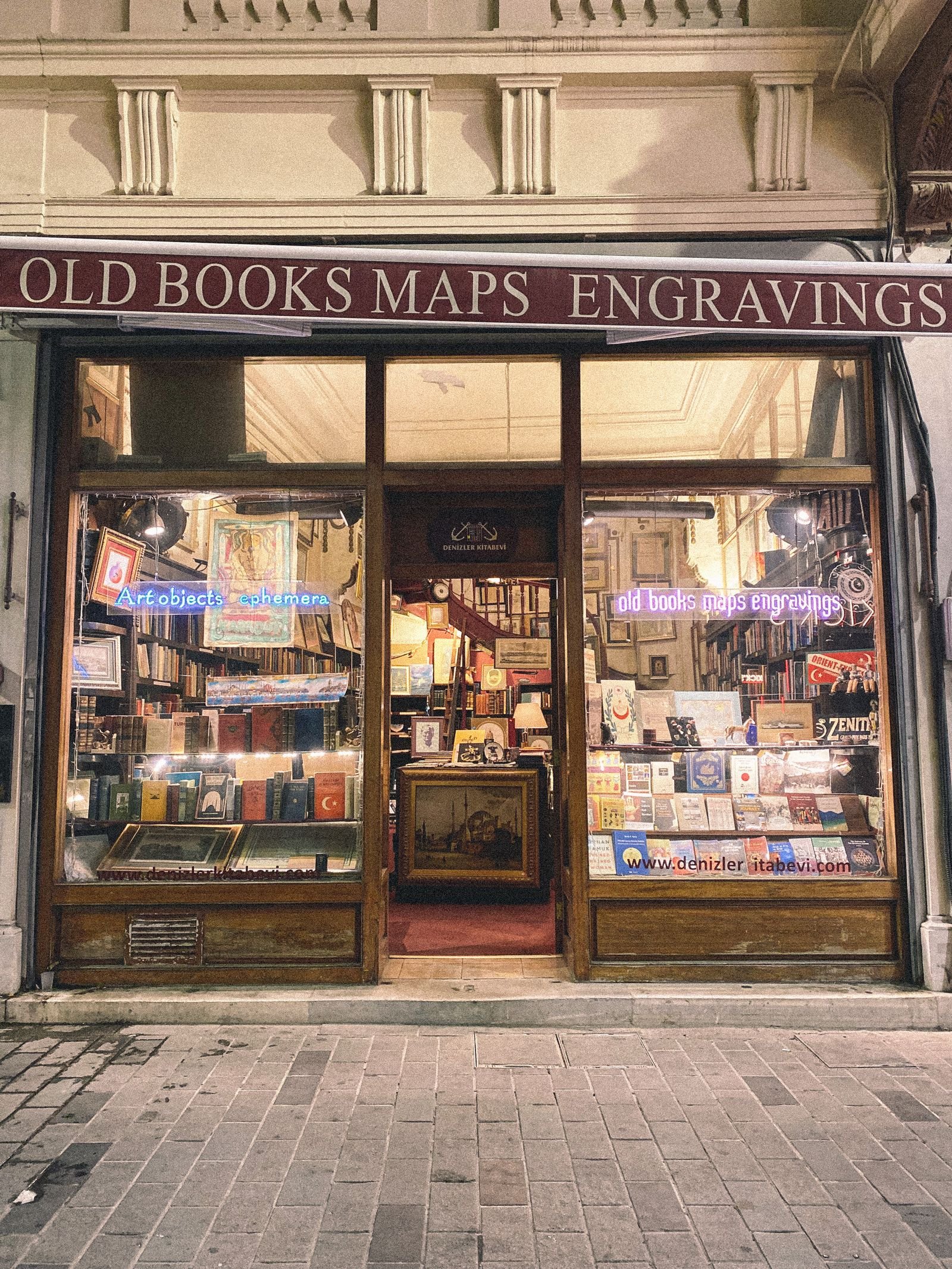
- Beyoğlu and Pera: İstiklal Caddesi and the streets down to Tünel have the city’s biggest bookshops, several with English shelves. Walk on to Çukurcuma for the Museum of Innocence and its antique shops.
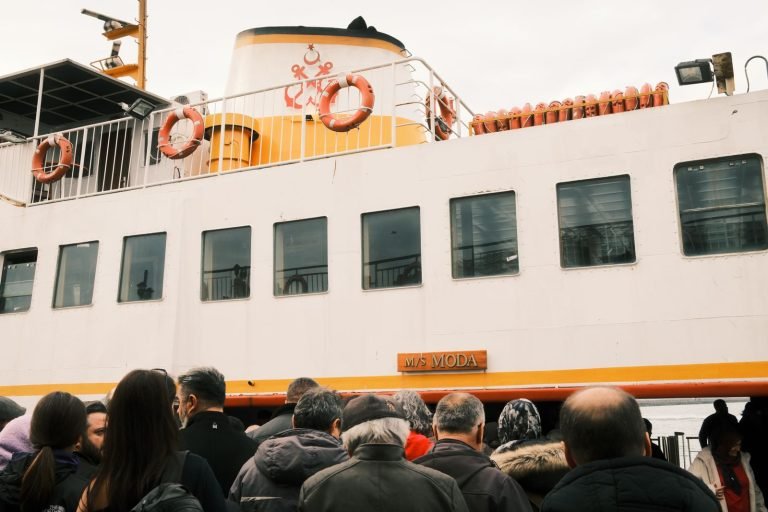
- Moda and Kadıköy: take the ferry to the Asian side for second-hand bookshops, cafés and the waterfront at Moda.
- Gülhane Park: the Tanpınar Literature Museum Library sits on the park wall near Sultanahmet.
- Burgazada: Sait Faik’s house, a short ferry ride from the city.
Translated Turkish fiction, Pamuk’s books and Ottoman-themed prints also make good presents; see our list of Istanbul souvenirs.
Frequently asked questions
Who is the most famous Turkish writer?
Orhan Pamuk, who won the Nobel Prize in Literature in 2006. Inside Turkey, Yaşar Kemal, Sabahattin Ali and the poet Nazım Hikmet are equally loved.
Which Turkish novel should I read before visiting Istanbul?
Pamuk’s Istanbul: Memories and the City for the atmosphere, and Tanpınar’s A Mind at Peace for the Bosphorus.
Is the Museum of Innocence worth it?
Yes, if you like small, personal museums. Allow about an hour, and combine it with Çukurcuma’s antique shops.
Can I buy English books in Istanbul?
Yes, in the larger bookshops of Beyoğlu and Kadıköy. Choice is better in the UK, so buy before you go if you have a title in mind.
Keep planning
- Famous Turkish poets
- Famous Turkish singers and musicians
- The Ottoman Empire: a traveller’s history
- Atatürk: life, legacy and where to see his story
- Things to do in Istanbul
- Day trips from Istanbul, including the Princes’ Islands
- Istanbul souvenirs
- Grand Bazaar guide
Prices and opening details checked in November 2026. Confirm on the official page before you go.