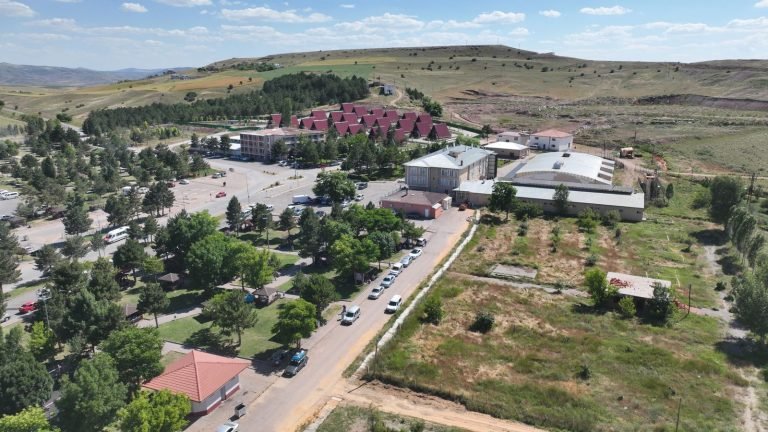
Dates: 1923 (probably 6 October), Hemite, now Gökçedam in Osmaniye province, to 28 February 2015, Istanbul.
Known for: Memed, My Hawk (İnce Memed, 1955) and epic novels of the Çukurova plain.
Start with: Memed, My Hawk (tr. Edouard Roditi).
Where to visit: the Çukurova around Adana and Kadirli, and the Taurus foothills to the north.
For half a century Yaşar Kemal was the Turkish novelist the world knew best. His books are big, generous and full of weather: cotton fields burning under the summer sun, nomads moving their flocks up to the mountain pastures, landlords, bandits and village storytellers. If you are heading to the south coast, his novels are the best way to understand the farmland and mountains you will see from the road.
This page belongs to our guide to famous Turkish writers and novelists. It covers his life, his main books in English, the screen versions and where to find his landscape in Turkey.
Life: from cotton picker to world author
Yaşar Kemal was born Kemal Sadık Gökçeli in the village of Hemite on the edge of the Çukurova, the great alluvial plain around Adana. His family were Kurds who had settled in the area, and his exact birth date is uncertain; 1923 is the year usually given. He lost the sight of one eye in a childhood accident, and as a small boy he saw his father killed in a mosque.
He left secondary school early and worked as a cotton picker, farm labourer, clerk and public letter writer, collecting the ballads and laments of the region as he went. His first book, Ağıtlar (1943), was a collection of folk laments. In 1951 he joined the Istanbul newspaper Cumhuriyet, where his reports from the countryside made his name and where he adopted the pen name Yaşar Kemal.
He was politically active on the left throughout his life and was arrested several times. In 1996 he received a suspended sentence over an article on the treatment of Kurds in Turkey. He died in Istanbul in 2015 and is buried in Zincirlikuyu Cemetery.

The books: what to read in English
Much of his work reached English through his first wife, Thilda Kemal, who translated many of his novels.
- Memed, My Hawk (İnce Memed, 1955; tr. Edouard Roditi, 1961). A thin, hungry village boy is driven by a cruel landlord to become an outlaw in the Taurus mountains. It reads like an adventure story and a western, and is the place to start.
- They Burn the Thistles (İnce Memed II, 1969; tr. Margaret E. Platon). Memed’s story continues.
- The Wind from the Plain trilogy: The Wind from the Plain, Iron Earth, Copper Sky and The Undying Grass (tr. Thilda Kemal). Villagers walk down from the mountains each year to pick cotton on the plain, and myth grows around a debt-collecting agha.
- The Sea-Crossed Fisherman (tr. Thilda Kemal). A change of scene to the shores of the Sea of Marmara and Istanbul.
- Salman the Solitary (tr. Thilda Kemal). A Kurdish family flees war in the east after the First World War and settles on the Çukurova.
Themes, awards and legacy
Yaşar Kemal wrote about land and power: who owns the fields, who works them, and what happens when the old village order meets machines and money. He drew on the oral epic tradition of Anatolia, and his novels often feel like sung stories. Animals, plants and the seasons are as alive as the people.
He won many international prizes, among them the Prix mondial Cino Del Duca (1982) and the Peace Prize of the German Book Trade (1997), and was made a Commandeur and later a Grand Officier of France’s Légion d’honneur. He was nominated for the Nobel Prize in Literature. Britannica’s biography summarises his life and work.
Yaşar Kemal’s country: where to go
The Çukurova plain. The flat, fertile land around Adana, Ceyhan, Osmaniye and Kadirli is the setting of most of his novels. Cotton is still grown here, and in late summer you will see the white fields from the motorway. It is a long day’s drive east of the main Mediterranean resorts.
Adana. The region’s big city has a lively food scene (it gave its name to the Adana kebab) and the Roman stone bridge, Taşköprü, over the Seyhan river. It is a good base for exploring the plain.
The Taurus foothills. North of the plain the land rises into the mountains where Memed hides. Kozan, with its castle on a crag, and the ancient city of Anazarbus (Anavarza) near Kadirli give you the views. Hire a car: public transport is patchy.
If you are combining the south with other parts of the country, our guide to the best time to visit Turkey will help: the Çukurova is very hot in July and August.

Screen versions and further reading
Peter Ustinov directed and starred in an English-language film of Memed, My Hawk in 1984. Turkish cinema adapted several of his books, including Yılanı Öldürseler (1981), and an opera based on his novella Teneke premiered at La Scala in Milan in 2007.
Video: Turkish writer Zülfü Livaneli on poet Yaşar Kemal: “He was my best friend for 44 years.” by Louisiana Channel (March 2026, in English). Watch on YouTube.
For more stories of rural and working-class Turkey, read Orhan Kemal, who also wrote about the Adana cotton fields, and the satirist Aziz Nesin. For the Anatolian folk tradition he loved, see Karacaoğlan, the folk poet of the same southern mountains, and Âşık Veysel.
Frequently asked questions
Which Yaşar Kemal book should I read first?
Memed, My Hawk. It is his most famous novel, the easiest to find in the UK and Ireland, and a gripping story in its own right.
Where is the Çukurova?
It is the wide plain around Adana in southern Turkey, between the Taurus mountains and the Mediterranean, a long drive east of the Antalya and Alanya resorts: allow most of a day.
Was Yaşar Kemal Kurdish?
Yes, he was of Kurdish descent, though he wrote in Turkish and is regarded as one of the great figures of Turkish literature.
Related reading
- Famous Turkish writers and novelists
- Orhan Kemal
- Aziz Nesin
- Sabahattin Ali
- Karacaoğlan
- Best time to visit Turkey
- Turkish food to try
- UNESCO sites in Turkey
Details checked in November 2026. Confirm opening times on the official page before you go.