Dates: c. 1681 to 1730, Istanbul
Known for: the poet of the Tulip Era; playful songs (şarkı) about Istanbul’s gardens, outings and pleasures
Where to go: Emirgan Park’s tulips in April, the Fountain of Ahmed III at Topkapı, and his grave in Karacaahmet Cemetery, Üsküdar
Nedîm is the most cheerful of the great Ottoman poets. He wrote about picnics by the water, new fashions, pretty faces and gardens full of tulips, and his songs still feel like an invitation to an afternoon out in Istanbul. He is the voice of the Tulip Era, a brief spell of pleasure palaces and garden parties that ended in a revolt in 1730.
This page covers his life, his style, the best English translations and how to find his Istanbul today. It is part of our series on famous Turkish poets.
Life: a scholar in the vizier’s circle
Ahmed Nedîm was probably born in Istanbul in 1681, into a family of judges and scholars; his grandfather had been one of the empire’s chief judges. He learned Arabic and Persian, passed the examinations to teach in the medreses and spent his career as a teacher and minor judge in the city.
His real fortune was his patron, the grand vizier Nevşehirli Damat İbrahim Pasha, who ran the empire for Sultan Ahmed III from 1718. Nedîm wrote poems celebrating the vizier’s building projects, worked as librarian of his private library and sat on the committees he set up to translate Arabic and Persian histories into Turkish. That put him at the centre of the most open, outward-looking court the Ottomans had yet seen.
It ended badly. In September 1730 a revolt led by Patrona Halil overthrew the sultan; İbrahim Pasha was killed and many of the era’s pleasure pavilions were wrecked. Nedîm died the same autumn. The Turkish Religious Foundation’s encyclopaedia notes that the sources disagree: some blame illness or anxiety, others say he fell from a roof while fleeing the rioters.
The Tulip Era
Turkish historians call the years from about 1718 to 1730 the Lâle Devri, the Tulip Era, after the craze for rare tulip bulbs among Istanbul’s elite. It was a time of peace treaties with Europe, the first Ottoman printing press for Turkish books, new fountains and libraries, and garden palaces along the Bosphorus and the Golden Horn. The most famous was Sâdâbâd, a palace and park on the Kağıthane stream, where the court held picnics, boat parties and evening entertainments lit by candles set on the backs of tortoises, or so the stories go.
Poetic style and themes
Nedîm wrote within divan poetry, the classical court tradition, but bent it towards everyday life. Where earlier poets placed their beloved in an ideal garden, Nedîm names real places, Sâdâbâd, Çırağan, the Bosphorus shore, and real pleasures: a boat trip, a new hat, a glass of wine. His Turkish is lighter and closer to the spoken language of the city, and he loved the şarkı, a short song form with a refrain made to be sung. Composers set his poems to music in his own lifetime and long after.
Turks call this light, worldly, witty manner “Nedîmâne”, in the style of Nedîm, and it influenced Istanbul poets and songwriters for two centuries.
Key works
- Dîvân (Collected Poems), his odes, gazels and songs, preserved in about 45 manuscripts.
- “Sâdâbâd” şarkısı (The Sâdâbâd Song), an invitation to an outing at the palace gardens of Kağıthane, and his best-known poem.
- Sahâifü’l-Ahbâr (Pages of Reports), a history he helped to translate into Turkish for İbrahim Pasha’s committee.
Where to find Nedîm in Istanbul
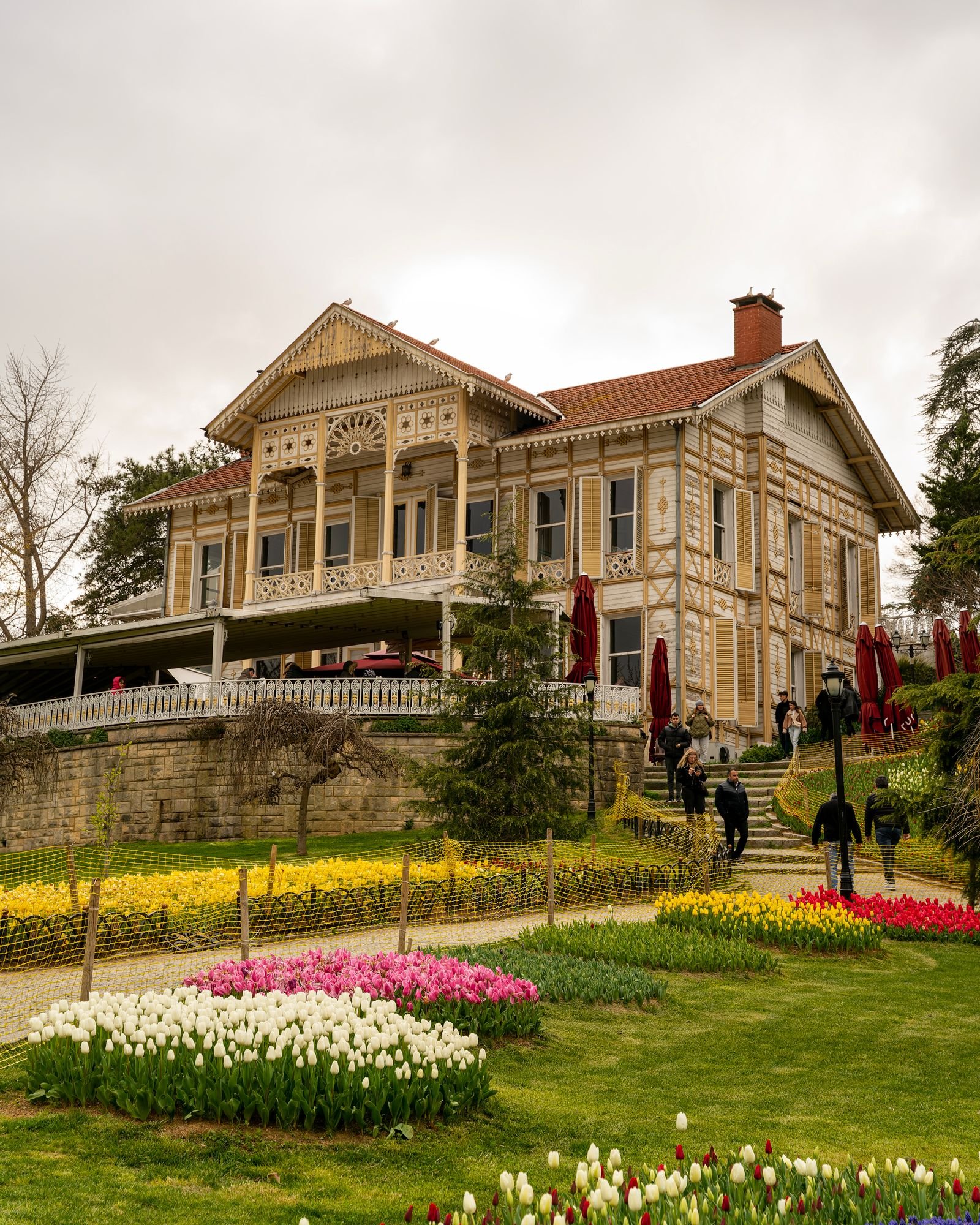
- Emirgan Park. The tulip displays of Istanbul’s annual Tulip Festival are at their best here in April, around three restored Ottoman pavilions including the Sarı Köşk. It is the nearest thing to a Tulip Era garden party you can join today.
- Fountain of Ahmed III. Built in 1728 just outside the Imperial Gate of Topkapı Palace, this richly carved public fountain is the finest surviving monument of the era. Inside the palace, the Library of Ahmed III dates from 1719. See our Topkapı Palace guide.
- Kağıthane. Sâdâbâd itself has gone, but the stream valley at the top of the Golden Horn is where his best-known song is set.
- Karacaahmet Cemetery, Üsküdar. One of Istanbul’s oldest and largest cemeteries, on the Asian side. Nedîm is buried in the section by the old Miskinler lodge. It is a working cemetery, so visit quietly.
A Bosphorus cruise passes many of the shores he wrote about.
Read, watch and listen next
- Ottoman Lyric Poetry: An Anthology (Andrews, Black and Kalpaklı): includes several of Nedîm’s songs with notes.
- Shirine Hamadeh, The City’s Pleasures: Istanbul in the Eighteenth Century: a readable history of the gardens, fountains and outings Nedîm wrote about.
- Listen: search for recordings of classical Turkish songs on his lyrics; many are still part of the art-music repertoire.
Video: Travelling in time to Ottoman Empire’s Tulip era by TRT World (2017, English). Watch on YouTube.
Sources: the TDV İslâm Ansiklopedisi entry on Nedîm (in Turkish) and Britannica on Ahmed III.
Frequently asked questions
What was the Tulip Era?
The years from about 1718 to 1730 under Sultan Ahmed III and his grand vizier İbrahim Pasha, known for garden palaces, new fashions and a craze for tulips. It ended with the Patrona Halil revolt of 1730.
Where is Nedîm buried?
In Karacaahmet Cemetery in Üsküdar, on the Asian side of Istanbul.
When is the best time to see tulips in Istanbul?
April, when the city’s Tulip Festival fills Emirgan Park and other parks. Exact dates change each year with the weather.
Related reading
- Famous Turkish poets: 12 names to know
- Bâkî
- Şeyh Galip
- Orhan Veli Kanık, another poet of Istanbul’s pleasures
- The Ottoman Empire: a traveller’s history
- Best time to visit Istanbul
- Things to do in Istanbul
Prices and opening details checked in November 2026. Confirm on the official page before you go.