Dates: 1526 to 7 April 1600, Istanbul
Known for: the greatest lyric poet of Süleyman the Magnificent’s age, called the “sultan of poets”; his elegy for Süleyman
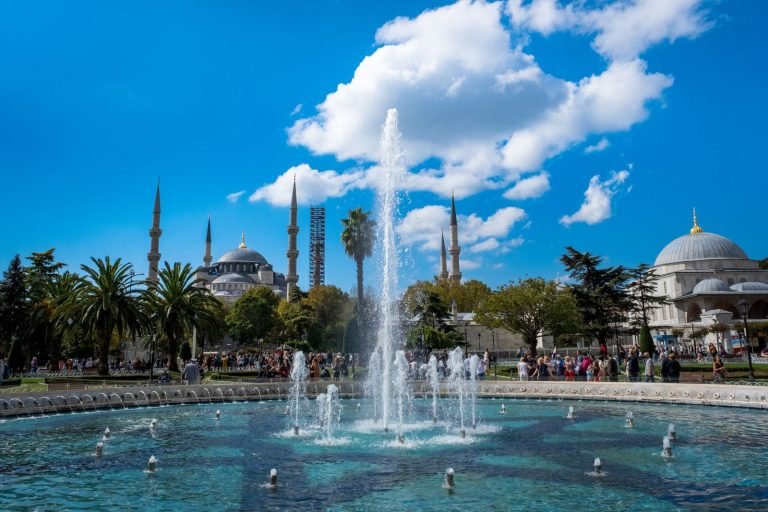
Where to go: the Süleymaniye Mosque, where Süleyman is buried, and the old city of Istanbul he wrote in
Bâkî was the star poet of the Ottoman golden age. He rose through Istanbul’s colleges to the top of the empire’s legal and religious hierarchy, wrote polished love lyrics that were copied across the empire, and composed the elegy for Süleyman the Magnificent that Turks still consider the finest of its kind.
This page covers his life and career, how Ottoman court poetry works, what to read in English and where to stand in Istanbul to picture his world. For other poets, see our guide to famous Turkish poets.

Life: from medrese student to “sultan of poets”
Mahmud Abdülbâkî was born in Istanbul in 1526, six years into Süleyman’s reign. He trained in the medreses, the colleges of Islamic law, and his poems were already admired when an ode he presented to the sultan brought him into Süleyman’s circle. From then on he had the most powerful patron in the empire, and his collected poems (divan) were first put together at Süleyman’s request.
His day job was the law. He taught at leading medreses, including the Süleymaniye, served as judge (kadı) in Mecca and Istanbul, and rose to kazasker, one of the two chief judges of the empire, first for Anatolia in 1586 and then three times for the European provinces. He wanted the very top post, şeyhülislam, and never got it. Bâkî died in Istanbul on 7 April 1600; after prayers at the Fatih Mosque he was buried in the cemetery outside the Edirnekapı gate.
The title “sultânü’ş-şuarâ”, sultan of poets, was given to him in his lifetime and has stuck for more than four centuries.
Poetic style and themes
Bâkî wrote divan poetry, the court poetry of the Ottomans, in a Turkish rich with Persian and Arabic vocabulary and in strict quantitative metres borrowed from Persian. Its favourite form, the gazel, is a short love lyric of rhyming couplets, and its world is a set of conventional images: the rose and the nightingale, the cypress-tall beloved, the cup-bearer, the garden in spring.
Within that tight code Bâkî was a master of sound and wit. Britannica sums up his themes as the shortness of youth and the pleasures of love and wine, and his lines are famous for their music and for an elegance that hides how much work went into them. He is less mystical than the Sufi poets and more worldly, a poet of the city and the court.
Key works
- Dîvân (Collected Poems), his gazels, odes and shorter poems; more than 100 manuscript copies survive.
- Kanûnî Mersiyesi (Elegy for Süleyman the Magnificent), written after the sultan died on campaign at Szigetvár in Hungary in 1566.
Legacy
Bâkî set the standard for Ottoman lyric poetry for the next two centuries, and every later court poet measured himself against him. The elegy for Süleyman is still taught in Turkish schools. It mourns a ruler but also marks the end of an era, and it is often read alongside the buildings of Mimar Sinan as the high point of the classical Ottoman style.
Where to find Bâkî in Istanbul
- Süleymaniye Mosque. Sinan’s masterpiece above the Golden Horn, where Süleyman and his wife Hürrem lie in tombs in the garden. Bâkî taught at the Süleymaniye’s colleges, so this is the place to read his elegy. It is a working mosque: entry is free, it closes to visitors at prayer times, and modest dress is required.
- Fatih Mosque. Where his funeral prayers were said, on the hill above the Golden Horn in the Fatih district.
- Edirnekapı. His grave is in the old cemetery outside this gate in the Land Walls. It is a working cemetery rather than a visitor attraction, but the walls themselves are worth the trip.
- Topkapı Palace. The court he wrote for. Our Topkapı Palace guide covers tickets and timing.
All four fit into a day in the historic peninsula; see things to do in Istanbul for how to plan it.

Read, watch and listen next
- Ottoman Lyric Poetry: An Anthology, translated and edited by Walter G. Andrews, Najaat Black and Mehmet Kalpaklı: the best way into Bâkî in English, with the elegy and several gazels.
- Walter G. Andrews and Mehmet Kalpaklı, The Age of Beloveds (Duke University Press): a lively study of love and poetry in Süleyman’s Istanbul.
- E. J. W. Gibb, A History of Ottoman Poetry: Victorian and dated in style, but still the fullest account in English.
Video: Language, Desire and the Mobility of Ottoman Literary Culture, with Dr Selim Sırrı Kuru, by the British Institute at Ankara (2026, English). A conversation about the Ottoman poetry world Bâkî belonged to. Watch on YouTube.
Sources: Britannica on Bâkî and the TDV İslâm Ansiklopedisi entry (in Turkish).
Frequently asked questions
Why is Bâkî called the sultan of poets?
The title “sultânü’ş-şuarâ” was given to him in Süleyman’s reign, when he was seen as the greatest poet of the age, and it has stayed with him ever since.
Where is Bâkî buried?
In the old cemetery outside the Edirnekapı gate of Istanbul’s Land Walls, after funeral prayers at the Fatih Mosque.
Is Ottoman divan poetry hard to read in English?
It relies on a code of images that translation cannot fully carry, so choose an edition with notes. Ottoman Lyric Poetry: An Anthology explains each poem.
Related reading
- Famous Turkish poets: 12 names to know
- Süleyman the Magnificent
- Mimar Sinan
- Nedîm and the Tulip Era
- Şeyh Galip
- The Ottoman Empire: a traveller’s history
- Blue Mosque visitor guide
Prices and opening details checked in November 2026. Confirm on the official page before you go.