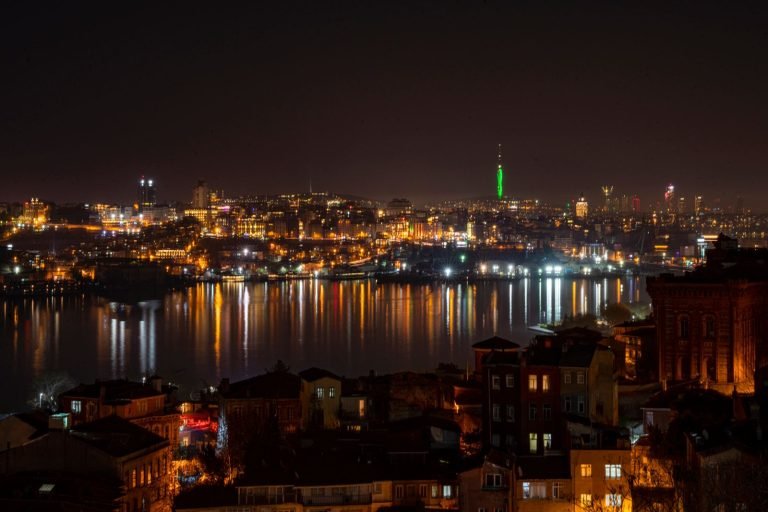
Few places in Turkey mean as much to as many nations as the Gallipoli peninsula. Australians, New Zealanders, Britons, Irish, French, Indians and Turks all lost men here in 1915, and the quiet hills above the Aegean now hold dozens of cemeteries and memorials. This page tells the story in brief and then explains how to visit. For the bigger picture of how the empire fell and the republic was born, see our guide to how the Turkish Republic was founded.
Why the Allies came to the Dardanelles
The Ottoman Empire entered the First World War on Germany’s side in late 1914. Britain and France hoped that forcing the Dardanelles, the narrow strait that leads to the Sea of Marmara and Istanbul, would knock the Ottomans out of the war and open a supply route to Russia.
On 18 March 1915 the decisive naval assault failed: the French battleship Bouvet and the British Irresistible and Ocean sank, and several more were badly damaged, mostly by mines. Many of those mines had been laid on the night of 7 to 8 March by the small Ottoman minelayer Nusret, which laid a line of 26 mines in Erenköy Bay. Turkey marks 18 March as the Çanakkale Naval Victory and Martyrs’ Remembrance Day.
The landings and the long stalemate
With the navy stopped, the Allies switched to a land campaign. On 25 April 1915 the British 29th Division and the Royal Naval Division landed at Cape Helles, at the tip of the peninsula, while the Australian and New Zealand Army Corps came ashore further north at what became Anzac Cove. A French brigade landed briefly at Kum Kale on the Asian shore.
The Allies never reached their first-day objectives. Ottoman troops, among them the 19th Division under Lieutenant Colonel Mustafa Kemal (later Atatürk), held the high ground. A new offensive in August, with landings at Suvla Bay from 6 August and the attack on Chunuk Bair (Conkbayırı), also stalled. Anzac and Suvla were evacuated on the night of 19 to 20 December 1915, and Helles on 8 to 9 January 1916.
Casualty figures are approximate and vary between sources. The Gallipoli Association puts Allied casualties at over 250,000, including more than 58,000 dead, and Ottoman casualties at over 300,000, with more than 87,000 dead.
Many nations, one peninsula
Australia and New Zealand
For Australians and New Zealanders, Gallipoli is a founding story, remembered every 25 April as Anzac Day.
Britain and Ireland
British troops made up the largest share of the Allied force. Irish regiments were in the thick of it: the 1st Royal Dublin Fusiliers and 1st Royal Munster Fusiliers landed at V Beach on 25 April, many from the converted collier River Clyde, under murderous fire. So many were lost that the two battalions were briefly merged, and soldiers called the joint unit the “Dubsters”. In August the 10th (Irish) Division fought at Suvla. Several thousand Irishmen died in the campaign, and many are buried at V Beach or named on the Helles Memorial.
France
About 80,000 French troops served, including colonial soldiers from Senegal and elsewhere in Africa. Their dead lie in the French cemetery at Morto Bay, near Seddülbahir.
India
The 29th Indian Brigade, with Sikh, Punjabi and Gurkha battalions, fought at Helles and in the August offensive alongside the Anzacs, and Indian mountain artillery landed at Anzac Cove on the first day. Indian mule drivers kept the front supplied throughout.
The Ottoman army
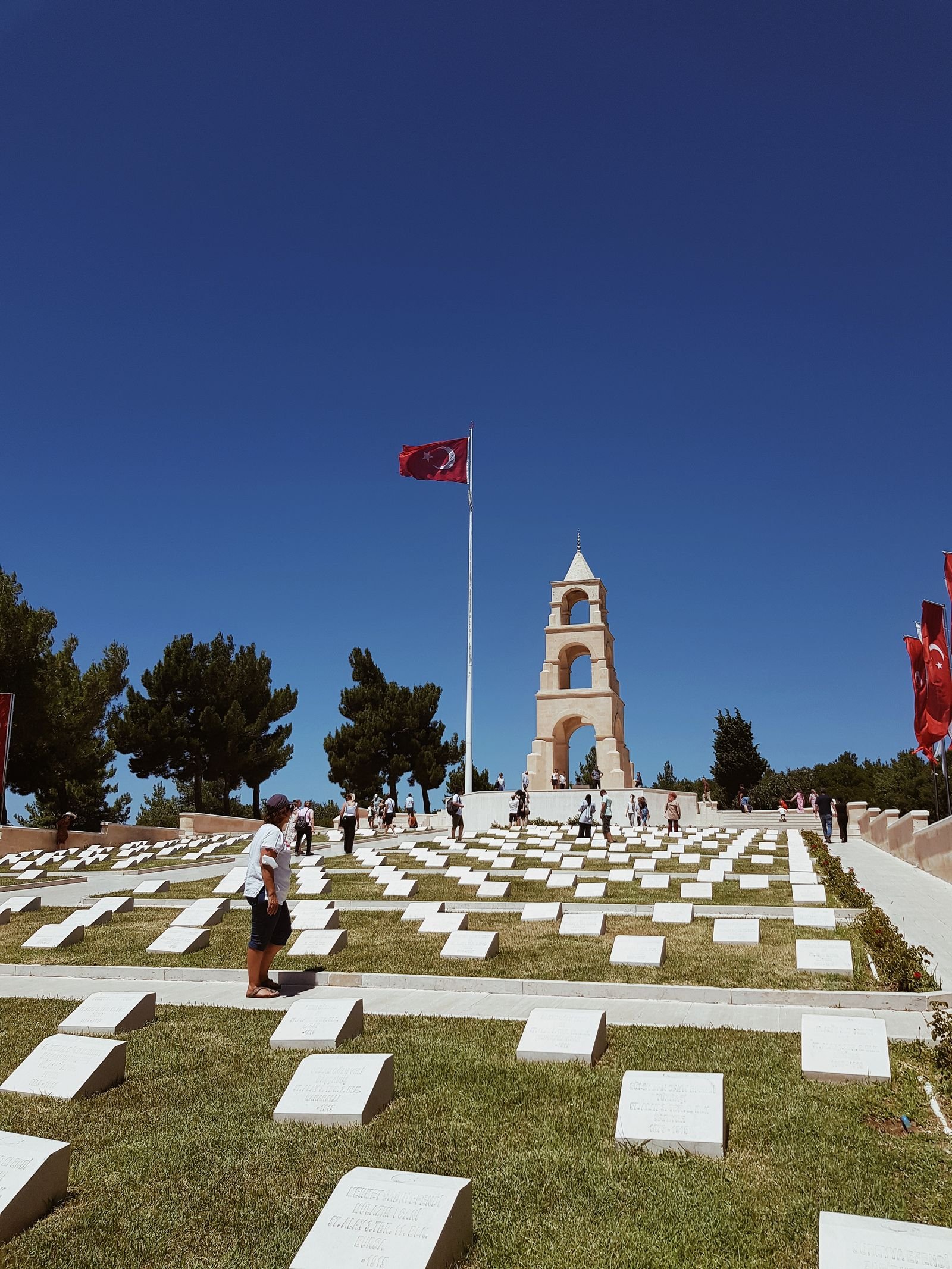
For Turks, Çanakkale is the defence of the homeland at a moment when the empire seemed close to collapse. Few Ottoman graves are individually known, so Turkish memorials often honour whole units, such as the 57th Infantry Regiment, which held the line above Anzac Cove.
Anzac Day and 18 March
The Anzac Day Dawn Service is held on 25 April at the Anzac Commemorative Site on North Beach, followed later that morning by an Australian service at Lone Pine and a New Zealand service at Chunuk Bair. Entry needs a free attendance pass, booked in advance through the official Anzac Day services ticketing site; New Zealand’s Defence Force reminds visitors that registering is essential. Expect a cold overnight wait, security checks and a long walk from the coach parks. Other national ceremonies, including Turkish, British and French services, are held around 24 and 25 April.
On 18 March, Turkey holds its main ceremony at the Çanakkale Martyrs’ Memorial, and the peninsula fills with Turkish visitors. Book accommodation early if you go then.
Visiting the battlefields
The peninsula is the Gallipoli Historic Site, managed by a Turkish state authority. Most memorials and cemeteries are open air and free. The town of Çanakkale, on the Asian shore, is the usual base; ferries run across the strait to Eceabat and Kilitbahir, and Eceabat is a quieter base closer to the sites. Çanakkale is about five hours by road from Istanbul, and our guide to getting to Çanakkale, Troy and Gallipoli covers coaches, flights and the 1915 Çanakkale Bridge.
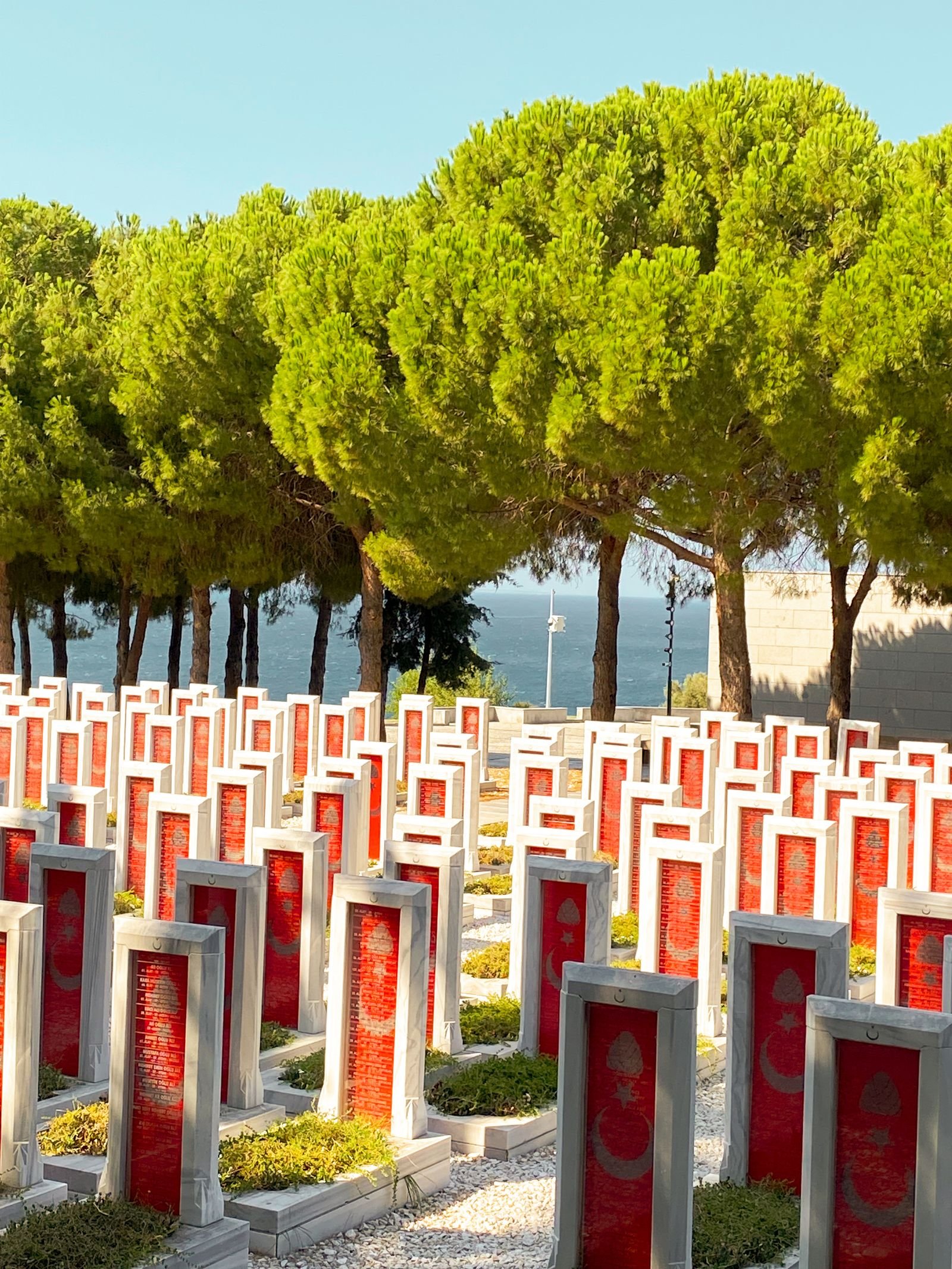
- Commonwealth War Graves Commission (CWGC) sites: the Helles Memorial at the tip of the peninsula carries more than 20,000 names of British, Indian and other soldiers with no known grave. Lone Pine, Chunuk Bair, Hill 60 and Twelve Tree Copse hold the Anzac memorials to the missing. Cemeteries such as V Beach and Lancashire Landing are well signed.
- Turkish memorials: the Çanakkale Martyrs’ Memorial near Seddülbahir, the 57th Regiment memorial, and the Conkbayırı memorials.
- Museums: the Çanakkale Epic Promotion Centre near Kabatepe tells the story with simulations, and Kilitbahir Castle has a museum. These charge entry; check the official site for current hours.
A guided tour is the easiest way to see the main sites in a day. If you drive, the official Gallipoli Historic Site guide app helps with navigation. Combine the trip with Troy, as our things to do in Çanakkale, Troy and Gallipoli guide suggests.
Watch: why the Allies lost at Gallipoli
Video: Why the Allies Lost the Battle of Gallipoli 1915 by The Great War (2026, in English)
Frequently asked questions
How long did the Gallipoli campaign last?
About eight and a half months on land, from 25 April 1915 to the final evacuation on 9 January 1916.
Do I need a ticket for the Anzac Day Dawn Service?
Yes. Attendance passes are free but must be booked in advance through the official ticketing site run for the Australian and New Zealand governments.
How do I find a relative’s grave at Gallipoli?
Search the CWGC’s online records by name. They give the cemetery or memorial and a plot reference you can take with you.
Related reading
How the Turkish Republic was founded · Atatürk: life and legacy · The Turkish War of Independence · The Battle of Sakarya · The Treaty of Lausanne · The Ottoman Empire: a traveller’s history · Things to do in Çanakkale, Troy and Gallipoli · Getting to Çanakkale, Troy and Gallipoli · Useful Turkish phrases
Sources: The campaign (Gallipoli Association), Helles Memorial (CWGC), The Irish regiments at Gallipoli (RTÉ), How to get there (Gallipoli Historic Site).
Details checked in November 2026. Confirm on the official page before you go.