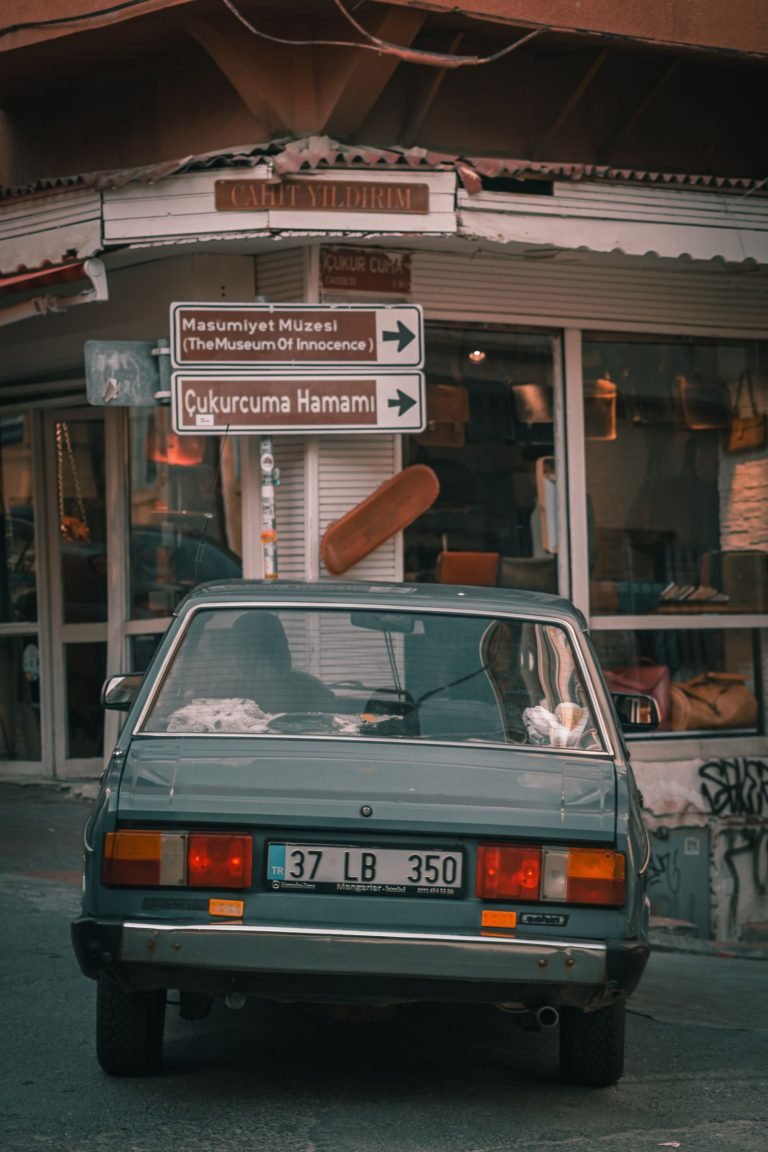
You cannot travel in Turkey for long without meeting Atatürk. His portrait hangs in shops and offices, and almost every town has a square or a boulevard named after him. For many Turks he is simply “Ata”, the father of the nation.
This guide sets out his life with dates, explains the reforms that still shape the country, and shows you where to see his story: from his mausoleum in Ankara to the palace room where he died and the house in Greece where he was born. It also covers the 10 November commemoration and the law that protects his memory, both of which matter to visitors.
Atatürk at a glance
| Date | Event |
|---|---|
| 1881 | Born Mustafa in Salonika (today Thessaloniki, Greece), then an Ottoman city |
| 1902 to 1905 | Graduates from the War College and then the General Staff College in Istanbul |
| 1915 | Commands the 19th Division at Gallipoli (Çanakkale) |
| 19 May 1919 | Lands at Samsun on the Black Sea to organise national resistance |
| 23 April 1920 | Grand National Assembly opens in Ankara |
| 1921 to 1922 | Victories at Sakarya and in the Great Offensive end the war with Greece |
| 29 October 1923 | Republic proclaimed; he becomes its first President |
| November 1934 | Parliament gives him the surname Atatürk |
| 10 November 1938, 09:05 | Dies at Dolmabahçe Palace, Istanbul, aged 57 |
| 10 November 1953 | His remains are moved to Anıtkabir in Ankara |
Early life: from Salonika to the officer corps
Mustafa was born in 1881 in Salonika, a busy, mixed port city of the Ottoman Empire. His father, Ali Rıza, died when he was about seven, and his mother brought him up. His father had chosen a modern secular school for him rather than a religious one, and the boy went on to military schools. A mathematics teacher at the military secondary school in Salonika gave him the extra name Kemal, meaning “perfection”, and it stuck.
He went on to the military school in Monastir (today Bitola in North Macedonia) and the War College in Istanbul, leaving the General Staff College as a captain in 1905. In 1907 he joined the Committee of Union and Progress, the movement behind the 1908 Young Turk Revolution, then fought the Italians in Libya in 1911 and served in the Balkan Wars.
Gallipoli, 1915
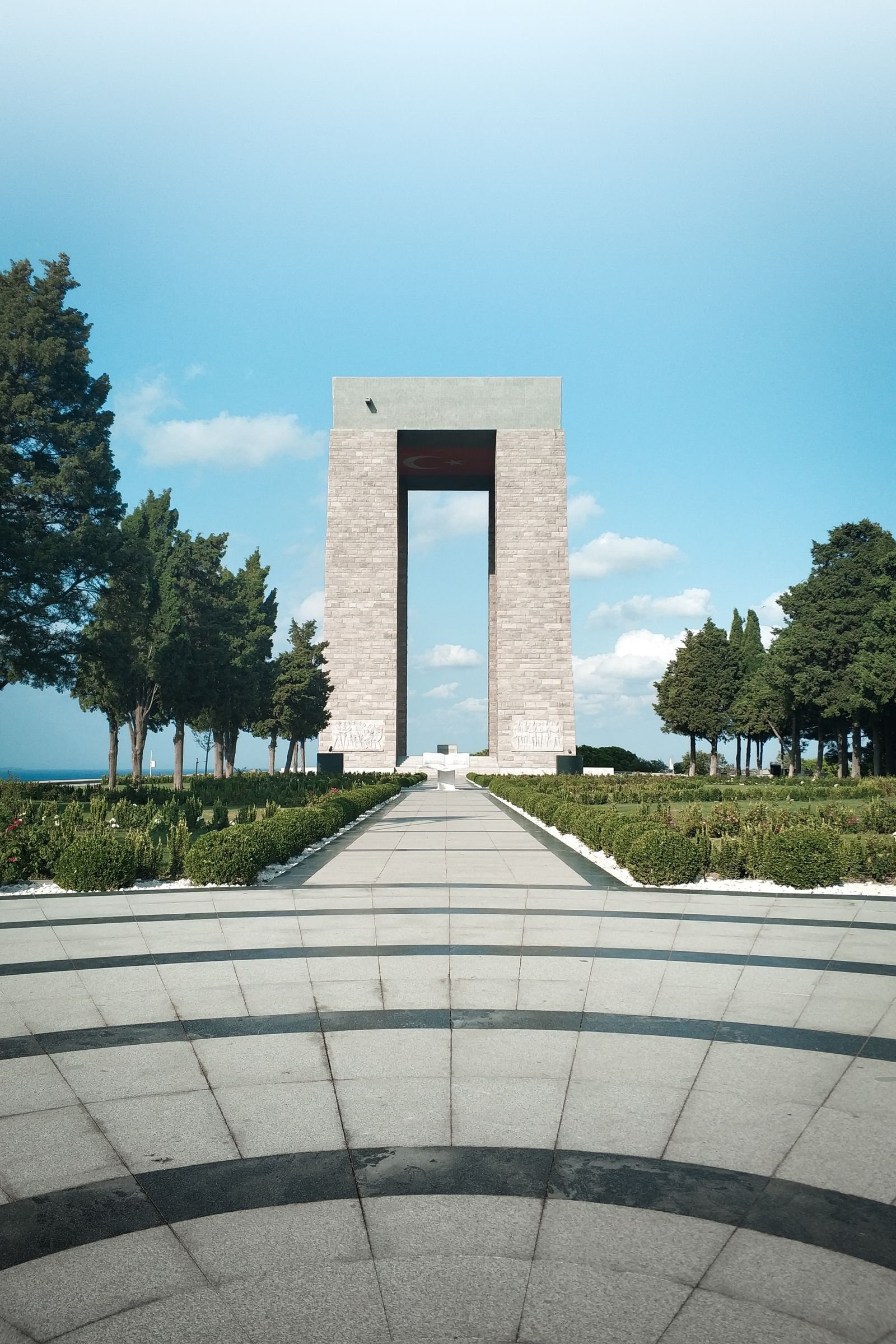
Turks call the Gallipoli campaign the Battle of Çanakkale, and it made Mustafa Kemal’s name. After an Allied fleet failed to force the Dardanelles on 18 March 1915, British, French and Anzac troops landed on the peninsula on 25 April. Lieutenant Colonel Mustafa Kemal commanded the 19th Division, which counterattacked the Anzac landing on 27 April. On 10 August he led the counterattack that drove New Zealand troops off Chunuk Bair (Conkbayırı). The Allies withdrew in January 1916 after about eight months; each side suffered roughly a quarter of a million casualties.
He ended the First World War as a general. On 30 October 1918 the Armistice of Mudros ended the Ottoman war, and Allied forces began occupying parts of the empire, including Istanbul.
The War of Independence, 1919 to 1922
On 19 May 1919, four days after Greek troops landed at Smyrna (İzmir), Mustafa Kemal stepped ashore at Samsun as an army inspector. He used the post to organise resistance instead. The Amasya Circular of June 1919 and the congresses at Erzurum and Sivas that summer united local resistance groups behind a single programme, and on 27 December 1919 he arrived in Ankara, which became the movement’s base.
After the Allies formally occupied Istanbul on 16 March 1920, a new Grand National Assembly opened in Ankara on 23 April 1920, with Mustafa Kemal as its leader. The nationalists fought on several fronts, but the decisive war was with Greece. The Battle of Sakarya (23 August to 13 September 1921) stopped the Greek advance on Ankara, and the Assembly made him a field marshal and gave him the title Gazi. The Great Offensive of August 1922, with the Battle of Dumlupınar on 26 to 30 August, broke the Greek army, and Turkish forces entered İzmir on 9 September. Our history of how the Turkish Republic was founded covers these years in more detail.
First President of the Republic
The Assembly abolished the Ottoman sultanate on 1 November 1922. The Treaty of Lausanne, signed on 24 July 1923, recognised the new state’s borders, and on 29 October 1923 the Republic of Turkey was proclaimed with Mustafa Kemal as President. Ankara, a modest Anatolian town at the time, became the capital. He led the Republican People’s Party, founded on 9 August 1923, and remained President until his death.
In 1923 he married Latife Hanım, and the couple lived in a vineyard house in Çankaya that the city of Ankara had given him in 1921 (today a museum, see below). He also adopted several children, among them the aviator Sabiha Gökçen, whose name UK travellers will know from Istanbul’s second airport.
The reforms, with dates
The reforms of the 1920s and 1930s changed daily life fast. These are the main ones, with the dates they were passed.
| Date | Reform |
|---|---|
| 1 November 1922 | Sultanate abolished |
| 3 March 1924 | Caliphate abolished; education brought under one state system |
| 8 April 1924 | Religious (sharia) courts abolished |
| 25 November 1925 | Hat Law: the brimmed hat replaces the fez for men |
| 30 November 1925 | Dervish lodges and religious orders closed |
| 26 December 1925 | International time and the Gregorian calendar adopted, in use from 1 January 1926 |
| 1 March and 4 October 1926 | New penal code (on the Italian model) and civil code (on the Swiss model) |
| 1 November 1928 | Latin-based Turkish alphabet replaces the Arabic script, from 1 January 1929 |
| 3 April 1930 | Women vote in local elections |
| 1931 | Metric weights and measures introduced |
| 21 June 1934 | Surname Law |
| 5 December 1934 | Women gain the vote and the right to stand in national elections; 18 women enter parliament in 1935 |
| 1935 | Weekend moved to Sunday |
| 5 February 1937 | Secularism written into the constitution |
The reforms were driven from the top by the state and a single ruling party, not by popular vote, and Turkey only moved to multi-party politics after his death. Historians still debate the period: how fast change came, how far reforms reflected the views of an urban elite rather than a mostly rural, religious population, and the balance between modernisation and one-party rule. Religion and secularism remain the most argued-over parts of the legacy in Turkey today.
The name Atatürk
Ottoman Muslims did not use family names. The Surname Law of 21 June 1934 required every citizen to take one, with surnames compulsory from 1 January 1935. A separate law in November 1934 gave Mustafa Kemal the surname Atatürk, “Father of the Turks”, and barred anyone else from using it. A few days later, on 26 November 1934, old titles such as pasha, bey and efendi were abolished.
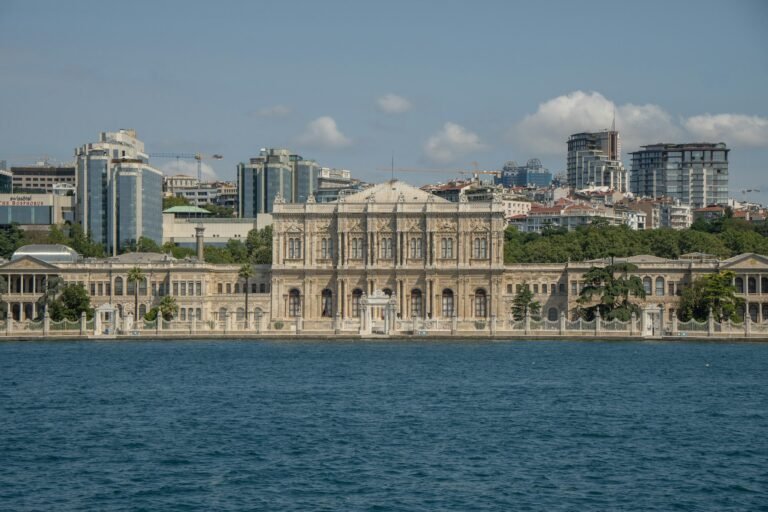
Death at Dolmabahçe, 10 November 1938
Atatürk spent his Istanbul stays at Dolmabahçe Palace from 1927 and died there after an illness at 09:05 on 10 November 1938, aged 57. His body was taken to Ankara, where it rested in the Ethnography Museum for fifteen years. On 10 November 1953 his remains were moved to the new mausoleum, Anıtkabir. His successor as President, İsmet İnönü, is also buried there.
Where to see Atatürk’s story
Anıtkabir, Ankara
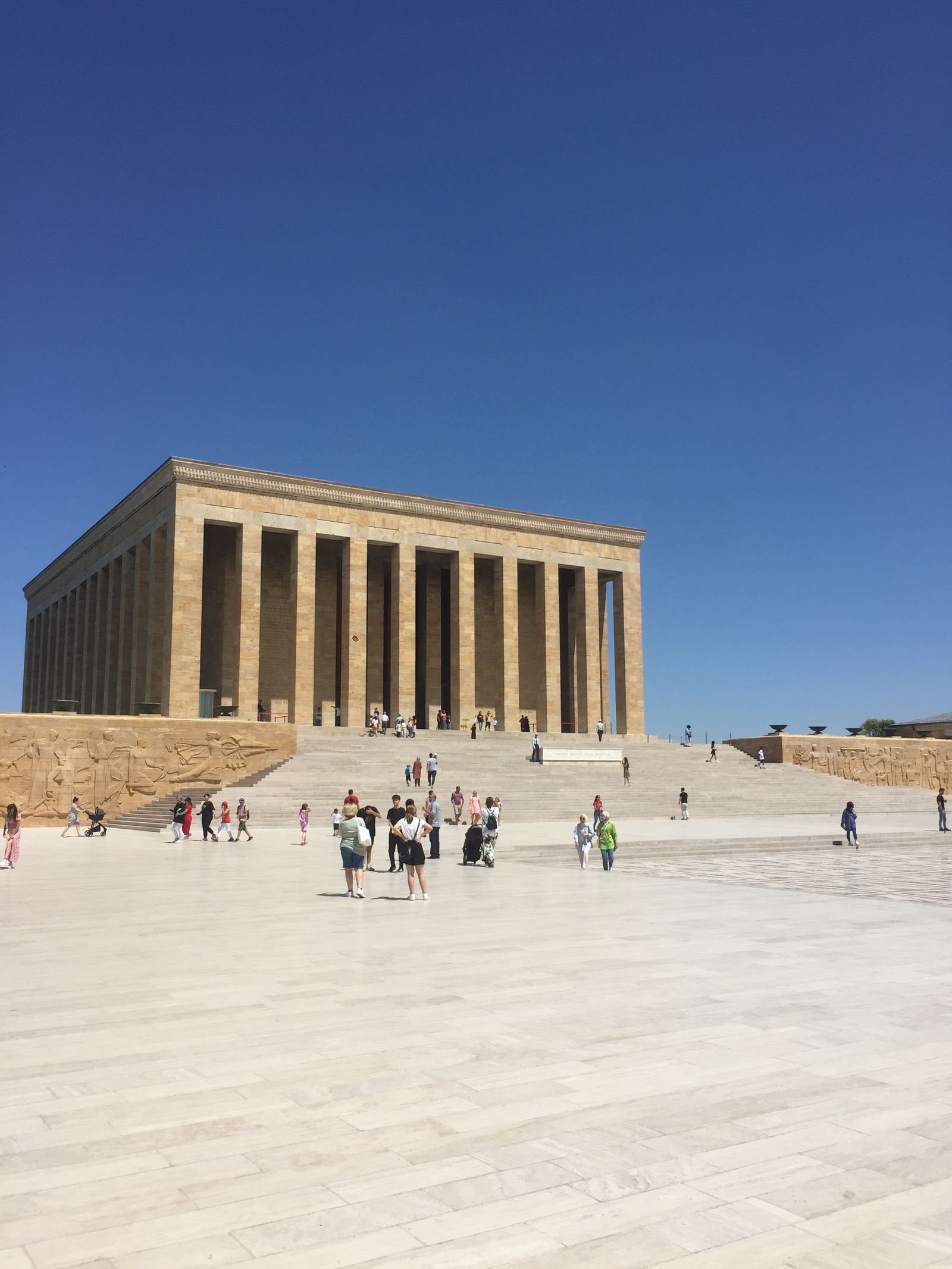
The mausoleum, designed by Emin Onat and Orhan Arda and built from 1944 to 1953, stands on a hill in central Ankara. You walk up the 262-metre Lion Road, lined with 24 stone lions, to a vast ceremonial square and the colonnaded Hall of Honour. The 40-tonne sarcophagus in the hall is symbolic; the actual tomb is in a chamber below. Under the Hall of Honour, the Atatürk and War of Independence Museum displays his personal belongings, his library, and large panoramas of Gallipoli, Sakarya and the Great Offensive.
| Period | Opening hours (every day) |
|---|---|
| 1 February to 14 May | 09:00 to 16:30 |
| 15 May to 31 October | 09:00 to 17:00 |
| 1 November to 31 January | 09:00 to 16:00 |
Entry is free and no booking is needed. A paid audio guide is available in six languages. The guard is drawn from the army, navy and air force, and the changing of the guard takes place at set times through the day (reportedly about hourly; check on the day). On national days the official ceremony comes first and public entry opens afterwards, and queues can be long.
Dolmabahçe Palace, Istanbul
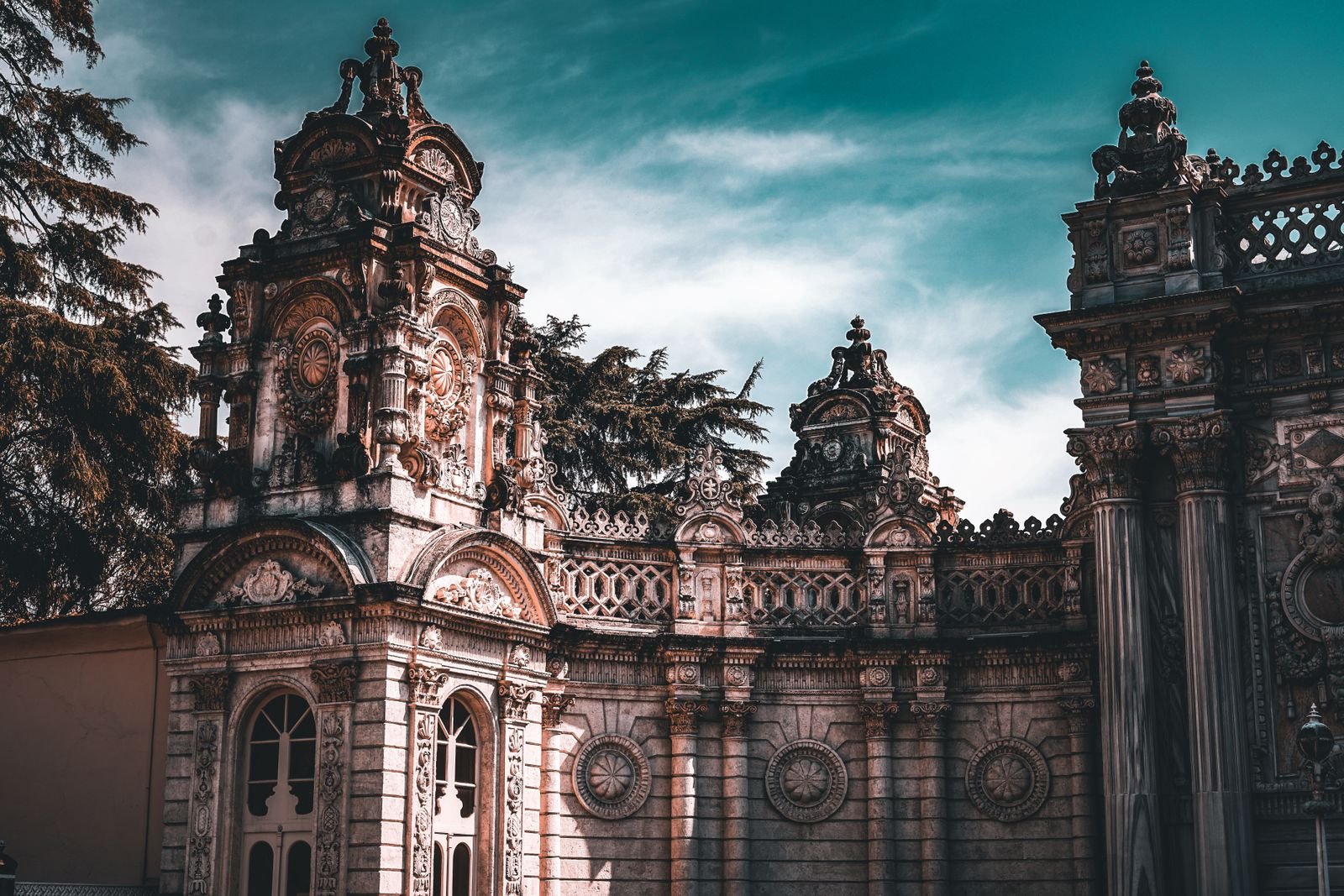
The room where Atatürk died, Room 71, is part of the palace tour. The official National Palaces page lists opening from 09:00 (ticket office until 17:00), closed on Mondays, New Year’s Day and the first day of each bayram. For foreign visitors, the ticket covering the Selamlık, the Harem and the Painting Museum cost 2,000 lira (about £30) when we checked in November 2026. On 10 November the palace becomes a place of pilgrimage: more than 100,000 people filed through in 2019. Pair it with our Istanbul guide.
Atatürk Museum Mansion, Çankaya (Ankara)
The vineyard house he was given in 1921, extended in 1924, was his home until 1932 and opened as a museum in 1950. It stands inside the Çankaya presidential compound, so visits are by appointment through the Presidency’s website, it is closed on Mondays, and weekend visits run in timed slots in the afternoon.
Samsun and the 19 May landing
Samsun on the Black Sea marks the start of the independence struggle. A full-size replica of the steamer Bandırma, which carried him there, has been a museum since 2003, and in 2026 the city was moving it to a new open-air museum site by the old Tobacco Pier where he came ashore, so check it is open before you go. 19 May is a public holiday, Commemoration of Atatürk, Youth and Sports Day; see our guide to public holidays in Turkey.
Gallipoli battlefields
The peninsula across the Dardanelles from Çanakkale is now a historical park with Turkish, Commonwealth and French memorials and cemeteries, including the battlefield of Chunuk Bair. Read our Çanakkale, Troy and Gallipoli guide before you book a tour.
Atatürk Museum, Thessaloniki (Greece)
The house traditionally identified as his birthplace stands on Apostolou Pavlou Street, inside the grounds of the Turkish Consulate General. It reopened on 10 November 2025 after a restoration that returned it to its 1953 appearance. Thessaloniki’s tourism office lists it as open Tuesday to Sunday, 10:00 to 17:00, with free entry.
10 November at 09:05
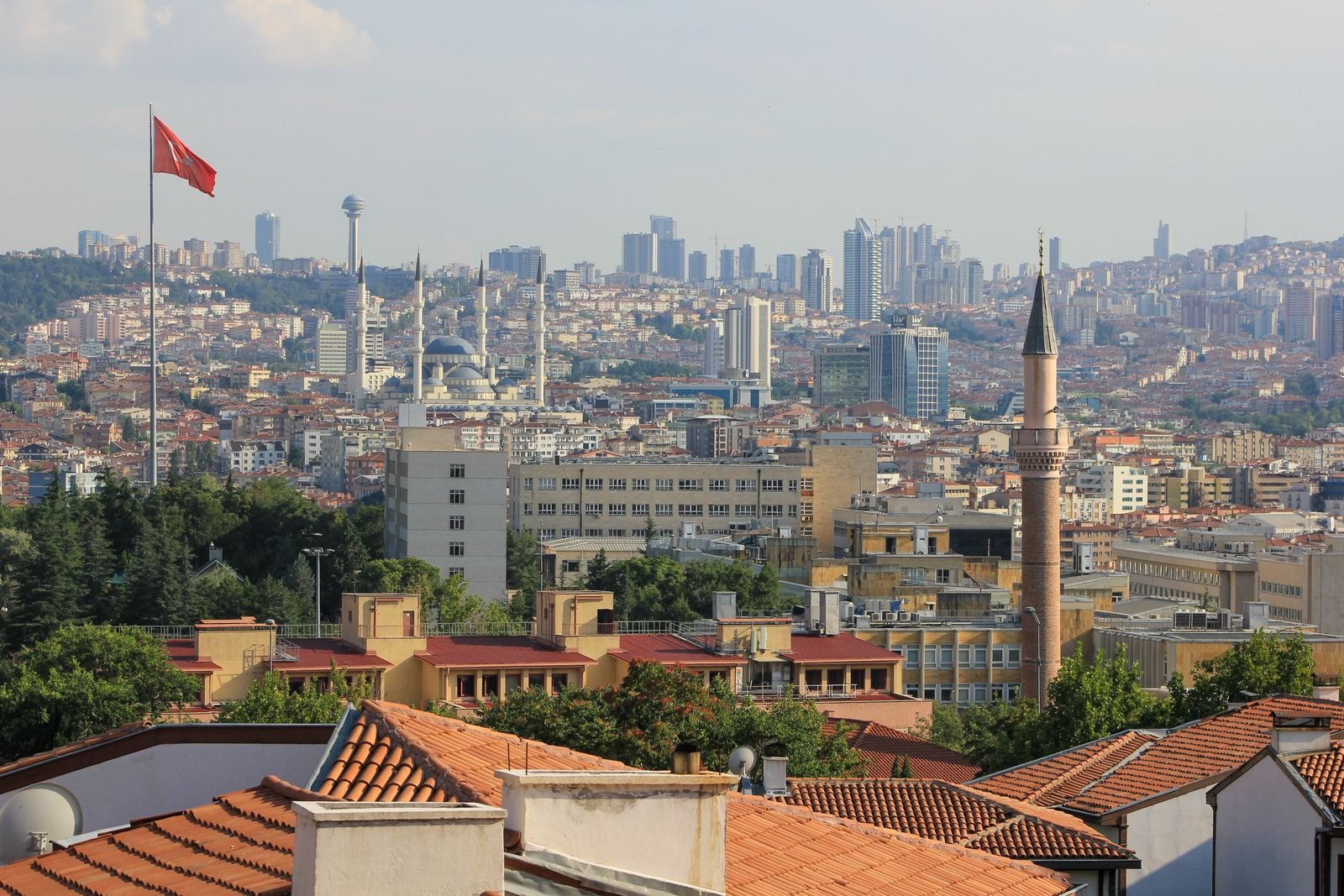
Every year at 09:05 on 10 November, sirens sound across Turkey and the country stops for a moment of silence. Traffic halts, including on Istanbul’s Bosphorus bridges, and many drivers get out and stand beside their cars. Anıtkabir and Dolmabahçe draw huge crowds. 10 November is not a public holiday, so shops and museums open as normal, but if you are on the street at 09:05, stop, stand still and stay quiet until the sirens end. Nobody expects more of a visitor.
Law 5816 and what it means for visitors
Law No. 5816, passed on 25 July 1951, makes it a crime to publicly insult or curse the memory of Atatürk, with one to three years in prison, and to damage or deface his statues, busts, monuments or tomb, with one to five years. Penalties rise when the offence is committed in public by a group or through the press, and prosecutors act without waiting for a complaint. It has been used against online content as well as speech.
In practice this asks nothing of a respectful visitor. Do not climb on or deface Atatürk statues, do not mock his portrait or image, and think twice before posting jokes about him on social media while in Turkey. Our customs and etiquette guide covers the wider picture.
Watch: Atatürk’s life and contested legacy
Video: Father of the Turks, Part 1 by Al Jazeera English (2007, in English)
Frequently asked questions
Where was Atatürk born?
In Salonika, today Thessaloniki in northern Greece, in 1881. The house identified as his birthplace is a free museum next to the Turkish Consulate General.
Where and when did Atatürk die?
At Dolmabahçe Palace in Istanbul, at 09:05 on 10 November 1938. Room 71, where he died, is on the palace tour.
Is Anıtkabir free to visit?
Yes. Entry to the mausoleum and its museum is free and needs no booking. Only the audio guide costs money.
Is it illegal to criticise Atatürk?
Law 5816 punishes insulting his memory and damaging his monuments. Serious historical discussion is common in Turkey, but insults, mockery and vandalism can lead to prosecution.
Related reading
How the Turkish Republic was founded · The Ottoman Empire: a traveller’s history · Public holidays in Turkey · Things to do in Ankara · Getting to Ankara · Çanakkale, Troy and Gallipoli · Things to do in Istanbul · Customs and etiquette in Turkey
Sources: Anıtkabir visiting hours (anitkabir.tsk.tr), Dolmabahçe Palace (National Palaces), Atatürk Museum Mansion visits (Presidency), Mustafa Kemal Residence (Thessaloniki Tourism), Kemal Atatürk (Britannica).
Prices and opening details checked in November 2026. Confirm on the official page before you go.