Dates: 1883 (some sources give 1884), Istanbul, to 9 January 1964, Istanbul.
Known for: her 1919 speech in Sultanahmet, service in the War of Independence, and novels including The Clown and His Daughter (Sinekli Bakkal) and The Shirt of Flame (Ateşten Gömlek).
Start with: The Clown and His Daughter, which she wrote in English.
Where to visit: Sultanahmet Square in Istanbul, and the War of Independence museums in Ankara.
Halide Edib Adıvar was a novelist, a public speaker, a soldier, a university professor and an MP, at a time when few Turkish women could be any of those things. She is one of the founding voices of modern Turkish literature, and unusually for her generation she wrote several of her most important books in English, so UK readers can read her exactly as she wrote.
This page is part of our guide to famous Turkish writers and novelists. It covers her life, her famous speech, her books and the places in Turkey linked to her.
Life: from Üsküdar to the front line
Halide Edib was born in Istanbul into an educated family; her father worked at the palace of Sultan Abdülhamid II. She was the first Muslim Turkish woman to graduate from the American College for Girls in Üsküdar, in 1901, and she translated, wrote and campaigned for women’s education from a young age. Her first novels, Seviye Talip (1910) and Handan (1912), were about educated women trapped by marriage and convention.
After the First World War, with Istanbul occupied by the Allies, she became one of the best-known speakers of the national movement. When Greek forces landed at İzmir in May 1919, huge protest meetings were held in Istanbul. At the largest of them, the Sultanahmet meeting on 23 May 1919, she addressed a crowd estimated at around 200,000 people, and the speech made her famous across the country.
In 1920, wanted by the occupation authorities, she and her husband, Dr Adnan Adıvar, escaped to Anatolia and joined Mustafa Kemal’s nationalists in Ankara. She worked on press and propaganda and served with the army at the front, enlisting and rising through the ranks as a non-commissioned officer. Our pages on the Turkish War of Independence and the Battle of Sakarya give the background.
After falling out with the new government’s leadership, the couple lived abroad from 1926 to 1939, mainly in Britain and France. She lectured in the United States and India, and wrote in English. Back in Turkey she became professor of English literature at Istanbul University in 1940, and from 1950 to 1954 she served as MP for İzmir. She died in Istanbul in 1964 and is buried in Merkezefendi Cemetery.
The books
- The Clown and His Daughter (1935, written in English; Turkish version Sinekli Bakkal, 1936). Life in an old Istanbul neighbourhood under Abdülhamid II, centred on Rabia, a girl with a beautiful voice, and her father, a shadow-puppet clown. Her best-loved novel.
- The Shirt of Flame (Ateşten Gömlek, 1922; English 1924). A novel of the War of Independence, written soon after the fighting.
- Memoirs of Halidé Edib (1926) and The Turkish Ordeal (1928). Her autobiography in two volumes, written in English, covering her childhood, the 1919 meetings and the war. A vivid first-hand source.
- Vurun Kahpeye (1926). A village teacher caught up in the war, much filmed in Turkey.
- Turkey Faces West (1930) and Inside India (1937). Non-fiction based on her lectures and travels.
Themes and legacy
Halide Edib wrote about women’s education and freedom, national independence and the meeting of East and West. Her novels give women active, intelligent roles in public life. She is remembered both as a heroine of the national struggle and as an independent thinker who argued for democracy and pluralism and paid for it with years of exile. Britannica’s biography gives a short overview.
On screen, Ateşten Gömlek became a film in 1923, directed by Muhsin Ertuğrul and remembered as one of the first Turkish films in which Muslim Turkish women acted. Vurun Kahpeye was filmed several times, starting in 1949. She also appears as a character in Turkish television dramas about the War of Independence.
Where to go in Turkey
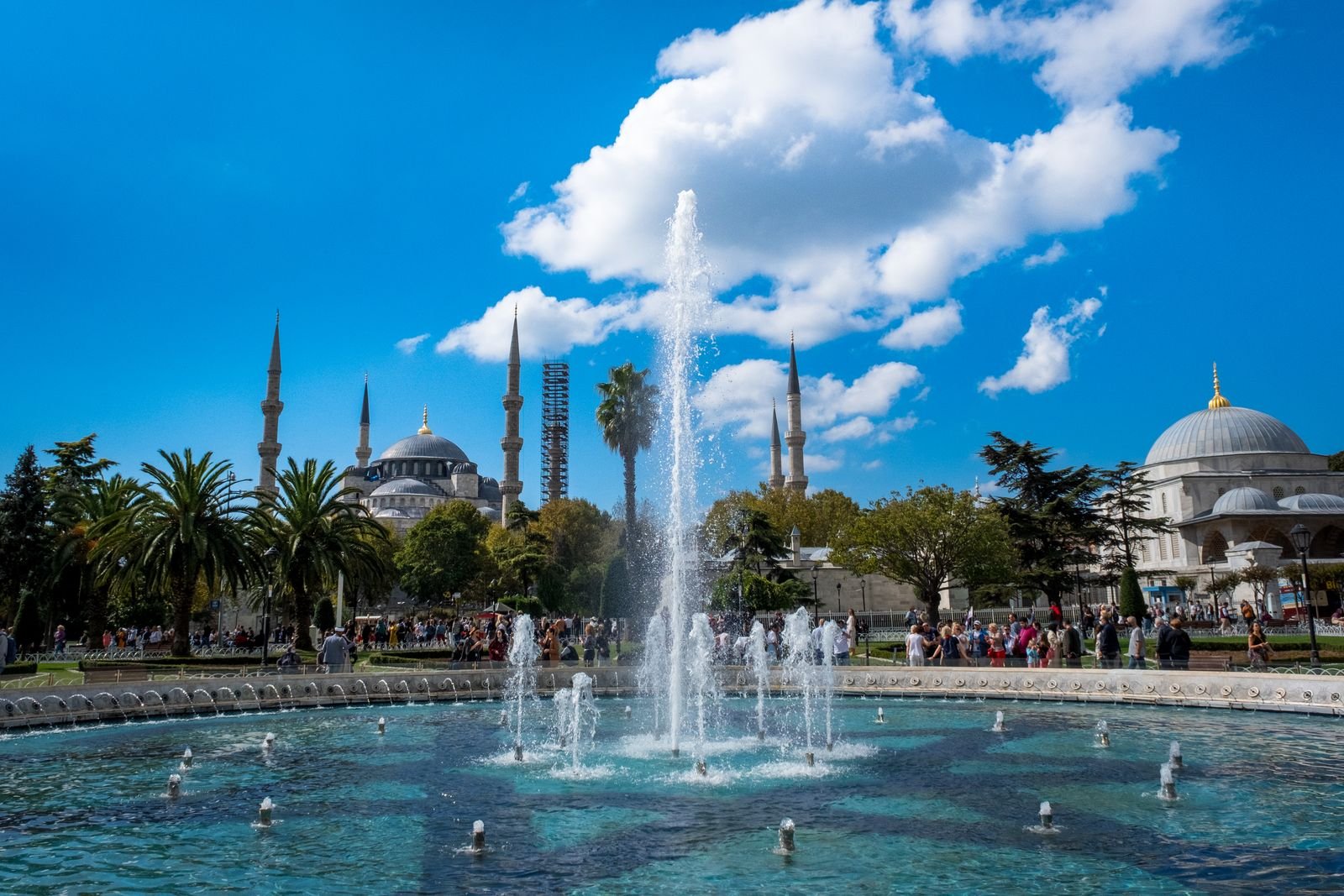
Sultanahmet Square, Istanbul. The open space between Hagia Sophia and the Blue Mosque is where the 1919 meeting took place. Stand on the old Hippodrome and picture the crowd that filled it. The square is busiest late morning, so come early.
Üsküdar. Her old school on the Asian shore is still a working school and not open to visitors, but a ferry to Üsküdar and a walk along the waterfront give you the neighbourhood of her youth.
Ankara. The War of Independence Museum in the First Parliament building in Ulus tells the story of the national struggle she joined. See our guide to things to do in Ankara.

Read next
Video: The Greedy Heart of Halide Edib by Lucasfilm (first released 2007, uploaded March 2025, in English). Watch on YouTube.
Read Halide Edib alongside Reşat Nuri Güntekin, whose heroine also leaves Istanbul to teach in Anatolia, and Elif Shafak, a later Turkish woman novelist writing in English. For the wider story, see Atatürk: life and legacy and how the Turkish Republic was founded.
Frequently asked questions
What did Halide Edib say in her 1919 speech?
She told the crowd that their darkest day would be followed by a brighter morning, that justice was a stronger weapon than guns, and called for a government that truly represented the people.
Did Halide Edib write in English?
Yes. Her memoirs, The Turkish Ordeal and The Clown and His Daughter were all written in English first.
Why is her birth year given differently?
Records from the period are inconsistent; Britannica gives 1883, while other sources give 1884.
Related reading
- Famous Turkish writers and novelists
- Reşat Nuri Güntekin
- Elif Shafak
- The Turkish War of Independence
- Atatürk: life and legacy
- Blue Mosque guide
- Hagia Sophia guide
- Things to do in Ankara
Details checked in November 2026. Confirm opening times on the official page before you go.