Dates: born about 1258; ruled from about 1299; died 1324 or 1326
Known for: founding the Ottoman dynasty, which takes its name from him
Where to visit: Söğüt (Ertuğrul Gazi tomb) and the tombs of Osman and Orhan at Tophane, Bursa
Every Ottoman sultan for more than six centuries traced his line back to one frontier chief in north-west Anatolia. Osman I left no buildings, no coins that survive in quantity and very few documents, yet his name became the name of an empire: “Ottoman” comes from Osman through its Arabic form, ʿUthmān.
This page looks at what is known about him, what is legend, and where you can follow his story on a trip from Istanbul. For the wider picture, from 1299 to 1922, start with our guide to the Ottoman Empire and where to see it.
Who was Osman I?
Osman, often called Osman Gazi, was born around 1258. Ottoman tradition says his family belonged to the Kayı branch of the Oğuz Turkmen, and that his father, Ertuğrul, led a small band of herders and fighters based at Söğüt, a town in the hills between today’s Bilecik and Eskişehir. Ertuğrul died in 1281, and Osman took over.
The setting matters. By the late 13th century the Seljuk sultanate of Anatolia had broken up under Mongol pressure, leaving many small Turkish principalities (beyliks). Osman’s principality sat right on the edge of Byzantine Bithynia, the fertile country around Bursa, İznik (Nicaea) and İzmit (Nicomedia). That border position gave his followers a steady supply of raids, land and recruits.
Most of what we know comes from chronicles written more than a century after his death, so historians treat the details with care. Even the date of his death is uncertain: Ottoman tradition places it just after the capture of Bursa in 1326, while many scholars prefer 1324, the year his son Orhan is first documented as ruler.
From Söğüt to the gates of Bursa
From Söğüt, Osman and his frontier warriors took a string of Byzantine forts and small towns, including Yenişehir, which became an early base. The traditional founding date of the Ottoman state is 1299.
His first major victory came at Bapheus, near Nicomedia, on 27 July 1302, when his horsemen beat a Byzantine force. The win opened the Bithynian countryside to Ottoman settlement. Bursa itself held out longer and finally surrendered to Orhan on 6 April 1326. It became the first real Ottoman capital, and Orhan brought his father’s body there for burial.
Osman’s dream: legend and meaning
The best-known story about Osman is his dream, told in the late 15th-century chronicle of Aşıkpaşazade. Staying with a respected dervish sheikh, Edebali, Osman dreamed that a moon rose from the sheikh’s chest and set in his own, and that a great tree grew from his navel and shaded the world. Edebali read it as a sign that God had granted rule to Osman and his descendants, and gave him his daughter in marriage.
Historians see the dream as a founding myth, written down when the dynasty was already powerful and wanted a story of divine favour. It is still worth knowing: it explains why Edebali is honoured in Bilecik, and it gave the historian Caroline Finkel the title of her English history of the empire, Osman’s Dream.
Legacy: a dynasty and a name
Osman’s real achievement was continuity. His son Orhan took Bursa, İznik and İzmit and crossed into Europe; his grandson Murad I took Edirne in 1361; and in 1453 Mehmed the Conqueror took Constantinople. Later sultans were girded with a ceremonial “Sword of Osman” when they came to the throne, a ritual that tradition linked back to Edebali.
In Turkey today Osman is a familiar figure, helped by the television drama Kuruluş: Osman. Remember that the series is drama, not history; the documented facts are far fewer than any screen version suggests.
Where to follow Osman’s story in Turkey
Söğüt and the tomb of Ertuğrul Gazi
Söğüt, in Bilecik province, is where the story starts. The main sight is the tomb of Ertuğrul Gazi, Osman’s father, restored with other founders’ monuments under Sultan Abdülhamid II in the late 19th century. Several of Osman’s sons are said to be buried there too. The small Ertuğrul Gazi Museum shows local crafts and costume (free entry; check hours on the Turkish Museums site before you go). Each year the town holds an Ertuğrul Gazi commemoration with Yörük nomad groups and folk dancing. Söğüt is easiest by car, roughly between Bursa and Eskişehir.
The tombs of Osman and Orhan in Bursa
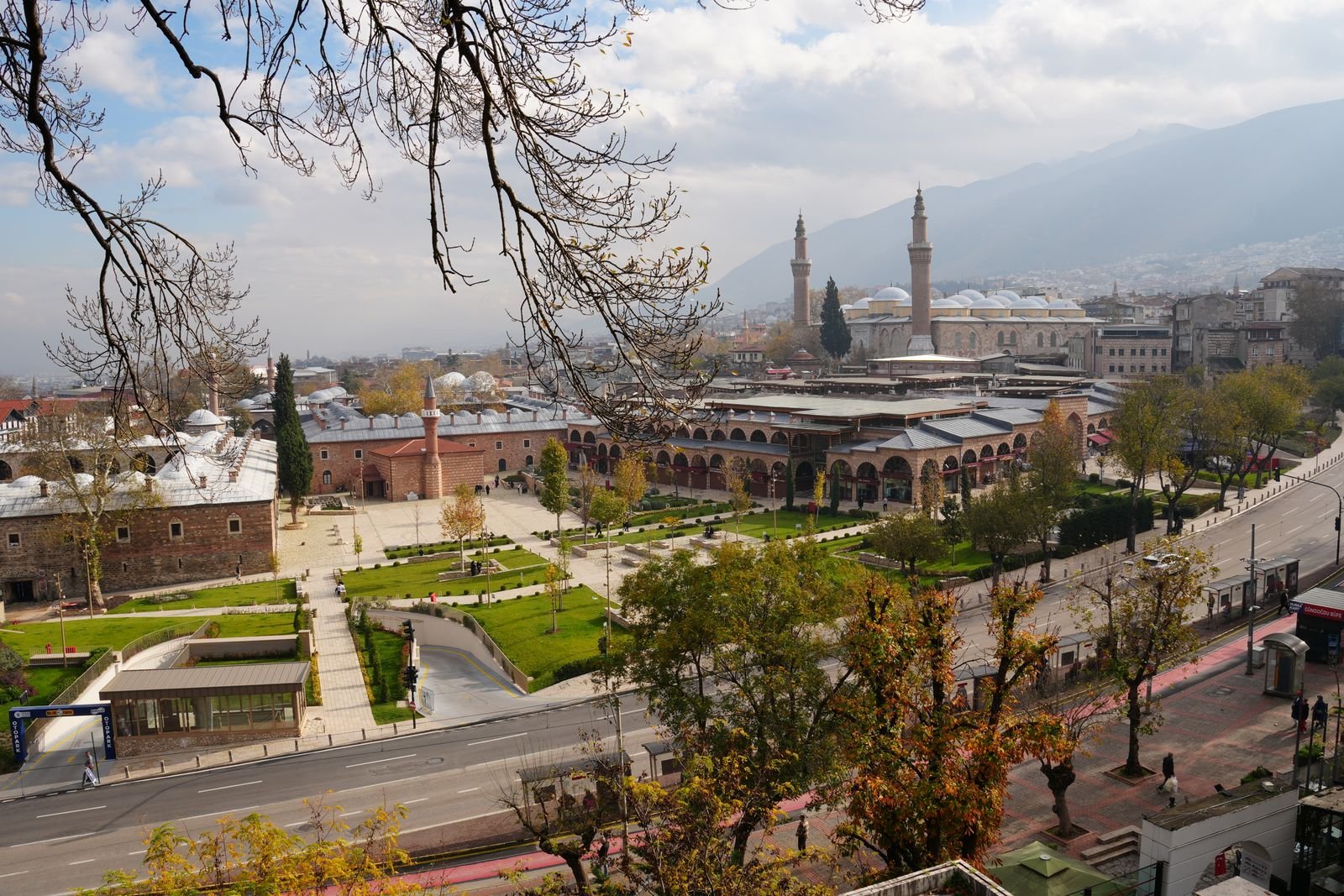
In Bursa the tombs (türbe) of Osman and Orhan stand in Tophane Park, on the citadel hill above the old town, next to the Tophane Clock Tower. They were built on the site of a Byzantine monastery church, and some floor mosaics from that church survive in Orhan’s tomb. The 1855 earthquake destroyed the originals; Sultan Abdülaziz had them rebuilt in the 1860s, which is why they look 19th-century rather than medieval. Dress modestly and keep your voice down, as many Turkish visitors come to pray.

Combine the tombs with the rest of early Ottoman Bursa: the Ulu Cami, the Green Mosque and the old silk market. See our things to do in Bursa and the Bursa and Cumalıkızık UNESCO guide; UNESCO lists the city as the birthplace of the Ottoman Empire. Bursa makes a long day trip or, better, an overnight stay from Istanbul.
Read and watch next
In English, Caroline Finkel’s Osman’s Dream and Marc David Baer’s The Ottomans both cover the founding period well. This short video from Hikma History gives an English-language overview of Osman’s life and the early Ottoman state.
Osman Ghazi: The Man Who Founded The Ottoman Empire (Hikma History, September 2022). Watch on YouTube.
Frequently asked questions
Where is Osman I buried?
In Bursa, in the Tophane district on the old citadel hill, beside his son Orhan. The present tombs date from the 1860s rebuilding after the 1855 earthquake.
Is Osman I the same person as Osman Gazi?
Yes. Gazi is an honorific for a warrior of the faith, and Turkish sources usually call him Osman Gazi or Osman Bey.
Can I visit Söğüt on a day trip from Istanbul?
It is possible by car but makes a long day. It works better as a stop between Bursa and Eskişehir.
Related reading
- The Ottoman Empire: a traveller’s history
- Mehmed the Conqueror
- Suleiman the Magnificent
- The Fall of Constantinople in 1453
- Things to do in Bursa
- Bursa and Cumalıkızık: UNESCO World Heritage
- Things to do in Istanbul
Sources: Britannica, Osman I, UNESCO, Bursa and Cumalıkızık and Turkish Museums, Söğüt Ertuğrul Gazi Museum.
Opening details checked in November 2026. Confirm on the official page before you go.