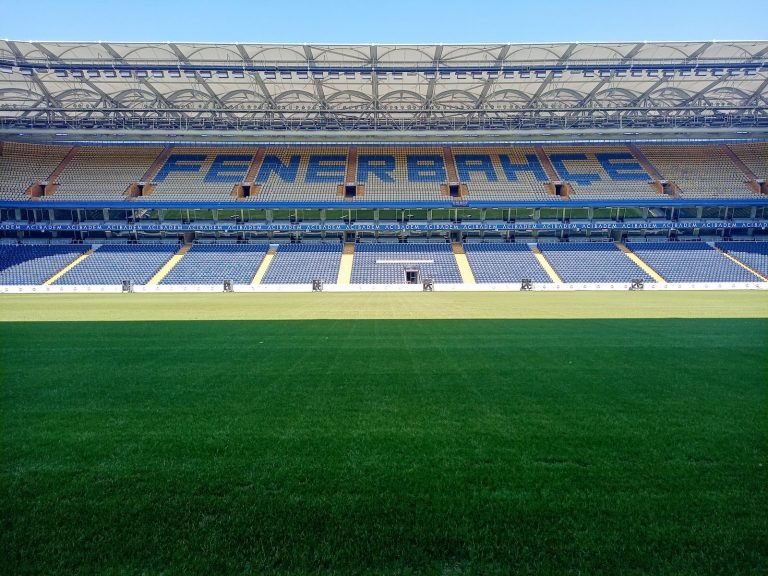
Where it is made: by hand in Nazarköy (Kemalpaşa) and Görece (Menderes), two villages near İzmir.
Best buy: a real glass bead from a workshop or a good bazaar shop, not a plastic copy.
Step off a plane in Turkey and the first evil eye usually finds you within minutes: on a keyring at the airport, hanging from a taxi mirror or pinned above a shop door. By the end of the week you will have seen it on babies’ clothes, in hotel lobbies and on market stalls by the thousand. It is the country’s most familiar charm and its most popular souvenir.
This guide explains what the evil eye is, where the belief comes from, how the blue beads are still made by hand in two villages near İzmir, the small customs that go with it, and how to buy a real one. It is part of our Turkish culture series.

What is the evil eye?
The “evil eye” (nazar in Turkish) is the belief that a look full of envy, or even too much admiration, can harm the person or thing being looked at. Babies, brides, new cars, a good harvest and a successful business are thought to be most at risk, because they are the things people envy.
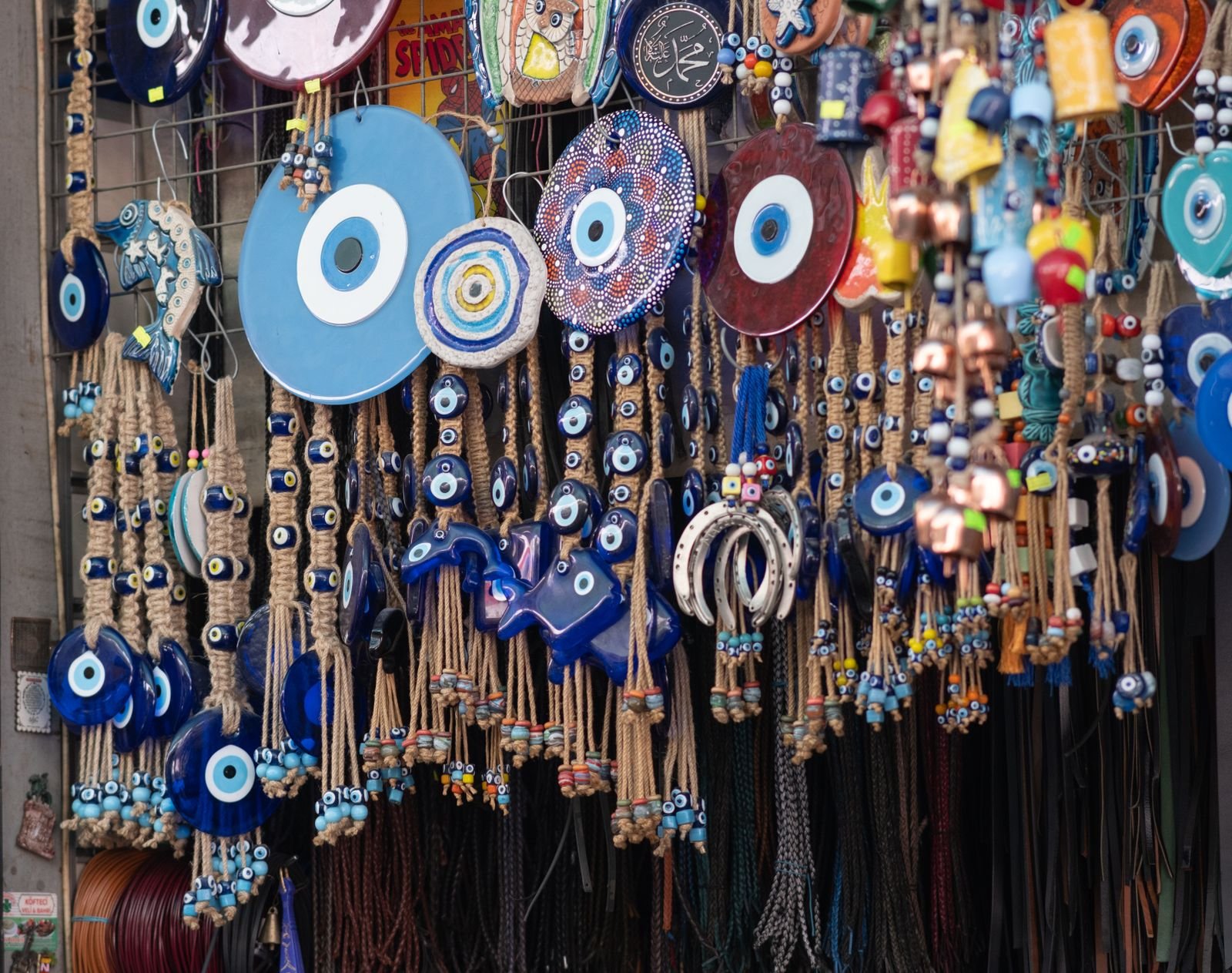
The nazar boncuğu (“evil eye bead”) is the protection. It is a disc or drop of dark blue glass with a white ring, a pale blue ring and a dark centre, so that it looks like an eye. The idea is that the bead meets the harmful look and absorbs it. Many Turks will tell you that when a bead cracks or breaks, it has done its job and should be replaced.
Belief varies a great deal. For some people it is a sincere protection, for many it is simply a tradition and a good-luck gift, and for others it is decoration. You do not need to believe in it to give or wear one, and nobody will mind if you buy a dozen for friends at home.
A belief shared around the Mediterranean
The evil eye is not only Turkish. Britannica describes the belief as ancient and very widespread: it is recorded in ancient Greece and Rome, in Jewish, Islamic, Hindu and Buddhist traditions and in many folk cultures, and it has lasted into modern times. Around the Mediterranean you will find versions of the same idea in Greece, Italy, the Middle East and North Africa, each with its own charms, from eye beads to hand-shaped amulets.
The glass bead belongs to a long history of glassmaking that began in the eastern Mediterranean. According to the İzmir Provincial Directorate of Culture and Tourism, glasswork appears among the Turks from the Seljuk period, and bead making in Anatolia began with craftsmen from Egypt who worked in İzmir’s old Kemeraltı market making bead bracelets and anklets. Local makers later developed their own designs, and once coloured glass was available they added the eye that turned an ornament into a charm.
Nazarköy: the evil eye village near İzmir
Most “evil eyes” sold today are mass-produced, but a handful of craftsmen still make them the old way in two villages in İzmir province: Nazarköy in the Kemalpaşa district, east of the city, and Görece in the Menderes district to the south.
Nazarköy was once called Kurudere. The provincial culture directorate says it was given its new name, which means “evil eye village”, by a government decision in March 2007 because bead making was so concentrated there. Hürriyet Daily News reported in January 2025 that the craft arrived in 1942 with three brothers of Egyptian origin who taught local masters, and that only three workshops were still working, down from 18 in earlier decades.
How the beads are made
The method has hardly changed. Craftsmen build round or oval kilns themselves and fire them with pine wood. Glass of different colours melts in separate trays inside the kiln, and the maker lifts molten glass out on an iron rod, winds on the blue body of the bead, then dots on the white, light blue and dark layers that form the eye, shaping each piece on a length of rail iron. The work happens at temperatures of around 1,200°C.
Bead types are named after their shape and colours, and come in large, medium and small sizes. The flat “plate” style is treated as one of the symbols of İzmir. The same workshops also make glass rings, small jugs, fish shapes and ashtrays.
Visiting
Nazarköy is easy to combine with a day in İzmir. The workshops sit near the village entrance and sell straight to visitors; if a master is at the kiln, you may be able to watch. These are small family businesses rather than visitor attractions, so there are no fixed opening hours: go in the daytime on a weekday, be patient if a master is busy, and buying a few beads is the polite way to say thank you. A taxi or hire car is the simplest way to get there; see our guide to driving in Turkey.
Evil Eye Village in Turkey: History, Culture and Glass Art in Izmir, an English-language visit to the Nazarköy workshops (SheTravelsTurkiye, July 2025). Watch on YouTube.
Where you will see the evil eye
- On newborns. A small bead is often pinned to a baby’s clothes or pram, and it is a common gift when visiting a new baby.
- At home and work. Above front doors, in offices and shops, and at the till.
- In cars. Hanging from rear-view mirrors of taxis and family cars.
- On “nazar trees”. In Cappadocia and elsewhere, bare trees are hung with hundreds of beads, partly for luck and partly for visitors’ photos.
- In jewellery. Bracelets, necklaces and earrings, from cheap market pieces to gold.

Customs that go with it: maşallah and knocking on wood
The bead is only one part of a set of everyday habits for keeping envy away. You will hear and see these within days:
- “Maşallah”. Literally “what God has willed”, it is said when praising something: a baby, a new flat, someone’s good health. Saying it shows the compliment carries no envy. If you admire a friend’s child, adding “maşallah” is a kind touch.
- “Nazar değmesin”. “May the evil eye not touch it”, often said after good news or a compliment.
- Knocking on wood. As in Britain, people knock on wood to avoid tempting fate. In Turkey it is often three knocks, sometimes with a tug on the earlobe as well. If there is no wood nearby, a table or even your own head will do.
- Lead pouring (kurşun dökme). An older ritual in which molten lead is poured into water over someone’s head to “break” the evil eye. It is less common today, and researchers have warned about the risk of lead poisoning.
These are folk beliefs and customs, not religious rules. Many devout Muslims, and many secular Turks, see them as tradition rather than faith. For the wider picture, see our guide to Turkish traditions and superstitions.
How to buy an evil eye (and spot a fake)
Evil eyes are among the cheapest souvenirs in Turkey, and that is part of their charm. But a lot of what is sold is imported plastic or resin, and the best pieces are handmade glass.
Glass or plastic?
- Weight and feel. Glass is heavier and cold to the touch. Plastic is light and warms up quickly in your hand.
- The hole. Nazarköy maker Uğur Karataş told Hürriyet Daily News that imitations tend to have a clean white hole, while handmade village beads carry a rust-coloured mark inside the hole from the iron rod.
- Small flaws. Tiny bubbles in the glass and slightly uneven eyes are signs of handwork, not defects.
- Price. Handmade glass costs more than a bag of identical plastic beads. If dozens of perfect beads cost almost nothing, they are probably factory made.
Where to buy
- From the makers in Nazarköy or Görece, the best option if you are near İzmir.
- Kemeraltı market in İzmir, where the craft has its roots.
- Istanbul’s Grand Bazaar and the streets around it, with the widest choice. Compare a few shops first and haggle gently on larger purchases.
Prices vary with size, quality and where you buy, so we do not quote figures. Small beads are pocket money; large handmade glass wall pieces and gold jewellery cost far more. See our Istanbul souvenirs guide for what else to bring home.
Gift etiquette
A bead is a perfect small gift for a host, a new baby or a friend starting a business. If a shopkeeper or host gives you one, accept it with thanks. Glass beads are fragile, so wrap them in clothes in your suitcase.
Frequently asked questions
Is the evil eye a religious symbol?
No. It is a folk charm older than Islam and shared by many faiths around the Mediterranean. In Turkey it is used by religious and secular people alike, mostly as tradition.
What does it mean when an evil eye breaks?
Popular belief says the bead has absorbed a harmful look and done its job. People usually throw the broken one away and hang a new one.
Is it rude for a foreigner to wear one?
Not at all. Turks generally enjoy seeing visitors wear one, and they are given freely as gifts.
Can I visit the bead workshops?
Yes. In Nazarköy near İzmir the workshops sell directly, and you may be able to watch a master at the kiln. They are working businesses, so be flexible about timing.
Keep planning
- Turkish culture: our full guide
- Turkish traditions and superstitions visitors will notice
- Turkish arts and crafts
- Turkish carpets and kilims: how to buy one
- What is Turkey famous for?
- Fun facts about Turkey
- Things to do in İzmir
- Grand Bazaar, Istanbul
- What to buy in Istanbul
- Things to do in Cappadocia
Sources: İzmir Provincial Directorate of Culture and Tourism: Evil eye bead; Hürriyet Daily News: Nazarköy craftsman continues ancestral profession (January 2025); Britannica: Evil eye.
Prices and opening details checked in November 2026. Confirm on the official page before you go.