Known for: arabesk’s most devoted following, who called him “Müslüm Baba”; late-career covers of pop and rock songs.
Start with: “Sevda Yüklü Kervanlar”, then the album Aşk Tesadüfleri Sever (2006).
Where to see his legacy: the Müslüm Gürses Museum in Şanlıurfa; his grave at Zincirlikuyu, Istanbul.
Müslüm Gürses sang about poverty, heartbreak and fate in a voice that his fans, many of them working-class migrants to Turkey’s big cities, felt was their own. They called him “Müslüm Baba”, Father Müslüm. Late in life he surprised everyone by recording songs by rock singers and even David Bowie and Leonard Cohen in Turkish, and won a whole new audience.
He is one of the arabesk names in our guide to famous Turkish singers and musicians. This page tells his story in more detail and shows where to find his legacy in Turkey today.
Life and career
Gürses was born Müslüm Akbaş in the village of Fıstıközü, in the Halfeti district of Şanlıurfa province, and moved with his family to Adana as a small child. He left school after primary level and worked as a tailor’s and cobbler’s apprentice. In 1967, at 14, he won a singing contest at a family tea garden in Adana, and soon he was singing türkü (folk songs) live on Saturdays on TRT’s Adana-Çukurova radio. There he took the surname Gürses, roughly “strong voice”.
His first single, “Emmioğlu / Ovada Taşa Basma”, came out in 1968. The next year “Sevda Yüklü Kervanlar”, released in Istanbul by Palandöken Plak, sold around 300,000 copies and made his name. Through the 1970s he recorded dozens of singles, and from 1979, starting with İsyankar, he acted in around 40 films, most built around his songs. In 1986 he married the actress and singer Muhterem Nur.
Cassette albums made him one of the biggest sellers in the country. Esrarlı Gözler (1980) took arabesk to a mass audience, and Küskünüm (1986) is often described as one of the best-selling albums in Turkish history. From the 1990s he widened his range: Nilüfer’s “Olmadı Yar”, Teoman’s rock ballad “Paramparça” (2002) and Tarkan and Sezen Aksu’s “İkimizin Yerine” (2003). In 2006 came Aşk Tesadüfleri Sever, made with the writer Murathan Mungan, which set Turkish words to songs by David Bowie, Leonard Cohen, Bob Dylan, Björk and others.
He died in Istanbul on 3 March 2013, after complications following heart surgery. A memorial ceremony was held at the Cemal Reşit Rey Concert Hall and a funeral at Teşvikiye Mosque, and he was buried at Zincirlikuyu Cemetery.
His music: style, songs and albums
Gürses sang arabesk, folk and Ottoman-era classical songs with a slow, aching delivery and a wide vocal range. His songs rarely end happily.
Signature songs
- “Sevda Yüklü Kervanlar” (1969)
- “Ben İnsan Değil Miyim” (1971)
- “Hangimiz Sevmedik” (1994)
- “Olmadı Yar” (2001)
- “Paramparça” (2002)
Key albums
- Esrarlı Gözler (1980)
- Küskünüm (1986)
- Senden Vazgeçmem (1994)
- Paramparça (2002)
- Aşk Tesadüfleri Sever (2006)
Legacy
Arabesk was long looked down on by critics, but from the late 1990s writers and academics began to take Gürses seriously, and his pop and rock covers brought younger listeners to his concerts. His life story became the film Müslüm (2018), directed by Ketche and Can Ulkay with Timuçin Esen in the title role. It drew close to 6.5 million cinemagoers in Turkey, one of the biggest audiences for any Turkish film. Previously unreleased songs have continued to appear since his death.
Where to see his legacy in Turkey
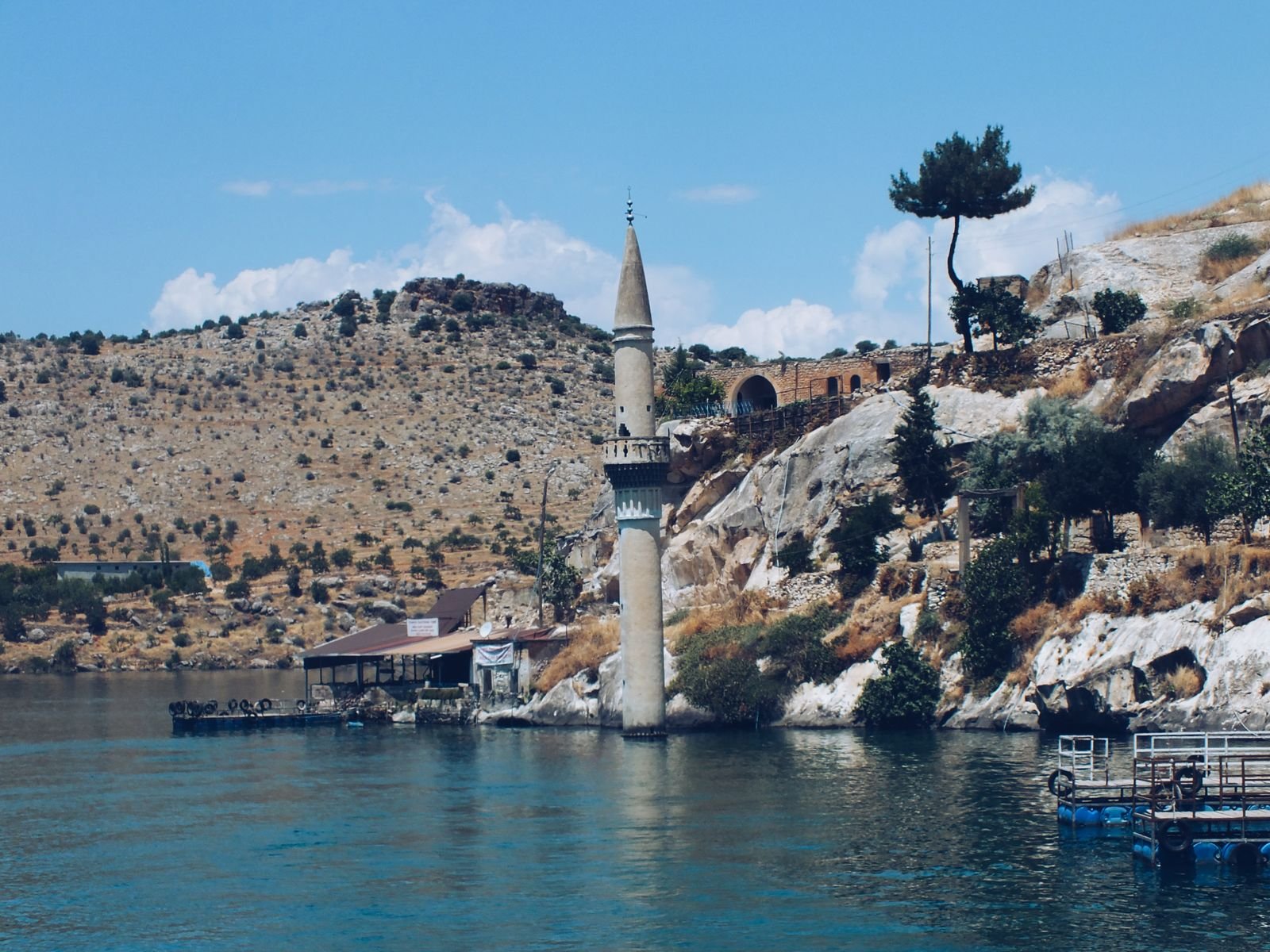
Müslüm Gürses Museum, Şanlıurfa. The museum opened in October 2013 and now stands in the Yaşam Parkı (Life Park) in the city’s Karaköprü district. It holds his clothes and shoes, records and cassettes, instruments, awards, childhood photographs and a wax figure. Check opening hours locally before you go. Şanlıurfa is also the base for visiting Göbekli Tepe, and Halfeti, the Euphrates town with the sunken minaret in the photo above, is in the same province.
Adana. The city where he grew up and first sang is on the way from the coast to the south-east, with the Roman stone bridge over the Seyhan at its heart.
Zincirlikuyu Cemetery, Istanbul. His grave is in this large cemetery on the European side, close to the Zincirlikuyu metrobus stop. Please visit quietly and dress modestly; our customs and etiquette guide has more.

Listen and watch next
TRT World’s English-language Compass programme went to Istanbul to ask what arabesk means to Turkey today, and how a music once kept off the state airwaves became part of everyday life.
Arabesk: Turkey’s Sound of Change, an English-language report on the genre (TRT World, April 2019). Watch on YouTube.
- His official catalogue on YouTube: Müslüm Gürses – Topic
- “Paramparça” on his label’s channel: Bayar Müzik on YouTube
- Discography: Müslüm Gürses on Discogs
- The museum today (in Turkish): Habertürk, March 2026
Frequently asked questions
Why was Müslüm Gürses called “Müslüm Baba”?
“Baba” means father. His fans gave him the name out of affection, and it stuck from the 1980s onwards.
Is there a film about Müslüm Gürses?
Yes: Müslüm (2018), starring Timuçin Esen. It was one of the most-watched Turkish films ever in cinemas.
Where is Müslüm Gürses buried?
At Zincirlikuyu Cemetery in Istanbul, after a funeral at Teşvikiye Mosque in March 2013.