Known for: “Dağlar Dağlar”, “Gülpembe”, his band Kurtalan Ekspres and the TRT show 7’den 77’ye.
Where to visit: the Barış Manço House museum in Moda, Kadıköy, on the Asian side of Istanbul.
With his long hair, moustache, heavy rings and a gentle, storyteller’s manner, Barış Manço is one of the most recognisable faces in Turkish music. He was a rock pioneer who rebuilt Anatolian folk songs for electric guitars, a writer of witty songs about everyday life, and, for a whole generation of Turkish children, the friendly man on family television.
This page covers his life, the songs and albums to start with, his honours, and how to visit his home in Moda, now a museum. For the rest of the Anatolian rock scene and other styles, see our guide to famous Turkish singers and musicians.

Life: from Galatasaray to Liège and back
Mehmet Barış Manço was born on 2 January 1943 in Üsküdar, on the Asian side of Istanbul. He started his first band, Kafadarlar, while a pupil at Galatasaray High School, and in 1962 and 1963 he played with Harmoniler.
He then went to Belgium to study at the Royal Academy of Fine Arts in Liège. With his band Les Mistigris he toured Belgium, Germany, France and Turkey until 1967, and he spent the late 1960s moving between Europe and Istanbul with Kaygısızlar and, in the early 1970s, Moğollar. “Dağlar Dağlar” (1970) made him a star at home.
In 1972 he formed Kurtalan Ekspres, named after a train that ran from Istanbul to south-east Turkey. The band stayed with him for the rest of his life. From 1988 he also made and presented 7’den 77’ye (From 7 to 77) on TRT 1, a family show of travel, culture and conversation that had reached its 378th episode by June 1998.
He suffered a heart attack at his home in Moda on 31 January 1999 and died in hospital on 1 February, aged 56. He is buried in Kanlıca Cemetery on the Asian shore of the Bosphorus.
His music
Manço’s records mix three things: Anatolian folk melodies and rhythms, Western rock and progressive rock, and lyrics that read like fables, full of humour and moral sense. Some of his best-loved songs are about the kitchen table (“Domates, Biber, Patlıcan”), a donkey (“Arkadaşım Eşşek”) or sharing bread (“Halil İbrahim Sofrası”), which is partly why children love him as much as their parents do.
Signature songs
- “Dağlar Dağlar” (1970)
- “Gülpembe” (1981)
- “Arkadaşım Eşşek” (1981)
- “Halil İbrahim Sofrası” (1983)
- “Domates, Biber, Patlıcan”
Key albums
- Dünden Bugüne (1971)
- 2023 (1975)
- Sözüm Meclisten Dışarı (1981)
- Estağfurullah… Ne Haddimize! (1983)
- Mançoloji (1999), the career compilation released after his death
Barış Manço and Kurtalan Ekspres on Australian television in 1974, where he talks in English about Turkish music and instruments (archive clip uploaded by Anadolu Rock, October 2025). Watch on YouTube.
Honours and legacy
Manço was named a State Artist in 1991. Abroad, he was made a Knight of the Order of Leopold II in Belgium and a Knight of Arts and Letters by the French Ministry of Culture, and he received the Japan International Culture and Peace Award; he had a following in Japan and released a live album recorded there in 1996. Hacettepe University gave him an honorary doctorate.
A quarter of a century on, his songs are still covered by Turkish rock and pop bands, and Kadıköy holds a commemoration for him every year around 1 February.
Where to experience his legacy in Istanbul
Barış Manço House, Moda
Manço lived from 1984 in a mansion built around the turn of the 20th century on Yusuf Kâmil Paşa Sokak in Moda, a leafy seaside neighbourhood of Kadıköy. Kadıköy Municipality rents the house and has run it as a museum since 2010. Inside you will find his piano, stage costumes from every phase of his career, his own artwork and furniture, with statues of his band members placed around the rooms. The garden has playful oversized vegetable sculptures, a nod to “Domates, Biber, Patlıcan”.
Listings give opening hours as Tuesday to Sunday, 09:00 to 17:00, with tickets sold at the door; check with Kadıköy Municipality before you go, as times can change (checked November 2026).
Getting there
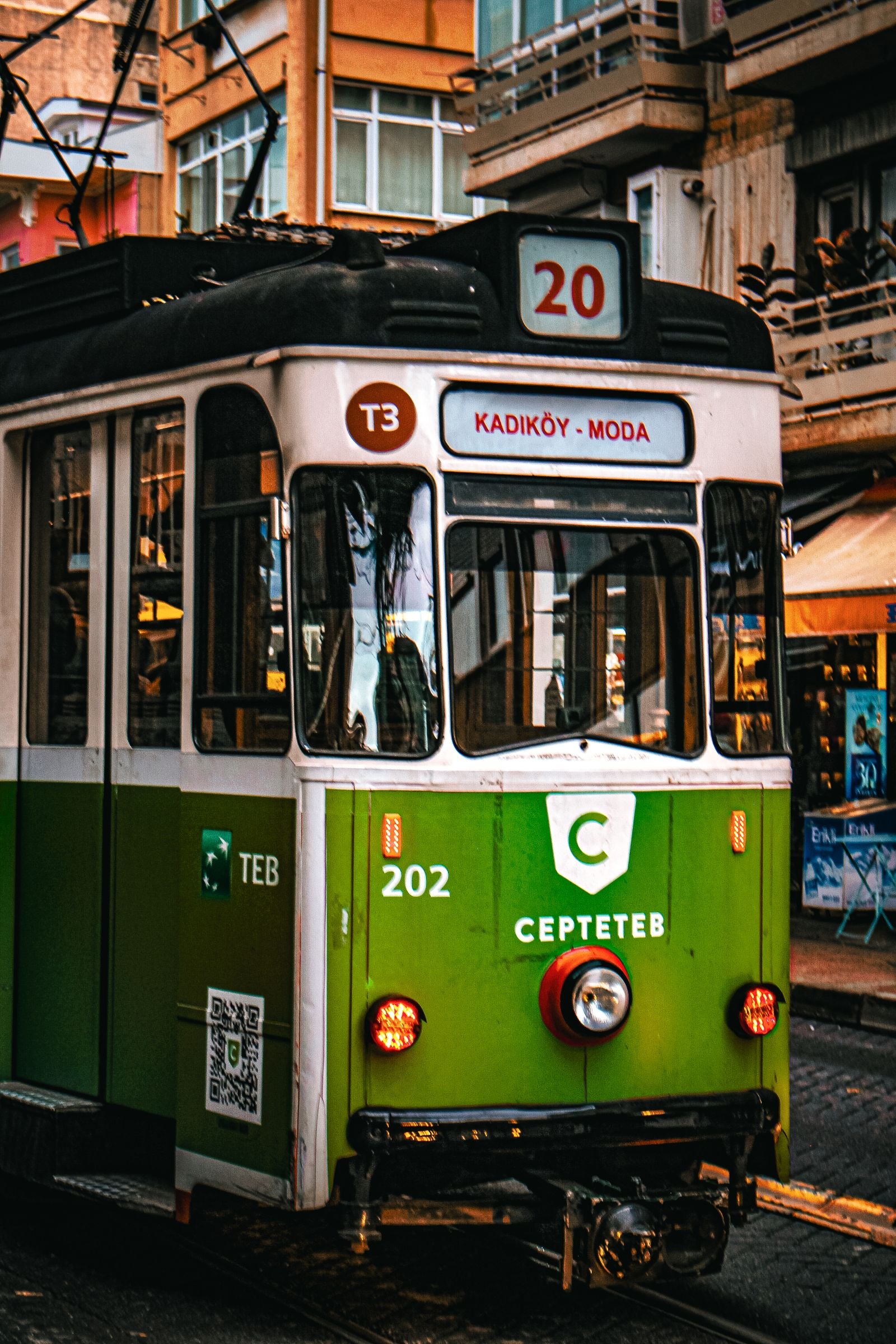
Take a ferry to Kadıköy from Eminönü, Karaköy or Beşiktaş, then walk about 15 to 20 minutes south through the shopping streets, or ride the nostalgic tram towards Moda. An Istanbulkart covers both. Pair the visit with a walk along the Moda seafront and a meal in Kadıköy’s market streets.
Listen next
- “Dağlar Dağlar” (netd müzik)
- “Gülpembe” (netd müzik)
- Then work through the Mançoloji compilation on your streaming service.
Anatolian rock fans should go on to Cem Karaca and Erkin Koray.
Frequently asked questions
Where is the Barış Manço museum?
In his former house on Yusuf Kâmil Paşa Sokak in Moda, Kadıköy, on the Asian side of Istanbul. It is about 15 to 20 minutes on foot from Kadıköy ferry pier.
Where is Barış Manço buried?
In Kanlıca Cemetery, on the Asian shore of the Bosphorus in Istanbul.
What was 7’den 77’ye?
His TRT 1 family show, which ran from 1988 and mixed travel films, interviews, music and stories for viewers “from 7 to 77”.
Related reading
- Famous Turkish singers and musicians
- Cem Karaca: life, songs and legacy
- Erkin Koray: life, songs and legacy
- Sezen Aksu: life, songs and legacy
- Things to do in Istanbul
- Istanbulkart and public transport
- 3 days in Istanbul itinerary
Sources: Kadıköy Municipality; TRT Haber: Barış Manço remembered; Cornucopia: Barış Manço Museum.
Prices and opening details checked in November 2026. Confirm on the official page before you go.