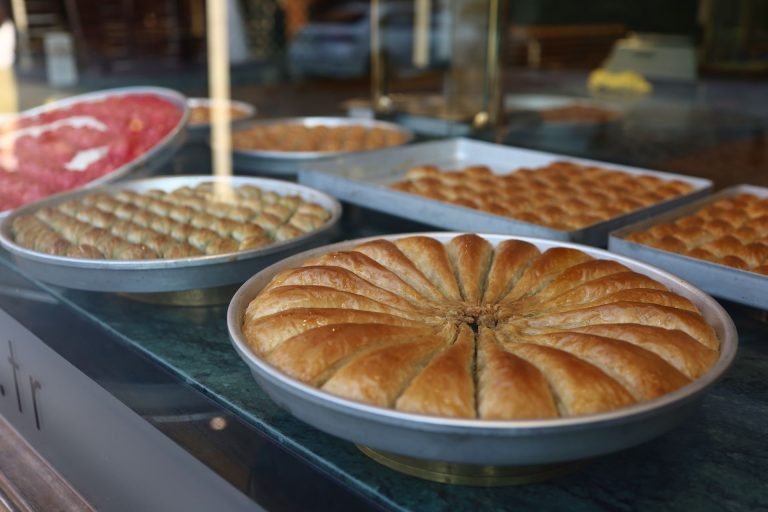
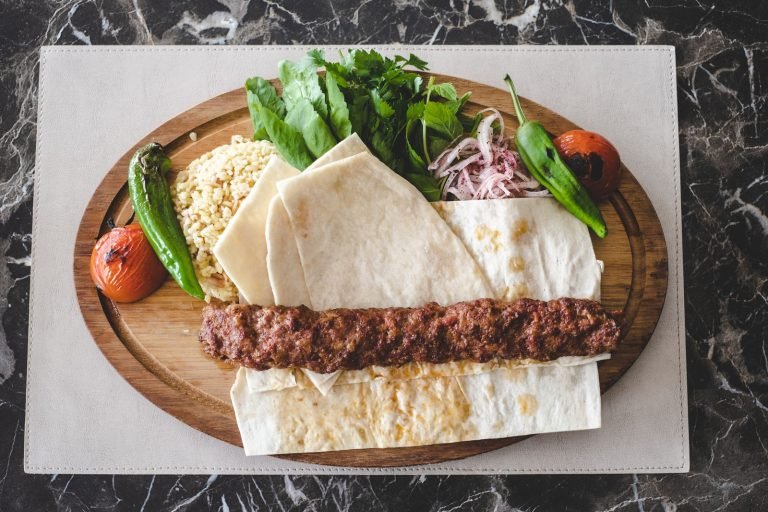
Most snacks cost between about 50p and £3.50 in 2026. Eat where the queue is longest and the food is cooked in front of you.
Some of the best meals you will eat in Turkey cost less than a coffee in London and come wrapped in paper. Street food here is not a novelty for tourists; it is how office workers, students and commuters eat every day, which is why turnover is high and standards are usually good.
Below are 20 things to look for, from the breakfast simit to the late-night kokoreç, with typical 2026 prices in pounds where we could source them, and some simple rules for eating well without a dodgy stomach.
Typical street food prices in 2026
Prices below are Istanbul figures, converted at roughly ₺67 to £1. Most come from a spring 2026 survey by istanbul.com; the simit price is the citywide rate reported in September 2026; lahmacun is from our own travel costs research. Expect more on tourist streets and less outside the big cities.
| Food | Lira | About |
|---|---|---|
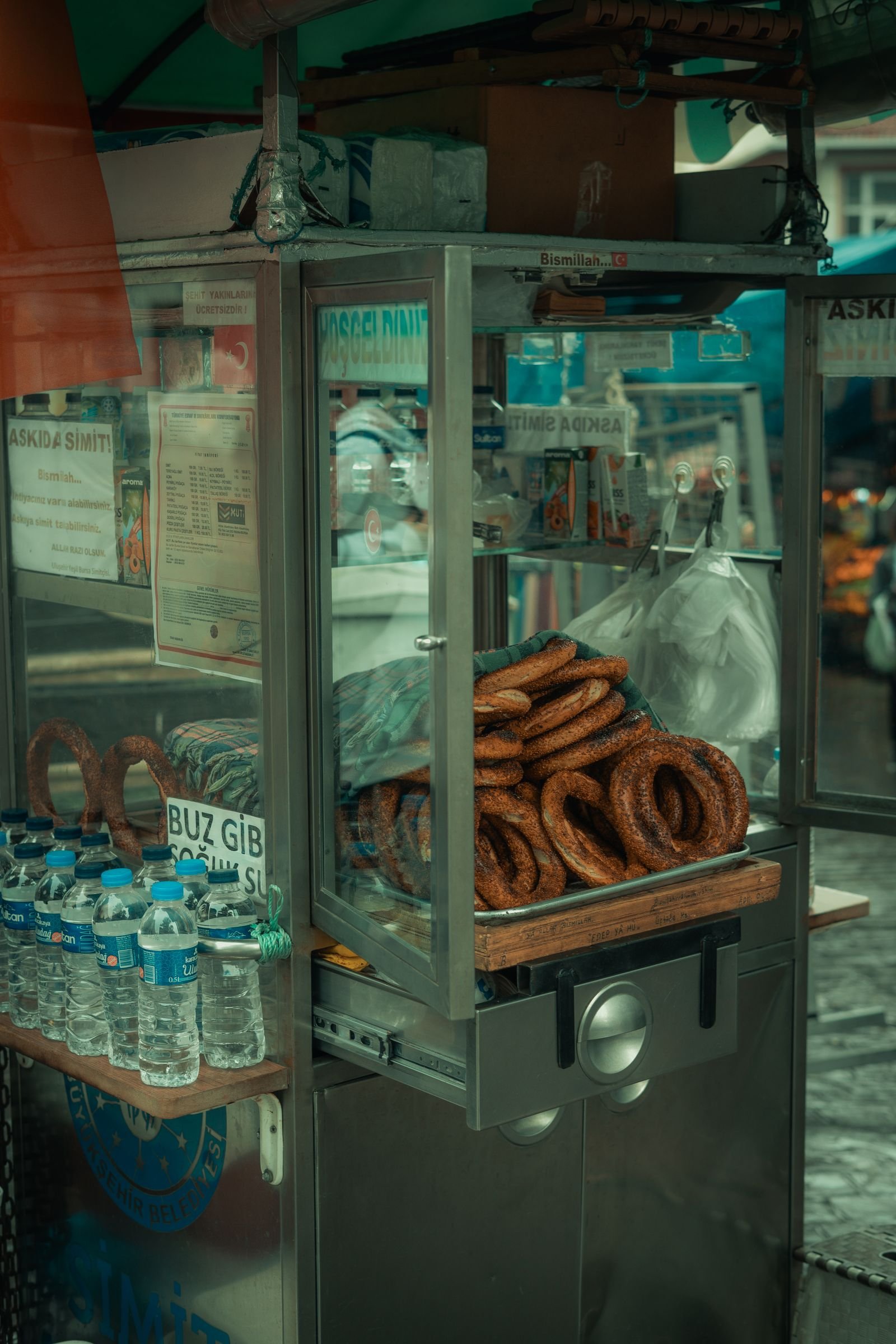
| Simit | ₺30 | 45p |
| Midye dolma (each) | ₺12 to ₺18 | 18p to 27p |
| Mısır (corn on the cob) | ₺40 to ₺70 | 60p to £1.05 |
| Çiğ köfte wrap | ₺40 to ₺90 | 60p to £1.35 |
| Lahmacun | – | £1 to £2 |
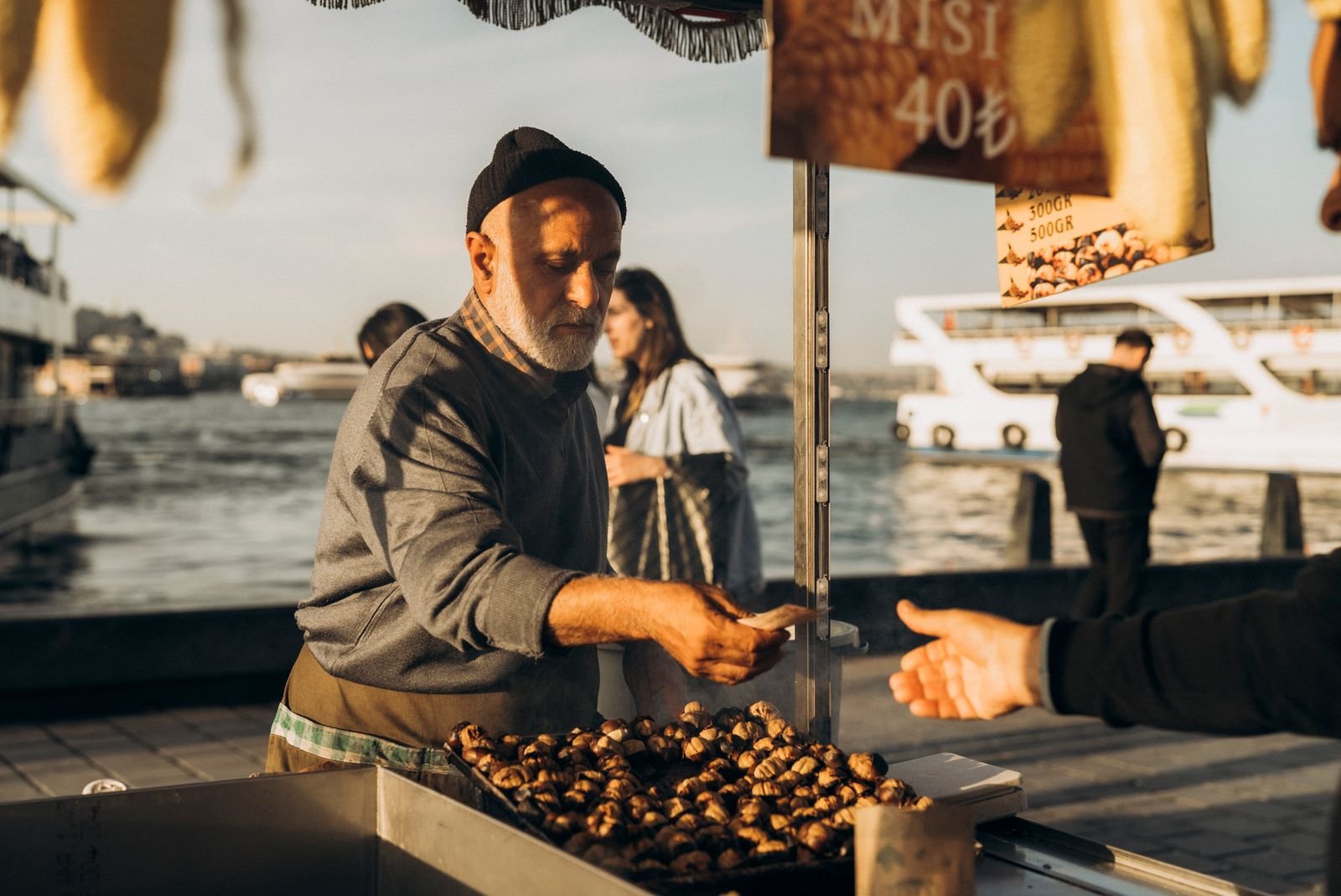
| Kestane (250 g) | ₺80 to ₺140 | £1.20 to £2.10 |
| Döner dürüm | ₺120 to ₺220 | £1.80 to £3.30 |
| Tantuni | ₺130 to ₺200 | £1.95 to £3 |
| Balık ekmek | ₺150 to ₺220 | £2.20 to £3.30 |
| Kumpir | ₺150 to ₺250 | £2.25 to £3.75 |
Carts and small stalls often prefer cash, so carry some small lira notes. Our money guide explains cards and cash machines.
Breads and pastries
1. Simit
A ring of bread dipped in grape molasses and rolled in sesame, sold from red carts and glass-sided trays on every corner from early morning. Crisp outside, chewy inside. Ask for it with a wedge of cheese, or pair it with a glass of tea.
2. Lahmacun
A paper-thin round of dough spread with spiced minced meat, onion and pepper, baked in a stone oven. Squeeze lemon over it, add parsley and a few onions, then roll it up. Most people order two.
3. Gözleme
Thin hand-rolled dough folded round cheese, spinach, potato or minced meat and cooked on a domed griddle (sac). You often see it made by women at roadside stalls and village markets, and it is one of the easiest vegetarian options. Our sister site Turkish Dish lists cheap Turkish eats in London, including gözleme, tantuni and lahmacun.
4. Boyoz and kumru (İzmir)
İzmir has its own street breakfast. Boyoz is a flaky, oily pastry usually eaten with a hard-boiled egg; kumru is a sesame-bun sandwich, typically filled with cheese, sucuk (spicy sausage) and tomato. See things to do in İzmir.
Fish and seafood
5. Balık ekmek
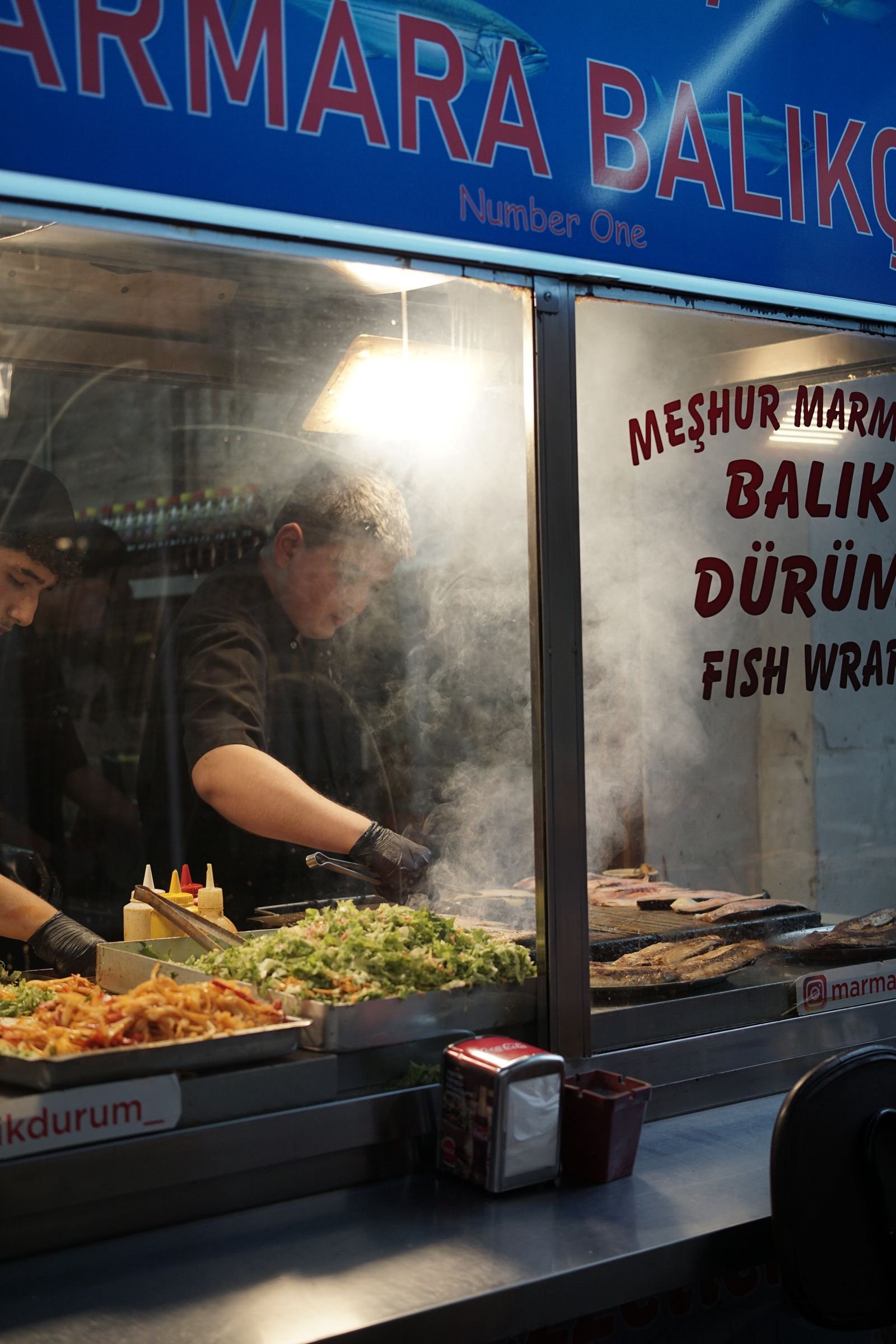
A grilled fish fillet, usually mackerel, stuffed into half a loaf with onion and lettuce. The classic place is the Eminönü waterfront in Istanbul by the Galata Bridge, where it has been sold from rocking boats for decades; there are also stalls under the bridge and in Karaköy. Add a squeeze of lemon and a sprinkle of salt and chilli flakes.
6. Midye dolma
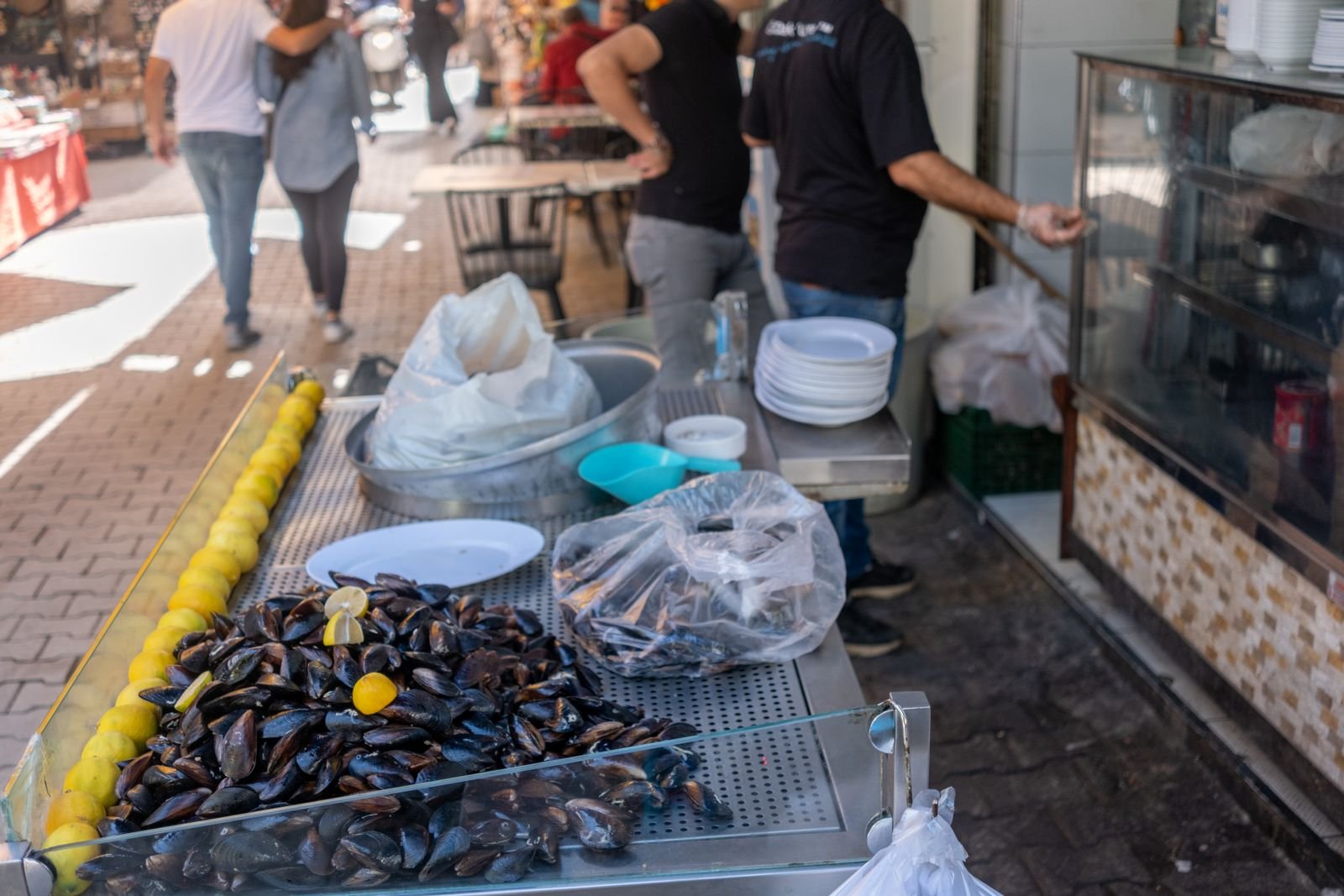
Mussels stuffed with spiced rice, often with pine nuts and currants, sold by the piece from trays with lemon wedges. The vendor opens one, you squeeze lemon on, use the loose half-shell as a spoon and keep going until you say stop. Count as you go: you pay per mussel.
7. Midye tava
Battered fried mussels on a skewer or in a paper cone, served with tarator, a garlicky walnut or breadcrumb sauce. Around £1.80 to £2.70 for a generous portion.
Meat on the go
8. Döner
Layers of seasoned meat (beef, lamb or chicken) roasted on a vertical spit and sliced thin. “Ekmek arası” means in bread, usually a half loaf. For plated döner and its famous Bursa cousin, İskender, see our Turkish kebab guide.
9. Dürüm
Any grilled meat, from döner to Adana kebab, rolled tightly in thin lavaş bread with onions, tomatoes, parsley and sumac. Neater to eat than a sandwich, which makes it the default lunch for many workers.
10. Kokoreç
Lamb intestines wrapped round a skewer of offal, roasted slowly on a horizontal spit, then chopped on a griddle with tomatoes, peppers, oregano and chilli and served in bread. Strong-flavoured and much loved as a late-night snack. Choose a busy stall where it is cooked through in front of you.
11. Tantuni
From Mersin on the south coast: finely chopped beef cooked on a wide griddle, wrapped in lavaş with tomato, onion and parsley. Small, cheap and addictive. Mersin-style tantuni shops are now found across Istanbul.
12. Islak hamburger
The “wet burger” of Taksim Square: a small beef burger soaked in a garlicky tomato sauce and kept warm in a steam cabinet. It is a famous late-night snack after a night out in Beyoğlu, soft rather than crisp, and very cheap.
Top Street Foods to Try in Istanbul in 2026, an English-language walk through balık ekmek, dürüm, midye and kumpir with prices (Bery Istanbul Tips, October 2025). Watch on YouTube.
Vegetarian and vegan street food
13. Çiğ köfte
Traditionally made from raw minced meat kneaded with fine bulgur and chilli paste. The version sold in shops today is meatless: bulgur, isot or chilli paste, onion, tomato paste and spices, kneaded until it holds together. Commercial sale of the raw-meat version is not allowed, so it is effectively vegan street food. It comes wrapped in lavaş or lettuce with a drizzle of pomegranate molasses. Chains sell it everywhere.
14. Kumpir
A giant baked potato split and mashed with butter and kaşar cheese, then loaded with your choice of toppings: corn, olives, pickles, Russian salad, sausage. Ortaköy, by the Bosphorus Bridge, is the place to eat one, ideally with a view of the mosque and the water.
15. Mısır
Corn on the cob, either boiled or grilled over charcoal, sold from carts in parks and along the waterfronts, with salt on request.
16. Nohutlu pilav
Buttery rice with chickpeas (sometimes topped with shredded chicken) sold from heated glass carts at lunchtime. Plain, filling and cheap; ask for “tavuksuz” if you want it without chicken.
17. Kestane
Chestnuts roasted on a charcoal cart, sold by weight in paper bags from late autumn. Bursa is famous for chestnut sweets (kestane şekeri), which make a good gift.
Sweet things and winter drinks
18. Maraş dondurma
Stretchy, chewy ice cream thickened with salep and mastic, from Kahramanmaraş. Vendors in fezzes play tricks with the long paddle before handing over the cone. Our Turkish desserts guide covers baklava, künefe and more.
19. Boza
A thick, slightly sour fermented millet drink, served cold in winter with cinnamon and roasted chickpeas on top. The historic Vefa Bozacısı in Istanbul has been selling it since 1876.
20. Salep
A hot, creamy milk drink thickened with flour from orchid tubers and dusted with cinnamon, sold from steaming urns on ferries and street corners in cold months. More on both in our guide to rakı and Turkish drinks.
To wash any of it down, ayran (salty yoghurt drink) is the usual choice with savoury food and tea with everything else; see Turkish coffee and tea.
Food-safety tips for street food
- Follow the locals. A long queue means fast turnover, which means fresh food.
- Cooked to order is safest. Grilled, fried or baked in front of you is better than anything that has been sitting out.
- Be choosy with shellfish. Midye dolma is popular year round, but buy from busy, established vendors and pass on trays that look like they have been in the sun all afternoon. If you have a sensitive stomach, have them in cooler months or at a restaurant.
- Offal should be hot through. Kokoreç and liver should come straight off the griddle.
- Salads and water. Most visitors drink bottled water, which is cheap. Raw salad in wraps carries the usual travellers’ diarrhoea risk; choose busy places and see our tap water guide.
- Allergies. Sesame is on simit and many breads, and nuts appear in stuffed mussels and many sweets. Learn the words in our Turkish phrases guide or carry a translated card.
- Insurance. Make sure your travel insurance covers medical treatment; a UK GHIC is not valid in Turkey. Check TravelHealthPro’s Turkey page before you travel.
Frequently asked questions
Is street food in Turkey safe?
Generally, yes. Food at busy stalls is cooked fresh and turns over quickly. Use common sense with shellfish and offal in hot weather.
What is the most famous Turkish street food?
Simit and döner are the most widespread. In Istanbul, balık ekmek at Eminönü and kumpir at Ortaköy are the best-known experiences.
Is çiğ köfte raw meat?
Not when you buy it from a shop or stall. The commercial version is made with bulgur and spices and contains no meat.
Can I pay by card at street stalls?
Some take cards, many do not. Carry small lira notes for carts and kiosks.
Where is the best street food outside Istanbul?
Gaziantep for lahmacun and pistachio sweets, İzmir for boyoz and kumru, Mersin for tantuni and Bursa for chestnut sweets. See things to do in Gaziantep.
Related reading
- Turkish culture: a traveller’s guide
- Turkish kebab guide
- Turkish coffee and tea
- Rakı and Turkish drinks
- What is Turkey famous for?
- Turkish food to try
- Turkish breakfast guide
- Things to do in Istanbul
- Bosphorus cruise guide
Sources: istanbul.com: Istanbul street food prices 2026; Evrensel: Istanbul simit price, September 2026 (Turkish); Daily Sabah: the çiğ köfte meat debate; TravelHealthPro: Turkey.
Prices and opening details checked in November 2026. Confirm on the official page before you go.