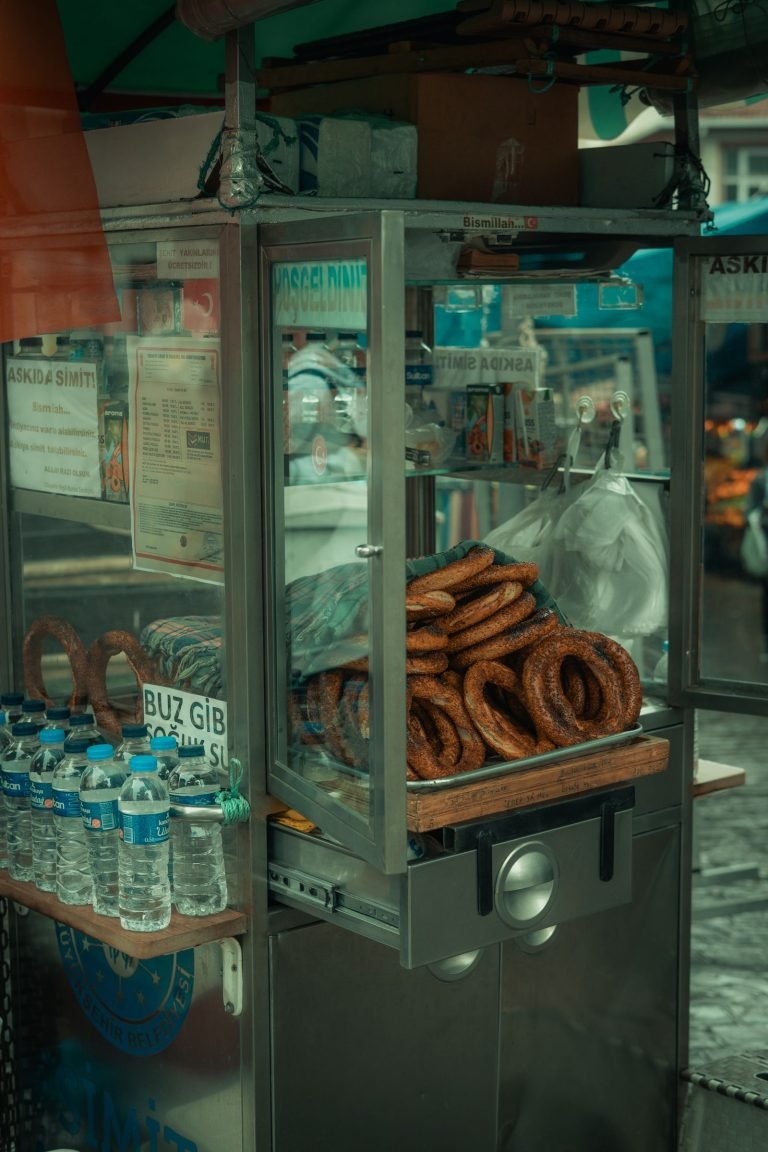
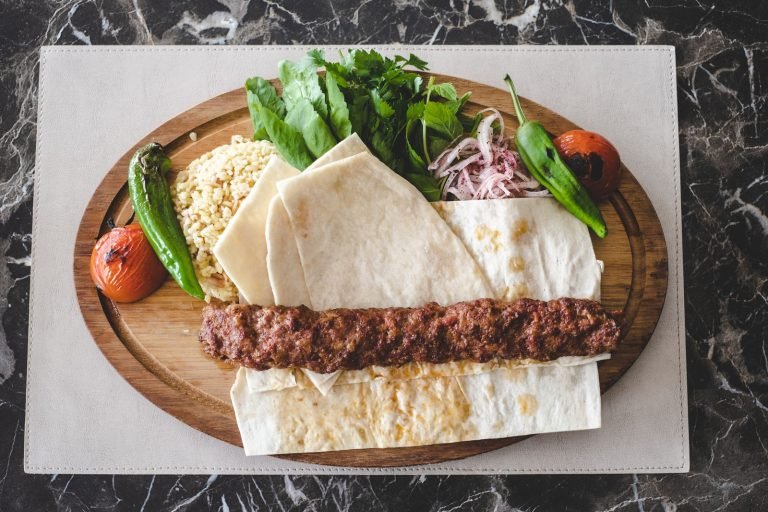
Order a “porsiyon” (plate) or a “dürüm” (wrap), and say “acılı” or “acısız” for spicy or mild. A main kebab in a restaurant costs about £7 to £13.
In Britain “kebab” usually means one thing, eaten late at night. In Turkey the word (kebap in Turkish spelling) covers dozens of dishes: minced meat pressed onto flat skewers, cubes grilled over charcoal, meat roasted on vertical and horizontal spits, stews baked in clay pots and dishes layered with aubergine and yoghurt. Many are tied to a specific city, and the locals will tell you theirs is the only real one.
This guide explains 15 kebabs you will see on menus, where each comes from, how to order, where to eat them and what to have if you do not eat meat.

The big three: Adana, Urfa and İskender
Adana kebab
The most famous minced kebab, from Adana in southern Turkey. Lamb from sheep more than a year old is mixed with tail fat, hot red pepper and salt, then chopped by hand with a long two-handled blade called a zırh rather than put through a mincer. The mixture is pressed onto wide, flat iron skewers with wet hands and grilled over oak charcoal, while flatbread soaks up the dripping fat. A standard portion is about 180 g of meat.
Adana kebab is legally protected. The Adana Chamber of Commerce registered it as a geographical indication with the Turkish patent office in 2004, which sets the rules on meat, fat, seasoning and cooking for anyone using the name. Outside Adana you will still see “Adana” on menus everywhere, usually meaning any spicy minced kebab.
Urfa kebab
Şanlıurfa’s version looks almost identical but is made without the chilli heat, so it is milder and lets the lamb come through. If you are unsure about spice, this is the safe order. Kebab houses often serve both, and ordering one of each to share is a good way to compare.
İskender kebab
In 1867, in his small shop in Bursa’s Kayhan Bazaar, İskender Efendi took lamb off the bone, stacked it on a vertical spit in front of a wood-charcoal fire and served it sliced thin over buttered pide bread. Restaurants run by his descendants still serve it in Bursa under the Kebapçı İskender name. The dish now comes topped with tomato sauce and yoghurt, finished at the table with sizzling melted butter. It is rich: one portion is a full meal. Bursa is the place to try it; see things to do in Bursa.

12 more kebabs to know
| Kebab | What it is | Associated with |
|---|---|---|
| Döner | Seasoned meat stacked on a vertical spit and sliced thin | Nationwide |
| Şiş kebab (kuzu şiş) | Cubes of marinated lamb grilled on skewers | Nationwide |
| Tavuk şiş | Chicken cubes marinated in yoghurt and pepper paste | Nationwide |
| Çöp şiş | Tiny pieces of lamb on thin wooden skewers, eaten by the handful | The Aegean and the southeast |
| Cağ kebabı | Marinated lamb roasted on a horizontal spit over a wood fire, sliced onto small skewers | Oltu and Erzurum |
| Beyti | Originally rolled lamb fillet; now usually spiced mince wrapped in lavaş, sliced and topped with tomato sauce and yoghurt | Istanbul |
| Patlıcan kebabı | Minced meat and slices of aubergine threaded alternately and grilled | Gaziantep and the southeast |
| Ali Nazik | Smoky aubergine purée mixed with garlic yoghurt, topped with lamb | Gaziantep |
| Testi kebabı | Meat and vegetables slow-cooked in a sealed clay jug, cracked open at the table | Cappadocia |
| Ciğer kebabı | Cubes of lamb liver grilled on skewers, often with tail fat | Şanlıurfa, Diyarbakır and Gaziantep |
| Tokat kebabı | Lamb, aubergine, potato and tomato cooked on skewers in a wood oven | Tokat |
| Kağıt kebabı | Meat and vegetables baked in a sealed paper parcel | Malatya and elsewhere |
Notes on a few
Döner is the Turkish original of the British takeaway, and in a good döner shop the spit is built from stacked slices of real meat rather than a processed cone. Order it on a plate (porsiyon), in bread (ekmek arası) or wrapped (dürüm). Our Turkish street food guide covers the takeaway versions.
Cağ kebabı from Oltu in Erzurum province is a registered geographical indication. The meat turns on a horizontal spit in front of a wood fire, and the cook slices it onto small pointed skewers called cağ, which you eat from directly.
Beyti takes its name from Beyti Güler, who opened a four-table restaurant in Istanbul in 1945. His restaurant, now in Florya, still serves the original rolled lamb dish, which is different from the mince-in-lavaş “beyti” sold in most kebab houses.
Testi kebabı is partly theatre: the waiter taps the sealed jug with a knife until the top breaks off. It is widely sold to tour groups in Cappadocia; see things to do in Cappadocia.
Turkey’s Cheapest Street Food to Most Expensive Kebabs, an English-language tasting tour of Istanbul kebab shops from budget dürüm to high-end grills (Turkey Travel Planner, February 2026). Watch on YouTube.
How to order a kebab
- Porsiyon: a plate, usually with grilled tomato and pepper, bulgur or rice and bread.
- Bir buçuk: a portion and a half, for the hungry.
- Dürüm: wrapped in thin lavaş; ekmek arası: in bread.
- Acılı / acısız: spicy / not spicy.
- Yarım: half, useful for trying two kinds.
- Hesap, lütfen: the bill, please.
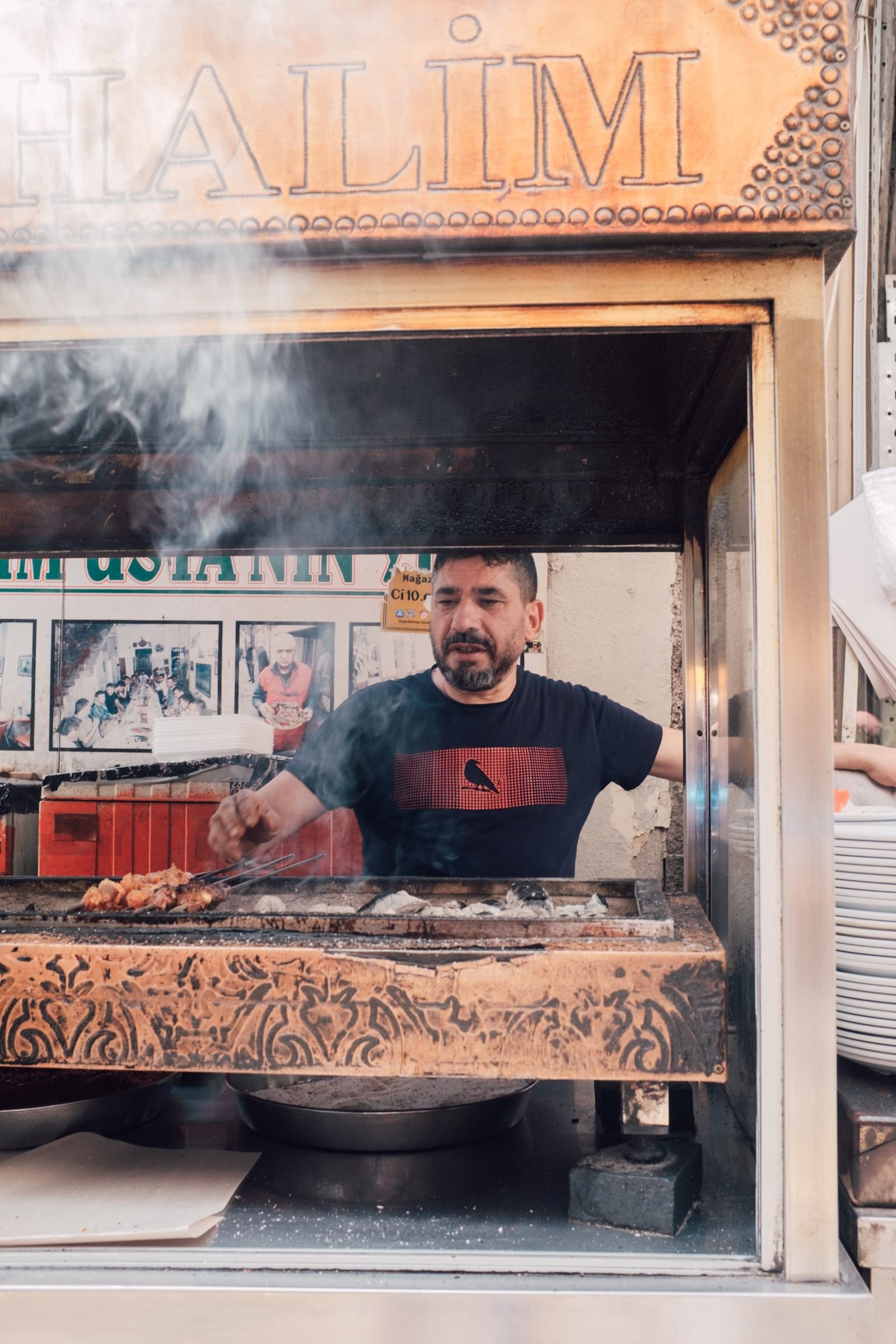
At an ocakbaşı (a restaurant where you sit round the grill) the cook works in front of you, and bread, onions with sumac, a spicy tomato salad (ezme) and herbs often arrive before the meat. Many kebab houses, especially in the southeast, serve no alcohol; ayran or şalgam (fermented carrot juice) is the usual drink, as our guide to rakı and Turkish drinks explains. More words are in our Turkish phrases guide.
What it costs
In 2026 a döner dürüm costs about £1.80 to £3.30 in Istanbul, and an İskender or main kebab in a sit-down restaurant about £7 to £13. Tourist areas charge more. See Turkey travel costs and tipping in Turkey.
Where to eat the best kebabs
- Adana. For Adana kebab and şalgam in their home city.
- Şanlıurfa. Urfa kebab and liver kebabs, often eaten with plenty of fresh herbs and isot pepper.
- Gaziantep. Arguably the best food city in Turkey for meat: patlıcan kebabı, Ali Nazik and, afterwards, pistachio baklava. See things to do in Gaziantep.
- Bursa. İskender at the family’s own restaurants.
- Erzurum. Cağ kebabı, best on a cold day.
- Istanbul. Every regional style is represented. Look for kebab houses run by families from the southeast, which often name their home town on the sign. Our Istanbul guide covers the districts.
If you would like to try these at a charcoal grill closer to home, our sister site Turkish Dish rounds up the best ocakbaşı grills in London.
Vegetarian options at a kebab house
Turkish kebab restaurants are not built for vegetarians, but you will not go hungry:
- Meze and salads: ezme, çoban salatası (shepherd’s salad), haydari (thick yoghurt dip), smoky aubergine salad.
- Mercimek çorbası (red lentil soup), served almost everywhere.
- Grilled vegetables from the mangal, such as peppers, tomatoes and aubergines.
- Pide with cheese, or lahmacun-style flatbreads without meat if the oven makes them.
- Çiğ köfte, which is now always meat-free in shops.
Check that soups and bulgur pilaf are not made with meat stock: ask “et suyu var mı?” (is there meat stock?). Many dishes in our Turkish food to try guide are vegetarian.
Frequently asked questions
What is the difference between Adana and Urfa kebab?
Heat. Both are hand-minced lamb grilled on flat skewers; Adana is seasoned with hot red pepper, Urfa is mild.
Is döner a Turkish dish?
Yes. Meat roasted on a vertical spit was developed in the Ottoman lands, and the Bursa family behind İskender kebab date their version to 1867. The döner sandwich as most of Europe knows it took off among Turkish communities in Germany.
Is Adana kebab protected?
Yes, within Turkey. It has been a registered geographical indication since 2004, at the request of the Adana Chamber of Commerce.
Is kebab meat halal in Turkey?
Almost all meat sold in Turkey is slaughtered according to Islamic rules, and pork is very rarely on menus outside a few international restaurants.
What do Turks drink with kebab?
Ayran, şalgam or a soft drink. Rakı is more common with meze and fish than with a plate of kebab.
Related reading
- Turkish culture: a traveller’s guide
- Turkish street food
- Rakı and Turkish drinks
- Turkish coffee and tea
- What is Turkey famous for?
- Fun facts about Turkey
- Turkish desserts
- Customs and etiquette in Turkey
Sources: Hürriyet: Adana kebab geographical indication (Turkish); Kebapçı İskender: our history; Michelin Guide: Beyti; Kure Encyclopedia: Oltu cağ kebabı (Turkish).
Prices and opening details checked in November 2026. Confirm on the official page before you go.