Few countries pack so many civilisations into one landscape. On a single trip you can stand in a Neolithic temple, walk the streets of a Roman city, and step into a palace where sultans ruled three continents. This Turkey history timeline puts it all in order, with 48 dated entries in one table.
Wherever we have a guide to the site, museum or event, the entry links to it, so you can use the timeline to plan what to see. Dates come from UNESCO, Britannica and official sources; where historians disagree, we say so.
Turkey history timeline: the key dates
| Date | What happened | See it |
|---|---|---|
| c. 9600 to 8200 BC | Hunter-gatherers build the carved stone enclosures of Göbekli Tepe | Göbekli Tepe |
| c. 7400 to 6200 BC | Çatalhöyük, one of the earliest large farming towns, is lived in near Konya | Çatalhöyük |
| Early Bronze Age | The first walled settlement at Troy (Troy I); the city is rebuilt layer on layer for about 4,000 years | Troy |
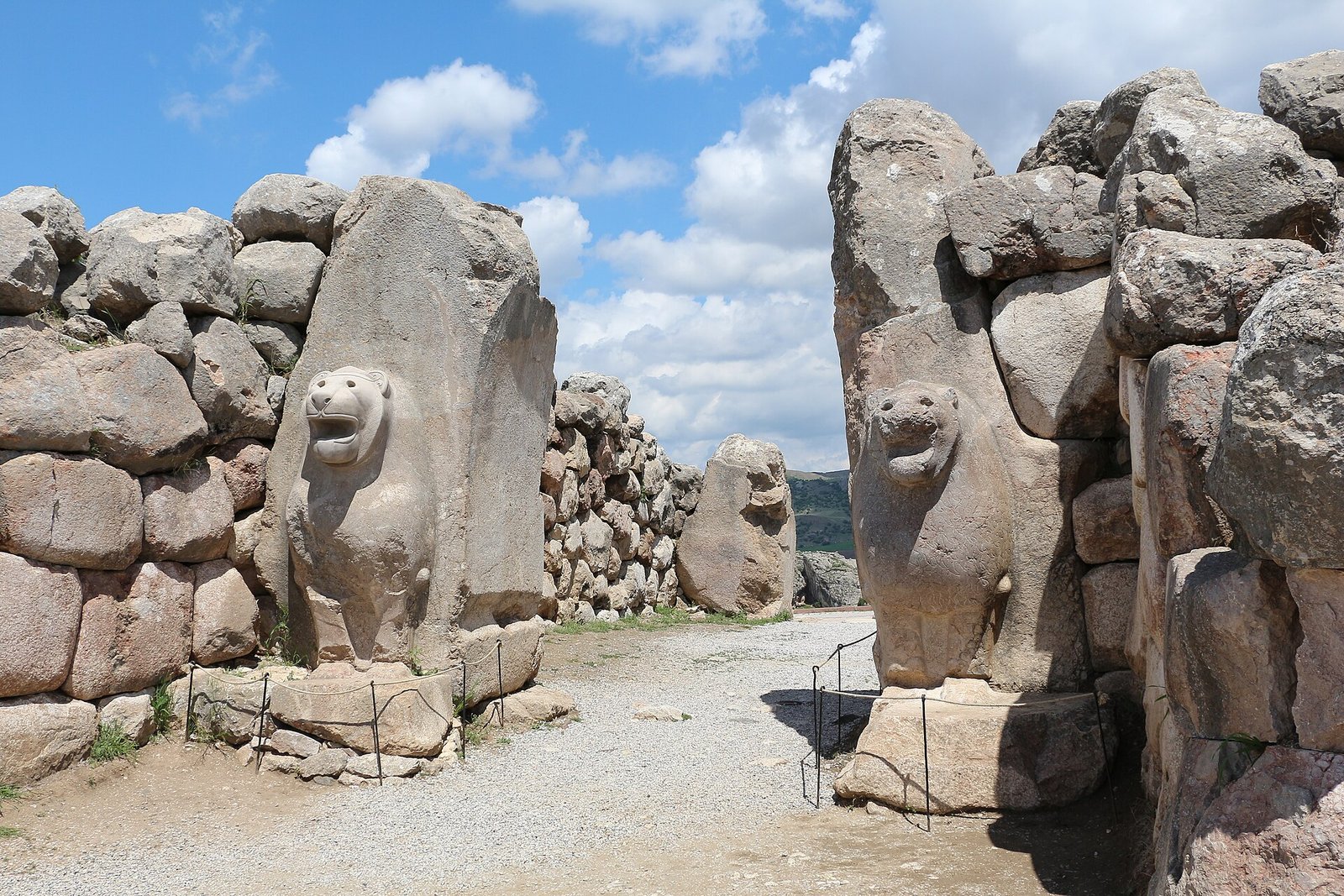
| c. 1650 BC | Hattusilis I rules the Hittites from Hattusa | Hattusa |
| 1275 BC | Battle of Kadesh between the Hittites and Egypt; about 15 years later they agree the first known peace treaty | Hattusa |
| 13th century BC | Traditional date of the Trojan War, later told in Homer’s Iliad | Çanakkale and Troy |
| c. 1193 BC | The Hittite empire collapses | Hattusa |
| Iron Age | Gordion is the capital of Phrygia, the kingdom linked with King Midas | Gordion |
| 7th century BC | A Lydian dynasty rules from Sardis; Lydians are said to have struck the first gold and silver coins | Sardis |
| c. 546 BC | Cyrus of Persia ends the Lydian kingdom of Croesus; Anatolia comes under Persian rule | Sardis |
| 499 to 494 BC | The Greek cities of Ionia on the Aegean coast revolt against Persia and fail | Kuşadası and Ephesus |
| 334 BC | Alexander the Great defeats the Persians at the Granicus, his first victory in Asia | Çanakkale region |
| 3rd century BC | Pergamon becomes the capital of the Attalid kings, with one of the great libraries of the ancient world | Pergamon |
| 133 BC | The last Attalid king leaves Pergamon to Rome; Ephesus becomes capital of the Roman province of Asia | Ephesus |
| 69 to 34 BC | Antiochos I of Commagene builds his tomb-sanctuary with giant statues on Mount Nemrut | Mount Nemrut |
| AD 325 | The first ecumenical council of the Church meets at Nicaea (İznik) | Bursa and İznik |
| 11 May 330 | Constantine dedicates Constantinople as the new capital of the Roman Empire | Historic Istanbul |
| 532 to 537 | Hagia Sophia is built for Emperor Justinian | Hagia Sophia |
| 26 August 1071 | The Seljuk Turks under Alp Arslan defeat Byzantium at Manzikert (Malazgirt) and settle much of Anatolia | Ottoman Empire history |
| 13 April 1204 | The Fourth Crusade sacks Constantinople; the Byzantines retake it in 1261 | Istanbul |
| 1243 | The Mongols defeat the Seljuks at Köse Dağ, and the Seljuks become Mongol vassals | Konya, the Seljuk capital |
| 17 December 1273 | The poet Rumi (Mevlânâ) dies in Konya | Rumi |
| c. 1299 | Traditional founding of the Ottoman state under Osman I | Osman I |
| 1326 | Orhan takes Bursa, the first Ottoman capital | Bursa and Cumalıkızık |
| 29 May 1453 | Mehmed II conquers Constantinople, ending the Byzantine Empire | The fall of Constantinople |
| 1516 to 1517 | Selim I conquers Syria, Egypt and the Hejaz | Topkapı Palace |
| 1520 to 1566 | Reign of Süleyman the Magnificent, the height of Ottoman power | Süleyman the Magnificent |
| 1550 to 1557 | Mimar Sinan builds the Süleymaniye Mosque complex | Mimar Sinan |
| 3 November 1839 | The Edict of Gülhane opens the Tanzimat reforms | Topkapı Palace (Gülhane Park) |
| 18 March 1915 to 9 January 1916 | The Gallipoli campaign | Gallipoli campaign |
| From spring 1915 | Deportation and mass killing of the Ottoman Armenians (see note below) | Britannica overview |
| 19 May 1919 | Mustafa Kemal lands at Samsun; the War of Independence begins to take shape | War of Independence |
| 23 April 1920 | The Grand National Assembly opens in Ankara | 23 April holiday |
| 23 August to 13 September 1921 | Battle of Sakarya | Battle of Sakarya |
| 26 to 30 August 1922 | The Great Offensive and Battle of Dumlupınar end the war in the west | The Great Offensive |
| 1 November 1922 | The Ottoman sultanate is abolished | Founding of the Republic |
| 24 July 1923 | The Treaty of Lausanne recognises the new state’s borders | Treaty of Lausanne |
| 29 October 1923 | The Republic of Turkey is proclaimed, with Ankara as capital and Mustafa Kemal as President | Republic Day |
| 1 November 1928 | The Latin-based Turkish alphabet replaces the Arabic script | Alphabet reform |
| 5 December 1934 | Women gain the right to vote and stand in national elections | Founding of the Republic |
| 10 November 1938 | Atatürk dies at Dolmabahçe Palace | 10 November |
| 18 February 1952 | Turkey joins NATO, alongside Greece | – |
| 1960 and 12 September 1980 | Military coups; new constitutions follow in 1961 and 1982 | – |
| July to August 1974 | After a Greek-backed coup in Cyprus on 15 July, Turkish forces land on 20 July and take the northern third of the island, which remains divided | – |
| 17 August 1999 | The İzmit earthquake kills more than 17,000 people; in December Turkey is recognised as an EU candidate (it had applied in 1987) | – |
| 15 July 2016 | A coup attempt by a faction in the armed forces is defeated | 15 July holiday |
| 6 February 2023 | Magnitude 7.8 and 7.7 earthquakes centred near Kahramanmaraş kill more than 50,000 people in Turkey | – |
| 29 October 2023 | The Republic’s centenary | Republic Day |
The ages of Turkish history in brief
Prehistory (to about 3000 BC)
Anatolia holds some of the oldest monuments on earth. UNESCO dates Göbekli Tepe to about 9600 to 8200 BC, built by people who had not yet taken up farming. Çatalhöyük shows what came next: a town of mud-brick houses entered through the roof. The best finds from both are in the museums of Şanlıurfa, Konya and Ankara.
Bronze and Iron Age kingdoms
The Hittites built an empire from Hattusa in central Anatolia and fought Egypt to a standstill at Kadesh. After their fall around 1193 BC, smaller kingdoms took over: the Phrygians at Gordion and the Lydians at Sardis, whose wealth became legendary. Greek cities grew up along the Aegean coast, and in the 6th century BC the Persians absorbed the whole peninsula.
Greeks, Romans and Byzantium
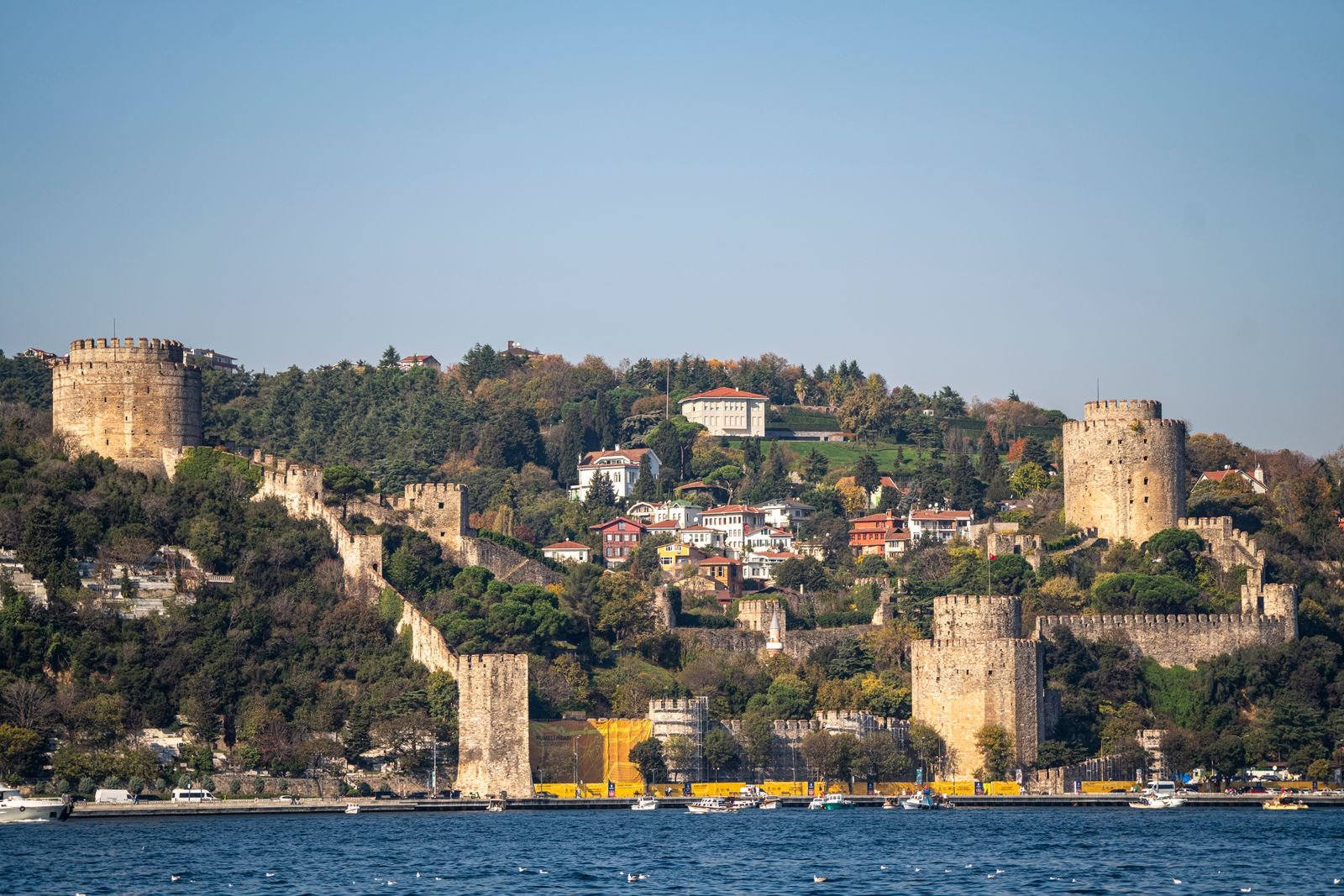
Alexander’s victory at the Granicus in 334 BC opened the Hellenistic age, when cities such as Pergamon and Ephesus flourished. Rome took over from 133 BC. In 330 Constantine made Constantinople his capital, and the eastern Roman, or Byzantine, Empire lasted until 1453. Its masterpiece, Hagia Sophia, still dominates the Istanbul skyline.
Seljuks and Ottomans
The Battle of Manzikert in 1071, which Britannica calls a turning point, opened Anatolia to Turkish settlement. The Seljuks ruled from Konya until the Mongols reduced them to vassals in 1243. Out of the small states that followed rose the Ottomans, who took Constantinople in 1453 and at their height ruled from Hungary to Arabia. Our Ottoman Empire guide covers the six centuries in detail.
The Republic
Defeat in the First World War led to Allied occupation, the War of Independence and, on 29 October 1923, the Republic. Under Atatürk came rapid reforms to law, dress and the alphabet. The 1950 election brought the first change of government by vote, later politics saw several military interventions, and Turkey joined NATO in 1952. Read how the Turkish Republic was founded for the full story.

A note on contested history
Some events in this timeline are still argued over. For 1915, historians and many governments, including several European parliaments, describe the mass killings and deportations of Armenians as genocide; the Turkish state rejects that term, while acknowledging that many died in wartime. On Cyprus, Turkey calls its 1974 landing a peace operation, carried out as a guarantor power after the coup; the Republic of Cyprus and much of the international community describe it as an invasion, and UN Security Council resolutions have called for foreign troops to leave. We give the dates and the main positions, and link to neutral overviews.
Watch: the history of Turkey in ten minutes
A fast English-language overview from the Knowledgia channel, from the first Anatolian civilisations to the Republic.
Video: THE HISTORY OF TURKEY in 10 minutes by Knowledgia
Frequently asked questions
How old is Turkey’s history?
Human history in Anatolia goes back far beyond the monuments, but the oldest great site, Göbekli Tepe, dates from about 9600 BC. The modern Republic was founded in 1923.
When did the Turks arrive in Anatolia?
Turkish groups were moving into Anatolia in the 11th century, and the Seljuk victory at Manzikert on 26 August 1071 opened the way to large-scale settlement.
How long did the Ottoman Empire last?
From about 1299 until the sultanate was abolished on 1 November 1922, a little over six centuries.
Why is Ankara the capital and not Istanbul?
Ankara was the base of the national movement during the War of Independence and was confirmed as the capital when the Republic was proclaimed in 1923.
Where can I see the most history in one trip?
Istanbul for Byzantium and the Ottomans, then Çanakkale for Troy and Gallipoli, and the Aegean coast for Pergamon and Ephesus. Our UNESCO sites guide lists all 22 World Heritage Sites.
Keep planning
- Turkish culture: the complete guide
- 40 fun facts about Turkey
- What is Turkey famous for?
- Turkish arts and crafts
- Turkish carpets and kilims
- The Ottoman Empire: a traveller’s history
- How the Turkish Republic was founded
- UNESCO World Heritage Sites in Turkey
- Things to do in Istanbul
- Public holidays in Turkey
Prices and opening details checked in November 2026. Confirm on the official page before you go. Sources: UNESCO World Heritage List (Göbekli Tepe, Çatalhöyük, Troy, Pergamon, Ephesus, Nemrut Dağ, Historic Areas of Istanbul); Britannica (Hittite, Battle of Kadesh, Lydia, Ionian revolt, Mausoleum of Halicarnassus, Battle of the Granicus, Council of Nicaea, Constantinople, Battle of Manzikert, Mongol rule in Anatolia, Ottoman Empire, Cyprus, Armenian Genocide, İzmit earthquake of 1999, Kahramanmaraş earthquake of 2023, political developments 1970s to 1990s); Oxford University Press; NATO; European Commission; our Ottoman, Republic and Atatürk guides.