Dates: 16th century; born probably in Banaz village near Sivas, executed in Sivas (dates given range from about 1560 to 1590)
Known for: the great poet-singer of the Alevi tradition; songs of faith, love and defiance still sung to the bağlama
Where to go: Banaz village in Yıldızeli district, Sivas, with its statue of the poet, and Sivas city
Pir Sultan Abdal is the poet of the Alevis, Turkey’s largest religious minority, and one of the most loved voices in Turkish folk music. His songs about faith, injustice and a love that will not bend are sung at Alevi ceremonies, at folk concerts and in the türkü bars of Istanbul, and his name has stood for resistance for more than four centuries.
This page sets out what is known of his life, how to read his poems, what to listen to and where to go in central Anatolia. It is part of our series on famous Turkish poets.
Life: a poet between two empires
Records are thin, and much of Pir Sultan’s life comes to us through Alevi tradition. The Turkish Religious Foundation’s encyclopaedia says he was probably born in the early 16th century in Banaz, a village in Yıldızeli district, Sivas, and that his real name was Haydar. Tradition says that Hacı Bektaş Veli, the 13th-century saint revered by Alevis and Bektashis, appeared to him in a dream and gave him the name Pir Sultan.
His century was one of war between the Ottomans and the Safavids of Iran, whose Shah İsmail had many followers among the Turkmen tribes of Anatolia. Pir Sultan’s poems openly side with the Safavid cause and with the Shi’i reverence for Ali and the Twelve Imams. According to tradition, the governor of Sivas, Hızır Pasha, had him imprisoned and hanged. Britannica dates the execution to around 1560; other sources suggest dates up to 1590. The place in Sivas where he is said to have died is still called Darağacı, “the gallows”.
One complication: several later poets used the same or similar names, and their poems were mixed into his. More than 400 poems carry his name, and careful editors accept fewer than half.
Poetic style and themes
Pir Sultan wrote as an âşık, a poet-singer who composed to the bağlama (saz), in the syllabic metres and half-rhymes of folk song. His main forms are the koşma, the semai and the nefes, a religious song sung at the Alevi cem ceremony. The language is plain and strong, close to the speech of villagers.
His themes run from devotion to Ali and the Imams to love, separation and the cruelty of tyrants. The natural world carries much of the emotion: cranes flying over mountains, a nightingale that should not sing in a ruined garden, roses and snow. The defiance in his poems is what later generations took up. In the 20th century poets and singers of the left as well as Alevi communities claimed him as a voice against oppression.
Key works
- “Uyur İdik Uyardılar” (We Were Asleep, They Woke Us).
- “Dönen Dönsün” (Let Those Who Turn Back, Turn Back), a vow to keep to his path.
- “Ötme Bülbül” (Do Not Sing, Nightingale).
Legacy
Pir Sultan’s poems are part of the living âşık tradition that UNESCO added to its intangible cultural heritage list in 2009, and they are sung at almost every Alevi gathering. Singers from Ruhi Su to today’s folk performers have recorded his songs.
His name is also tied to a painful date. On 2 July 1993, during a Pir Sultan Abdal culture festival in Sivas, a crowd set fire to the Madımak Hotel where many guests were staying, and more than 30 people died, most of them writers, musicians and festival guests. The anniversary is marked in Sivas every year.
Where to find Pir Sultan Abdal in Turkey
- Banaz village, Yıldızeli, Sivas. A statue of the poet holding a bağlama stands in the village, the result of a project a local association began in the 1970s, when it also started cultural events in his name. It is a rural village with few facilities, so go by car from Sivas and check event dates locally.
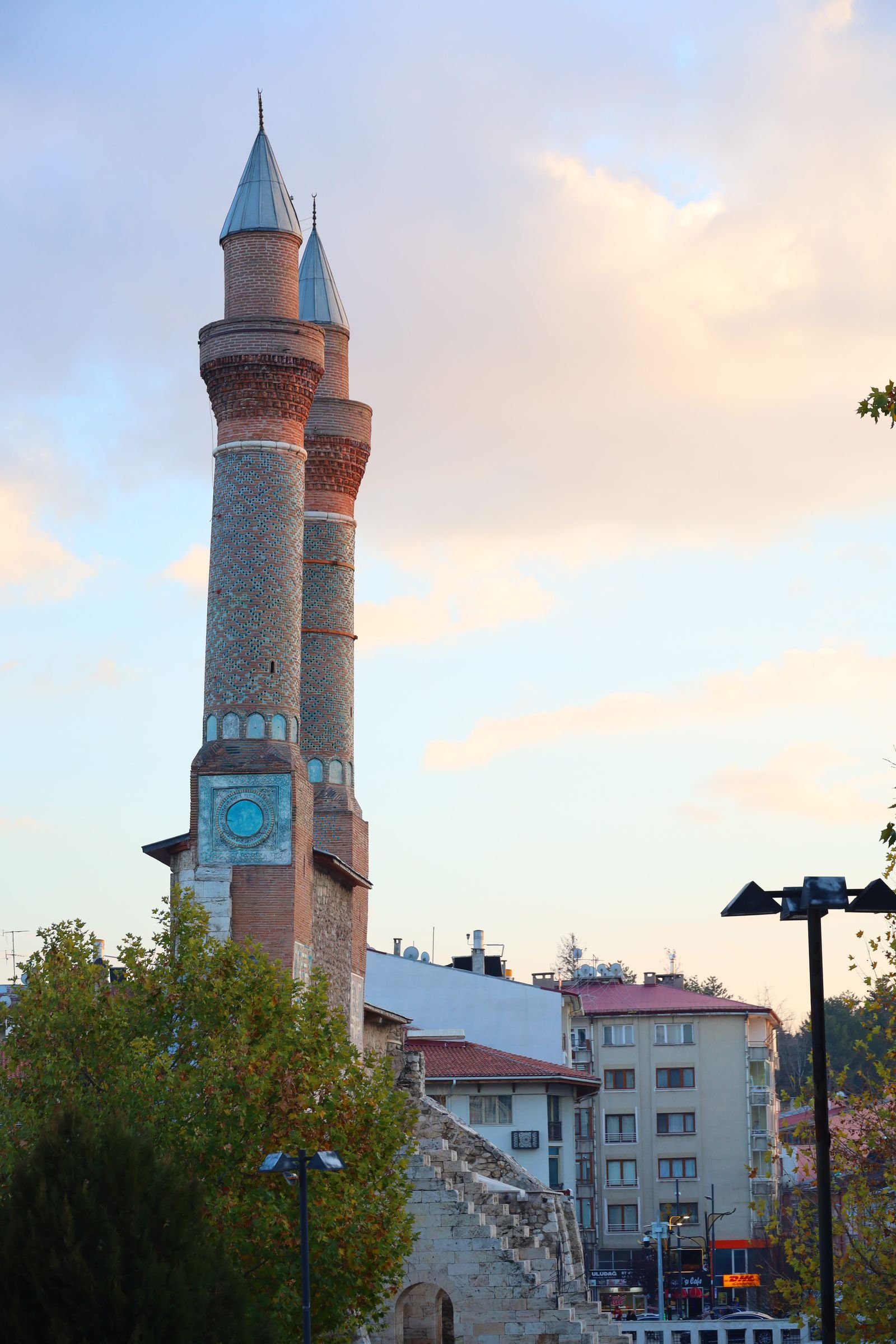
- Sivas city. The Seljuk monuments of the old centre, among them the Double Minaret Medrese and the Gök Medrese, give a sense of the city he knew. Sivas is on the high-speed rail line from Ankara, which makes it easier to reach than it used to be; see things to do in Ankara for a starting point.
- Divriği. A day trip from Sivas takes you to the UNESCO-listed Divriği Great Mosque and Hospital, one of Turkey’s most extraordinary buildings.
- Istanbul’s türkü bars. The folk music bars of Beyoğlu play his songs most nights.
Alevi cem houses (cemevi) are places of worship. If you are invited to a cem, ask before taking photos and follow your host’s lead.

Read, watch and listen next
- The Penguin Book of Turkish Verse (1978), edited by Nermin Menemencioğlu with Fahir İz: the easiest place to find him in English.
- Talât S. Halman, A Millennium of Turkish Literature: a short history that places him in the folk tradition.
- Listen: Ruhi Su’s recordings of Pir Sultan’s songs, and any of our Turkish folk singers.
Video: Alevi Discourses in the Poetry of Pir Sultan Abdal, a short talk by Zeynep Oktay for the Ottoman and Turkish Studies Association (2023, English). Watch on YouTube.
Sources: Britannica on Pir Sultan Abdal, the TDV İslâm Ansiklopedisi entry (in Turkish) and UNESCO’s page on the âşıklık (minstrelsy) tradition.
Frequently asked questions
Why was Pir Sultan Abdal executed?
Sources agree he was hanged in Sivas on the governor’s orders, accused of supporting the Safavids of Iran, the Ottomans’ rivals. The exact year is uncertain.
Can you visit Banaz?
Yes, it is an ordinary village in Yıldızeli district with a statue of the poet. Go by car from Sivas, and check locally if you want to time a visit for a cultural event.
What is a nefes?
A religious song of the Alevi and Bektashi tradition, sung with the bağlama during the cem ceremony. Many of Pir Sultan’s best-known poems are nefes.
Related reading
- Famous Turkish poets: 12 names to know
- Karacaoğlan
- Yunus Emre
- Nazım Hikmet
- UNESCO sites in Turkey
- Customs and etiquette in Turkey
Prices and opening details checked in November 2026. Confirm on the official page before you go.