Where to see them: at weddings, regional festivals and folk shows such as those at the Hodjapasha Culture Centre in Istanbul.
The whirling of the Mevlevi dervishes, the sema, is a religious ceremony rather than a folk dance.
Go to a Turkish wedding and, sooner or later, someone will grab your hand and pull you into a line of dancers. Folk dance in Turkey is not a museum piece. It is how families celebrate, how towns show off at festivals and how people from one region recognise each other in a big city.
Every region has its own steps, music and costumes. This guide explains the main dances, what the dancers wear, where a visitor can see them, and why the famous whirling dervishes belong in a different category altogether.
Turkish folk dances by region
Turkey’s Ministry of Culture and Tourism groups the main group dances by region: the bar in Erzurum, the halay in the east and southeast, the horon on the Black Sea, the hora in Thrace and the spoon dances around Konya. Add the zeybek of the Aegean and you have the six styles a visitor is most likely to meet.
| Dance | Region | Music | What to look for |
|---|---|---|---|
| Halay | East and southeast, now everywhere | Davul drum and zurna pipe | A long line holding hands or linking little fingers, led by a dancer with a handkerchief |
| Zeybek | Aegean, around Aydın and İzmir | Davul and zurna, sometimes bağlama | Slow, proud solo steps, arms raised, a drop to one knee |
| Horon | Black Sea, around Trabzon and Rize | Kemençe fiddle or tulum bagpipe | Linked arms, quick stamps and a shoulder shimmy that speeds up |
| Bar | Erzurum and the northeast | Davul and zurna | Dancers side by side, linked by hands, shoulders or arms |
| Hora | Thrace, the European corner of Turkey | Drums and zurna | Lively wedding dances, related to the face-to-face karşılama |
| Kaşık (spoon dances) | Around Konya and the Mediterranean region | Violin, bağlama, clarinet, often with song | Dancers clicking wooden spoons like castanets |
The big three: halay, zeybek and horon
Halay
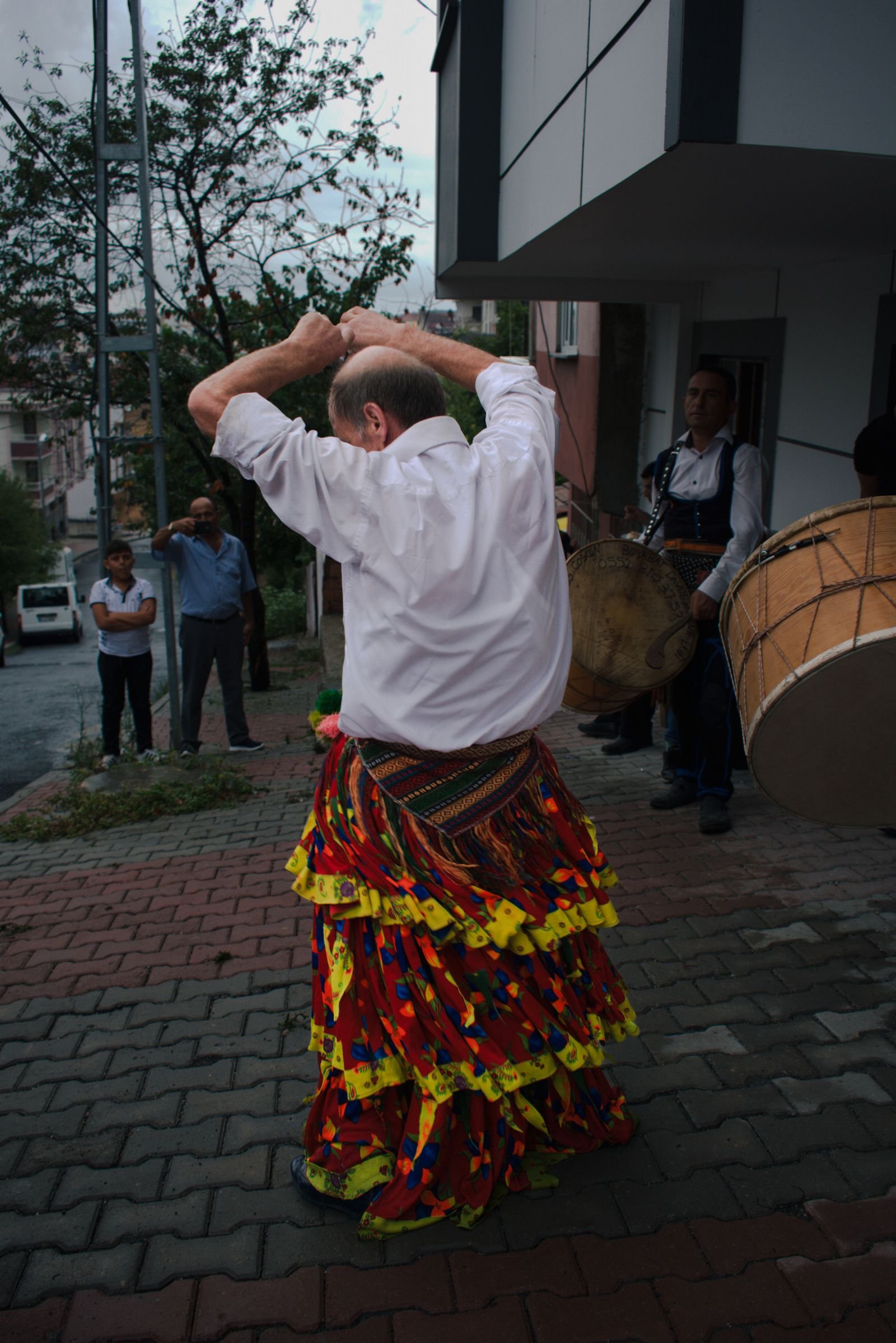
The halay is the dance you are most likely to join. Dancers form a long line that curls into a half or full circle, holding hands or linking little fingers, and step to the beat of the davul and zurna. At the head of the line the halaybaşı waves a handkerchief, sets the steps and decides when to speed up. The tempo often climbs until only the fittest are left. It is danced at almost every wedding, and around bonfires at spring festivals such as Nevruz and Hıdrellez.
Zeybek
The zeybek comes from the Aegean, with Aydın often named as its heartland. It takes its name from the zeybeks, irregular fighters of the Ottoman countryside led by a chief called the efe. The dance is slow and dignified: arms spread like wings, measured steps around a circle, then a sudden drop to one knee. It is usually performed solo or by a few dancers who do not hold hands. Women began to dance it publicly in the early 20th century, and today you will see both. There are well over a hundred local versions, from the Aydın zeybeği to the Bergama zeybeği.
Horon
The horon is pure Black Sea energy. Dancers link arms in a tight line, start slowly and finish with fast foot stamps and a shoulder shimmy, while a leader shouts calls to change the step. The music comes from the small Black Sea kemençe fiddle or the tulum bagpipe, which UNESCO added to its heritage list in 2024. People along the coast say the shimmy imitates the shiver of a hamsi, the anchovy that the region is famous for; treat that as a local story rather than history.
Getting to Know Türkiye: Let’s Learn a Turkish Dance, Horon, an English-language lesson that breaks the horon down step by step (Turkish American Association of Minnesota, October 2024). Watch on YouTube.
Other dances worth knowing
- Bar (Erzurum): group dances performed outdoors, side by side, linked by the hands, shoulders or arms. Men’s and women’s bars are different. You will see them across the northeast, from Erzurum to Kars and Artvin.
- Spoon dances (Konya and the south): the dancers click wooden spoons like castanets, usually to a brisk two-beat rhythm and a folk song.
- Hora (Thrace): the hora of the Edirne region is related to the karşılama, a fast wedding dance in which partners face each other.
- Semah (Alevi-Bektaşi ritual): men and women turn side by side to the saz in the cem ceremony of Alevi communities. UNESCO inscribed the semah in 2010. It is worship, so watch only if you are invited.
Costumes
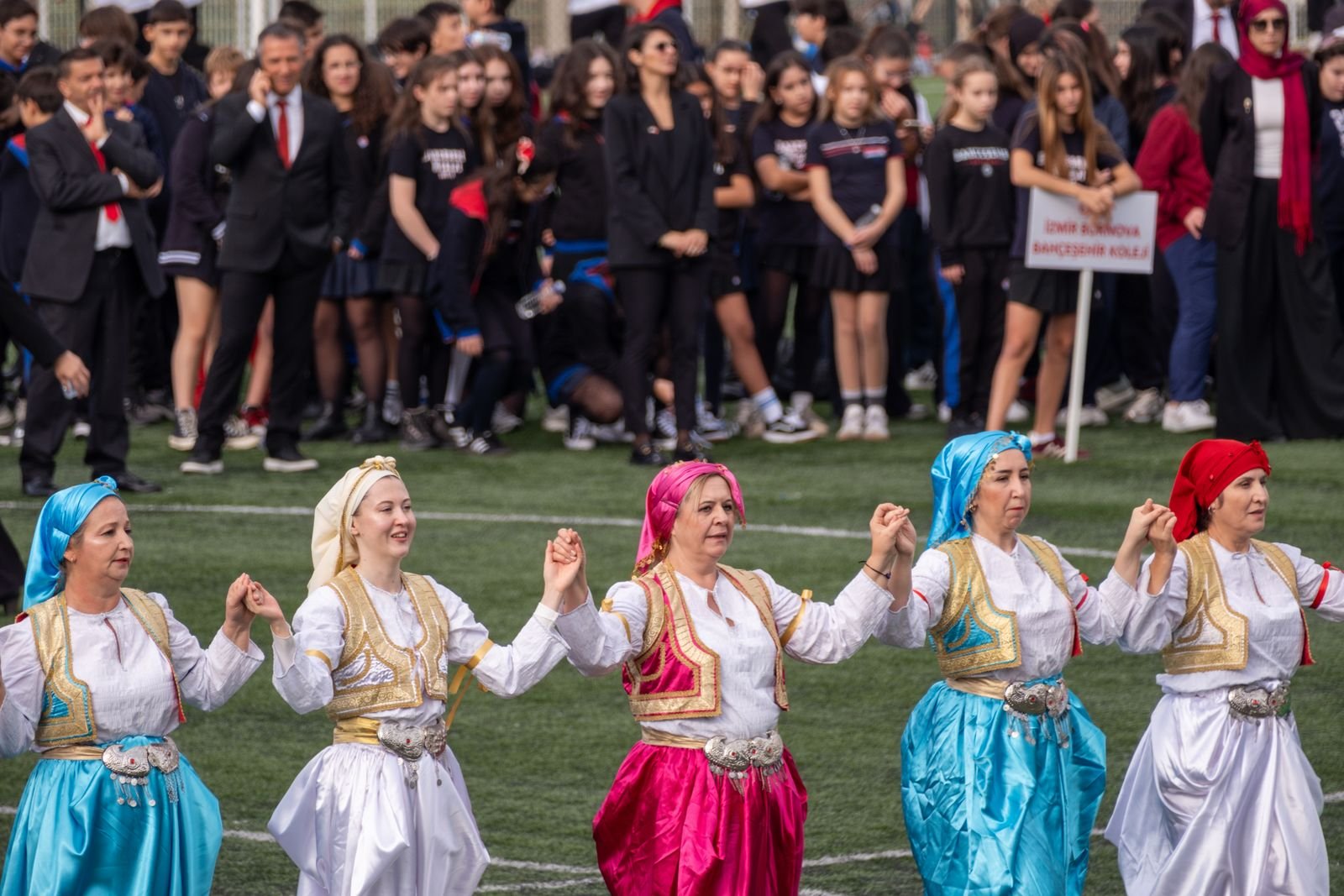
Costumes change from valley to valley, and a troupe’s outfit tells an audience at once which region it is dancing. A few you will recognise:
- Zeybek men wear a small fez or wrapped headpiece, a white shirt, an embroidered waistcoat, a wide sash once used to carry pistols and knives, baggy knee-length trousers and long boots. Women wear a flowered headdress with a sequinned scarf, an embroidered blouse, a long robe and a velvet jacket.
- Black Sea men dress in black with a leather belt and a pocket-watch chain; women wear a bright jacket and skirt over şalvar trousers, with a patterned headscarf.
Most of what you see on stage is a festival version of everyday clothes worn a century ago. If you want to see the real thing up close, the ethnography sections of regional museums display old costumes and jewellery.
Where to see Turkish folk dances
Weddings
The most authentic place is a wedding, and Turkish weddings are big and loud. If you are invited, expect a long halay; you will be welcomed into the line.
Festivals and holidays
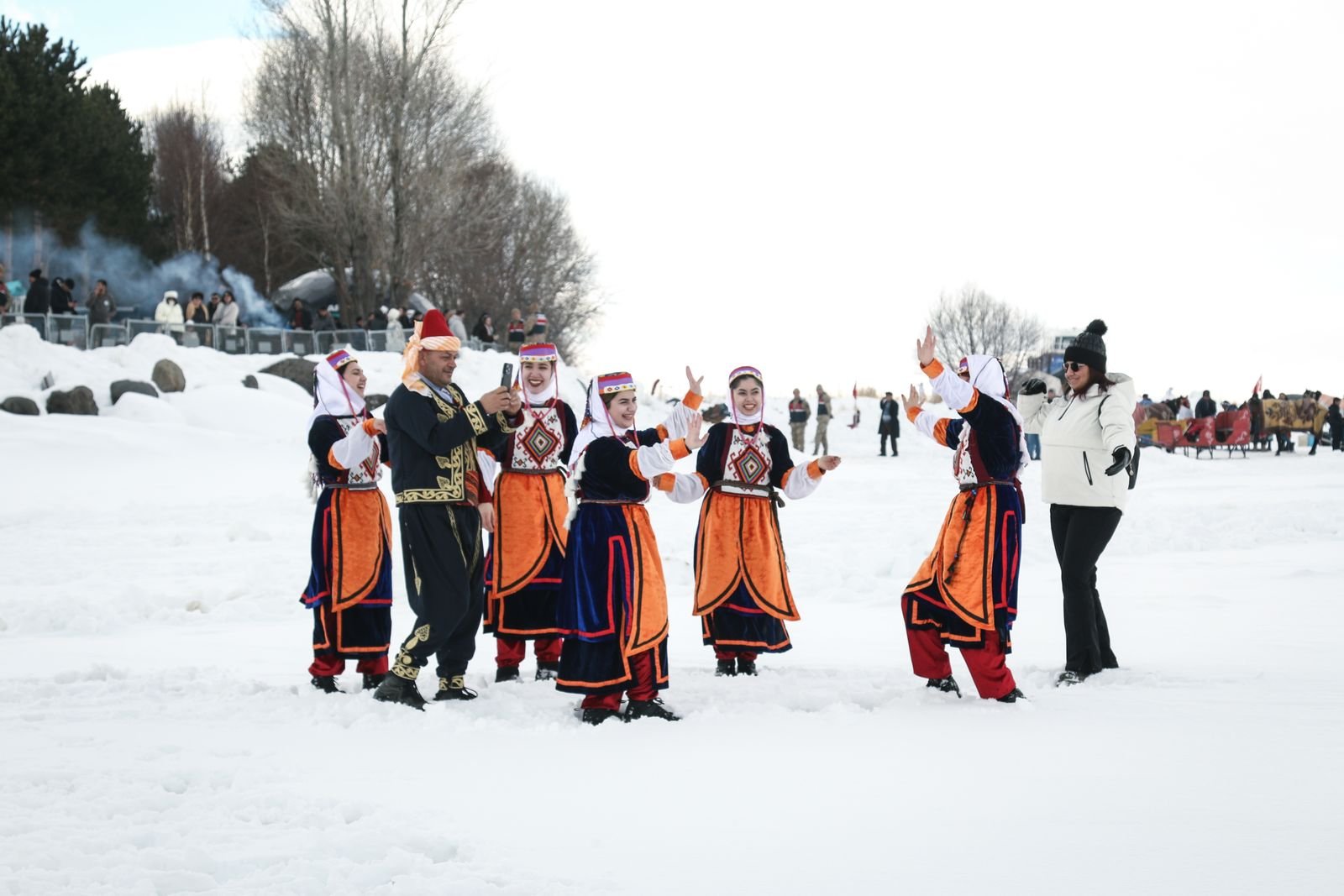
Town festivals, harvest fairs and school shows all feature folk dance troupes, and national holidays bring performances in public squares. Spring festivals such as Nevruz in March and Hıdrellez in early May are good times to see a halay, and winter festivals in the east, such as the one in Kars, put dancers on the snow. Check our guide to public holidays in Turkey for dates.
Shows in Istanbul
The Hodjapasha Culture Centre, in a converted 15th-century hamam in Sirkeci near Hagia Sophia, runs a dance show, Rhythm of the Dance, on Tuesday, Thursday and Saturday evenings at 20:30 (checked November 2026). It mixes folk dances with stage choreography and belly dance, so treat it as a polished introduction rather than village tradition. The same venue holds a sema every evening at 19:00.
For a bigger production, Fire of Anatolia (Anadolu Ateşi), created by Mustafa Erdoğan and first staged in 2001, turns Anatolian dances into a theatre spectacle and tours Turkey and abroad. Check its schedule before you travel.
The whirling dervishes: a ceremony, not a dance
The image of white-robed dervishes turning with one palm raised is on every Turkey poster, but the sema is not folk dance. It is a form of worship of the Mevlevi order, founded in Konya after the death of the poet and mystic Rumi (Mevlana) in 1273. The dervishes turn on the left foot to music led by the ney flute and kudüm drums, in a ceremony with fixed sections and meanings.
UNESCO inscribed the Mevlevi Sema Ceremony on its list of Intangible Cultural Heritage in 2008, and notes that many performances for tourists are shortened and lose part of their religious meaning. That does not mean you should avoid them; just watch as you would a service.

Where to see a sema
- Konya, 7 to 17 December: the Şeb-i Arus commemorations mark Rumi’s death, with a sema every evening at the Mevlana Cultural Centre. Book early. See things to do in Konya.
- Istanbul: Hodjapasha holds a sema nightly at 19:00, and the Galata Mevlevi House Museum in Beyoğlu is a former dervish lodge with its own sema hall.
Etiquette at a sema
- Stay seated and silent; Hodjapasha asks for a “silent and tranquil” atmosphere.
- Arrive on time, as latecomers disturb the ceremony.
- Check the photo rules: Hodjapasha does not allow photos or video during the sema, and the minimum age there is 7.
Joining in: a short guide for visitors
- Say yes. If you are pulled into a halay, it is a compliment. Link little fingers or hold hands with your neighbours and copy the feet of the person next to you.
- Do not lead. The handkerchief belongs to the halaybaşı. If someone hands it to you, enjoy your moment and pass it back.
- Watch a zeybek, don’t join one uninvited. It is often a solo display of pride and skill.
- Dress sensibly. A halay can go on for a long time, so wear shoes you can stamp in.
For more on behaviour at weddings and in homes, see our guide to customs and etiquette in Turkey.
Frequently asked questions
What is the national dance of Turkey?
There is no single official national dance. The halay is the most widely danced across the country, while the zeybek and horon are strong regional symbols.
Is whirling a Turkish folk dance?
No. The sema of the whirling dervishes is a Mevlevi religious ceremony, recognised by UNESCO in 2008. Folk dances are social and festive.
Where can I see Turkish folk dancing in Istanbul?
The Hodjapasha Culture Centre in Sirkeci runs a dance show three evenings a week. For the real thing, look out for festivals and weddings.
What music is played for the halay?
Traditionally the davul drum and the zurna pipe, which together are loud enough to fill a village square.
When is the best time to see the whirling dervishes in Konya?
During Şeb-i Arus, from 7 to 17 December, when there is a sema every evening.
Keep planning
- Turkish culture: a traveller’s guide
- Turkish musical instruments
- Turkish arts and crafts
- Turkish traditions and superstitions
- Fun facts about Turkey
- Rumi (Mevlana)
- Things to do in Konya
- Things to do in Trabzon
- Things to do in İzmir
- Famous Turkish singers and musicians
Prices and opening details checked in November 2026. Confirm on the official page before you go.